AI Industry PACs Spend $4.8M on Midterms—Mixed Results as Heavily Backed Candidates Lose
By admin | Nov 04, 2026 | 3 min read
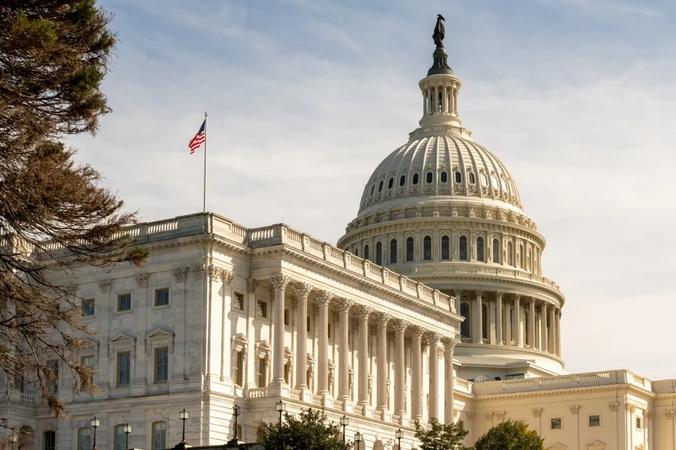
Political action groups on both sides of the AI debate poured millions into Tuesday's midterm elections, hoping to shape the future of AI regulation. The results were decidedly mixed—several candidates who received the heaviest financial backing ultimately lost their races.
On the industry side, two AI-focused political action committees—American Mission and Building the Future—raised and spent a combined $4.8 million to support South Carolina Senate candidate Darline Graham, who was defeated. American Mission serves as the Republican spending arm of Leading the Future (LTF), a larger political organization backed by OpenAI President Greg Brockman and the venture capital firm Andreessen Horowitz. The group also directed more than $500,000 each toward Republican House candidates Aaron Flint in Montana and Laurie Buckhout in North Carolina—both of whom lost their bids.
EMBED_PLACEHOLDER_0
LTF's Democratic counterpart, Think Big, fared better, supporting Florida Representative Jared Moskowitz, who successfully won reelection.
Organizations pushing for stronger AI safeguards experienced similarly uneven outcomes. Public First, backed by Anthropic, supported several Republicans who ultimately lost through its affiliated PAC, though it found more success with Democratic candidates. The group also contributed $3 million to a PAC supporting California State Senator Scott Wiener, who was leading his race at the time of publication. Meanwhile, the Guardrails Alliance—a group working to make accepting money from AI companies a political liability—spent over $1 million each opposing two losing candidates: California Representative Jimmy Gomez and Montana's Flint. The organization also invested $300,000 in support of Angela Gonzales-Torres, who defeated Gomez.
EMBED_PLACEHOLDER_1
Disentangling the impact of AI-related spending from the broader Democratic wave that swept Tuesday's elections is difficult. Elon Musk, who reportedly contributed half a billion dollars to Republican causes, also watched many of his preferred candidates fall. Even LTF backed some candidates it expected to win, only to see them lose to Democrats.
For LTF, however, the general election was never the primary focus. The group spent $27.38 million during the primaries, including $8 million solely to oppose New York Assembly member Alex Bores, who lost his congressional bid in June. When evaluating whether to invest in a general election race, LTF considers how competitive the contest is, whether its spending could tip the outcome, and whether it should preserve resources for future elections.
Charlie Blaettler, political director of Guardrails Alliance, offered a different explanation for why LTF spent relatively little during the general election. "They don't want their money to become an issue in these elections," Blaettler said. He cited the Michigan Senate primary, where a pro-Israel lobbying group called AIPAC spent nearly $30 million backing Democratic candidate Haley Stevens against Abdul El-Sayed. Stevens conceded the primary to El-Sayed, who went on to win the Senate seat. "AIPAC became the story in that race," Blaettler noted. "We know people hate AI billionaires. They hate the people running these companies. They're very distrustful and disgusted by the political spending and lobbying that the tech industry does. If they spend in a competitive race, they would just become an enormous liability for their candidates."
The central conflict among AI PACs—whether pro-industry or pro-regulation—revolves around whether Congress should establish a national AI framework that overrides state laws, or whether states should retain their own authority to impose safeguards. Neither side appears ready to concede. Blaettler explained that while LTF's advertisements rarely address AI directly, instead focusing on issues popular with each candidate's constituency, Guardrails Alliance's ads specifically highlight who is accepting money from the AI industry. "Our goal is to make AI money politically toxic," Blaettler stated.
RELATED ARTICLES
Comments
Please log in to leave a comment.

В последние несколько лет Турция занимает одно из ведущих мест среди туристических и медицинских центров мира, предоставляя стоматологическую помощь первого класса по ценам, которые не могут быть сопоставимы, в основном из-за: Отсутствие диагностического оборудования в стоматологическом кабинете создает проблемы для качественного лечения пациентов https://loldentrnd.ru/page107608786.html Когда дело доходит до стоматологических процедур в иностранных странах, идеально подходить к клинике, уделяющей особое внимание и адаптированной инфраструктуре для таких пациентов https://loldentrnd.ru/ Это может включать встречи в аэропорту, размещение, переводчиков и последующие назначения, которые помогут минимизировать беспокойство во время ваших процедур https://loldentrnd.ru/gnatalogy Современные технологии и оборудование Частная клиника, заботящаяся о своей репутации, может предложить своим пациентам суперсовременные методики лечения с использованием новейших материалов и европейского оборудования https://loldentrnd.ru/page107608376.html Кроме того, она гарантирует пациентам тишину, спокойствие, доброжелательную, почти домашнюю атмосферу без страха, утомительного ожидания и неприятных звуков https://loldentrnd.ru/page107608376.html Компьютерные программы и сверхточная аппаратура позволяют диагностировать любое стоматологическое заболевание и составлять эффективные планы лечения https://loldentrnd.ru/page107608786.html