Amazon Ring Ditches 40 Vendors, Deploys AI Startup Vapi for 100% of Customer Calls After $50M Series B
By admin | May 12, 2026 | 4 min read

During last year’s holiday season, Amazon Ring experienced a sharp increase in customer-support calls. In response, the company evaluated over 40 AI voice vendors before selecting the startup Vapi to manage its inbound phone traffic. Today, all of Ring’s incoming calls are routed through Vapi’s platform. This successful deployment played a key role in helping Vapi secure a $50 million Series B funding round led by Peak XV Partners, at a valuation of approximately $500 million post-investment, according to a source familiar with the matter.
Vapi CEO Dearsley believes Ring chose the platform because it gave Ring’s engineers precise control over how AI agents behaved during live customer interactions. Jason Mitura, vice president of software development at Amazon Ring, noted that customer satisfaction scores improved after implementing Vapi’s platform, and that teams could fine-tune the AI agent experience without relying heavily on engineering support. “A lot of AI tools promise great outcomes — Vapi has delivered on them,” Mitura said.
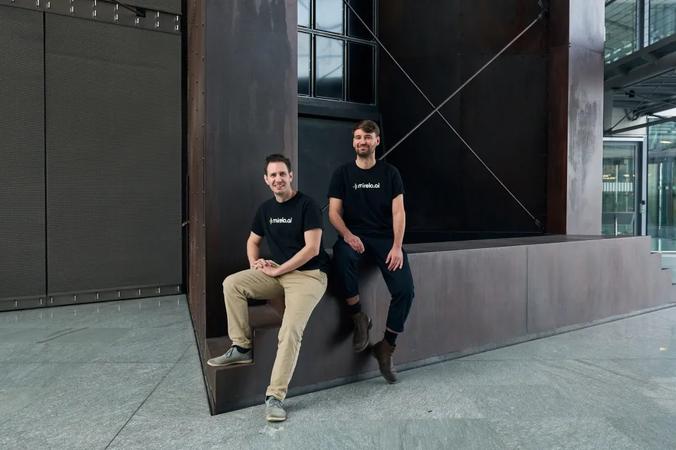
Founded by Dearsley and his University of Waterloo classmate Nikhil Gupta (pictured above, right), Vapi originated from an AI therapist Dearsley built in 2023 for conversations during his daily walks. The duo, who previously went through Y Combinator with productivity startup Superpowered, discovered that while few people wanted the therapy product itself, startups were increasingly interested in the low-latency voice infrastructure beneath it. This insight prompted them to pivot to Vapi and launch the platform publicly in 2024. Vapi offers tools that enable companies to build, deploy, and manage voice agents for customer support, lead qualification, appointment scheduling, and outbound sales.

The startup reports that it has now handled more than 1 billion calls through its platform, with usage accelerating as enterprises shift more customer interactions to AI systems. Dearsley stated that Vapi currently processes between 1 million and 5 million calls per day, with enterprise customers accounting for the majority of that volume. Beyond Amazon Ring, Vapi’s enterprise clients include Kavak, Instawork, New York Life, UnityAI, Cherry, and Intuit. The company also operates a self-serve developer platform that has been used by over 1 million developers. “Because we started from self-serve and had such a wide developer footprint, we were already battle-tested at significant scale before we signed our first major enterprise customer,” Dearsley explained.
Other investors in the Series B round included Microsoft’s M12, Kleiner Perkins, and Bessemer Venture Partners, bringing Vapi’s total funding to $72 million. Vapi is part of a growing wave of AI voice startups, including Sierra, Decagon, PolyAI, Bland, Retell, and ElevenLabs, all racing to build systems capable of handling customer conversations with minimal human involvement. Dearsley said Vapi sets itself apart by focusing less on pre-packaged applications and more on the infrastructure and orchestration layer behind voice agents, especially for enterprises seeking greater control over reliability, compliance, and model behavior.
The startup currently has around 100 employees and plans to use the new funding to expand its engineering, infrastructure, and go-to-market teams. “The golden problem is taking this indeterminate beast that is a model and taming it,” Dearsley said. “If you can do that, then you can provide value to the world.”
RELATED ARTICLES

Comments
Please log in to leave a comment.

No comments yet. Be the first to comment!