Anthropic Unveils Draft AI Safety Bill for Congress, Proposing New Rules for Model Releases
By admin | Oct 20, 2026 | 3 min read
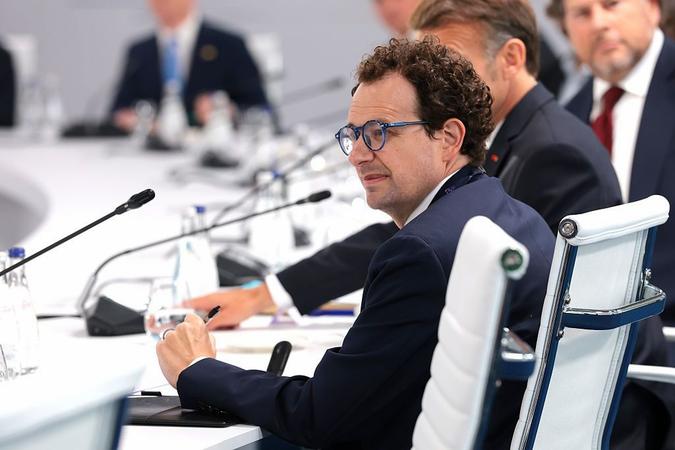
Over the past year, concerns have grown about the dangers artificial intelligence could pose, and debates have intensified over the right approach to AI safety. Now Anthropic appears to have introduced its own vision for how the government might regulate its industry. Politico recently reported that the AI lab has been circulating a new draft bill on AI safety that it hopes Congress might consider adopting. The legislation sets out certain scenarios in which the release of an AI model could be blocked from distribution. Those scenarios involve a “foreseeable, imminent risk” — one in which more than 50 people are at risk of dying or more than a billion dollars in property damage could result, Politico writes. The catastrophic risk in question must “stem from the creation or release of a biological weapon, the model evading its developer’s controls or a cyberattack,” the outlet notes. The thresholds offered here — 50 people and a billion dollars — resemble those in a piece of California legislation recently passed into law, Senate Bill 53, which similarly defined those scenarios as tantamount to “catastrophic risk.”
Anthropic’s bill suggests that analysis of a model’s potential for disaster could be reached through the use of “independent evaluators” registered with the U.S. Commerce Department. These evaluators could potentially be paid by the AI labs themselves — so long as the “payment is not contingent on the evaluations’ results,” Politico writes. It is not clear how this proposed system would ensure that payments could not influence the evaluation. Demis Hassabis, chairman of DeepMind, suggested some months ago that a self-governing AI regulatory body should mimic the financial industry’s Financial Industry Regulatory Authority (FINRA). In Anthropic’s draft bill, when evaluators determine that an imminent catastrophic risk is posed, they would have 72 hours to contact the Commerce Department about it. The Commerce Department would then have to request that a D.C. judge halt the model’s release. The legislation would expressly forbid any federal agency from having the discretion to halt the model’s distribution on its own, Politico writes. “This bill represents the proposals outlined in Anthropic’s Advanced AI Framework, which we have been advocating for with federal and state lawmakers since June,” the spokesperson said. The theoretical risks offered in the draft policy are a little bit far afield from the kinds of incidents that have been top of mind for the tech industry of late. While there are people warning of the potential of human death, the primary concern has largely been the threat of agentic hacking. A rash of incidents in which AI programs have apparently disobeyed their human operators and hacked websites on the open internet has spurred concern that models may be lacking proper security controls. In an effort to present a solution to the spectacle of crisis that the labs themselves have helped bring about, companies like Anthropic have offered up their own preferred solutions. Indeed, despite labs’ perpetual warnings that the technology they’re selling could result in the demise of human civilization, they have largely been resistant to mandatory government oversight. Instead, they have suggested a voluntary system of embedded evaluators — supposedly “neutral” third-party observers that are placed inside AI organizations so that they can monitor the models for potential signs of risk or abuse. Still, Anthropic’s mere suggestion for legislation appears to go slightly further than others’ regulatory proposals offered by the industry, including Nvidia, whose CEO Jensen Huang recently argued that the AI industry didn’t need any new laws at all.
RELATED ARTICLES


Comments
Please log in to leave a comment.
No comments yet. Be the first to comment!