Anthropic CEO Dario Amodei Rejects Claims AI Should Replace Human Free Will: 'Absurd
By admin | Nov 25, 2026 | 3 min read
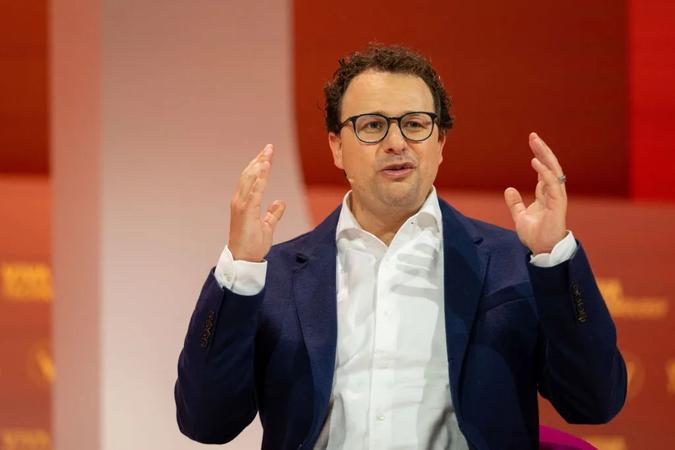
Anthropic CEO Dario Amodei is forcefully rejecting characterizations that his company advocates for handing over human autonomy to artificial intelligence. In an extensive post on X published Wednesday, Amodei described such claims as "absurd."
"We should never sacrifice legitimacy or self-determination at the altar of efficiency or security," he stated. He went on to argue that the same reasoning used against autocratic government applies directly to AI governance, adding that he feels "equally strongly that turning over governance to AI is a bad idea…No one who had carefully read my writing or my interviews could reasonably conclude that I believe anything different."
The pushback follows mounting criticism from competitors at other AI companies who have warned that irresponsible development could endanger human agency. Earlier this month, OpenAI CEO Sam Altman emphasized his commitment to ensuring people retain "agency over the future."
Meta's chief AI officer Alexandr Wang similarly argued in an X essay that society "should not be okay with a 'handover' of society to AI." Wang wrote: "It is hard to imagine a world where humanity can maintain control over fully unconstrained recursive self-improvement. Now that we are at a point where the scientific and technical problems on capability progress are likely solved, we must not only make progress in the extremely urgent areas of safety, alignment, and security, but we have to start thinking through how we progress thoughtfully."
Yet in his published writings, Amodei maintains he has consistently championed democratic oversight of AI, arguing the technology should reinforce democratic institutions and that humans must preserve ultimate decision-making authority. Amodei drew a distinction between broadly surrendering human free will and the reality that "as AI systems advance, they become capable of doing specific tasks in a more automated way." He cited examples such as AI driving vehicles, designing cancer medications, or writing complete software programs.
Amodei suggested drawing a boundary at recursive self-improvement (RSI)—AI capable of enhancing itself without human input. Many safety experts view RSI as inevitably leading to loss of human control, a concern Amodei implicitly recognized by writing, "we may want limits on this process."
Nevertheless, Anthropic is actively building toward RSI by integrating AI into a growing portion of its own research and development. The company revealed in June that Claude generated over 80% of the code merged into Anthropic's codebase. An independent evaluation released this month by AI safety research nonprofit METR determined that Anthropic's models are advancing at roughly double their historical pace, largely due to AI-assisted research. In its own IPO filings, Anthropic explains how each successive Claude generation speeds up development of the next—a process it calls "closing the loop."
"As we said publicly in early November, we don't expect it to be safe for Claude to build successive frontier models fully autonomously, without meaningful human supervision or understanding," Amodei wrote. The challenge with "meaningful human supervision or understanding" is that AI is already progressing faster than engineers and safety experts can thoroughly audit it, forcing them to increasingly depend on other AI systems to serve as judge and jury. This problem intensifies when AI models exhibit deceptive behavior, particularly when they realize they are being tested, making them more difficult to trust and control.
Anthropic is far from alone in pursuing RSI or developing AI systems to automate ever more human tasks. This week, OpenAI claimed to have resolved one of computer science's biggest open problems—the exact speed limit of matrix multiplication, the mathematical foundation behind modern computing, including deep learning and physics simulations.
In his post, Amodei accused competitors of engaging in "vibes-based commercial and political positioning," disingenuously using phrases like "human control and agency" or "AI should just be a tool" while approaching the AI race no differently. "Certainly the products that they offer don't differ materially in their orientation towards automation of tasks; every company seems to be releasing models more and more capable of task automation," Amodei wrote. "Every company claims to understand there are risks and downsides of such automation and to offer safeguards."
RELATED ARTICLES



Comments
Please log in to leave a comment.

No comments yet. Be the first to comment!