Anthropic Launches Claude Fable 5: The Mythos Model Outperforms All Competitors by a Wide Margin
By admin | Jun 09, 2026 | 2 min read
Anthropic has unveiled Claude Fable 5, marking the first public release of its highly anticipated Mythos model. So what can Fable actually do? Quite a lot, as it turns out. Ethan Mollick, a prominent AI researcher and associate professor at Wharton, has been testing the model and appears to be thoroughly enjoying himself. In his experiments, Fable consistently "outperformed basically every other public model I have used by a considerable margin," Mollick wrote Tuesday on his Substack. He added that it was "capable across many problems and produced some startling results - it would work up to a dozen hours executing on multi-page specifications."
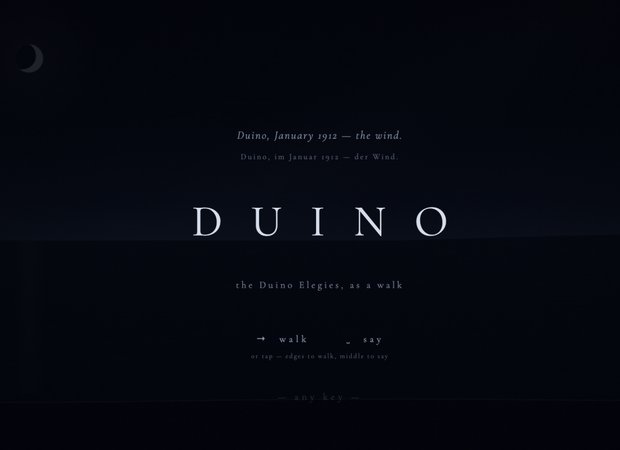
Perhaps most impressively, Mollick used Fable to build several video games—all created from "one initial prompt" in Claude Code, according to the researcher. Among these, Snake is exactly what you'd expect: you control a Pac-Man-like serpent that roams around eating apples. The snake never stops moving, and if you run off the screen, you die. It feels like a classic 1980s arcade game, but like many old-school titles, it's strangely addictive. I played it longer than I care to admit before remembering I'm a gainfully employed writer, not a fruit-loving reptile. Then there's Strata, where you explore what seems like an endless network of underground tunnels, with the simple goal of lighting as many lanterns as possible. The graphics resemble a degraded version of Myst—they're not great—but the mere existence of this game, generated from a single prompt, is remarkable. Mollick even created Duino, a game inspired by the Duino Elegies, the celebrated poetry cycle by German poet Rainer Maria Rilke. I find the animation here most appealing—the player is a lone figure in a nocturnal landscape—though the gameplay is limited to walking around while Rilke's verses appear on screen.
Beyond the variety of instant games, Mollick also used Fable to produce an isochronic map—a visualization showing travel time between any two locations. The accuracy and detail are striking. The implications are clear: software projects that once required entire teams—games, mapping tools, highly complex specifications—can now be spun up from a single prompt. This is reason for vibe coders everywhere to celebrate. For founders and operators tracking AI capability curves, it's a useful data point on just how quickly the floor is rising.
RELATED ARTICLES



Comments
Please log in to leave a comment.

No comments yet. Be the first to comment!