Apple Mac revenue beats Wall Street forecasts, boosted by rising AI workload demand
By admin | Apr 30, 2026 | 2 min read
Apple’s latest quarterly results highlighted strong performances from iPhone sales and Services revenue, but the Mac also quietly outperformed expectations, fueled by increasing demand for AI-related workloads. Wall Street analysts had predicted Mac revenue would land in the low $8 billion range, but Apple reported $8.4 billion for the quarter ending March 28—a notable beat for a segment that isn’t the company’s core focus. Investors had also assumed Mac sales would be essentially flat year-over-year, but Apple revealed they actually grew 6% annually. Overall, the company’s total revenue reached $111.2 billion, a 17% increase compared to the same period last year.
Apple attributed part of the Mac’s growth to recent product launches, particularly the well-received MacBook Neo. However, these colorful new computers were only available for a few weeks after preorders began on March 4. In reality, most units shipped in mid-to-late March, and some demand likely shifted into April as certain models sold out. Apple CEO Tim Cook told analysts on the company’s Q2 earnings call on Thursday that customer demand for the Neo was “off the charts” and higher than anticipated. He also noted that Apple set a record for new Mac customers during the quarter, partly thanks to the Neo.
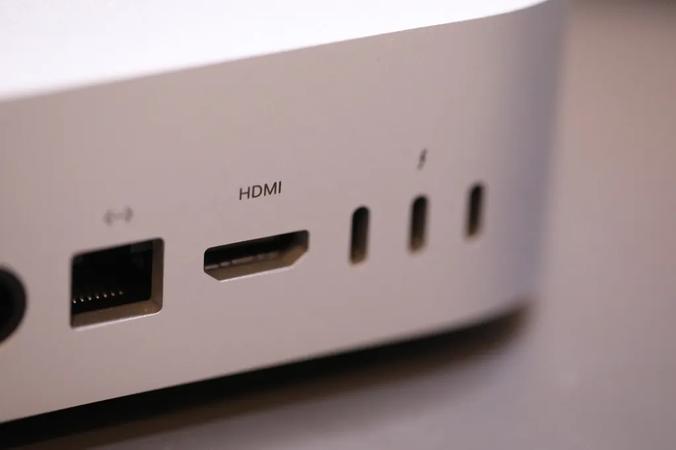
Cook credited the Mac’s sales growth to its use for running local AI models, such as OpenClaw—a trend that caught Apple somewhat off guard. Mac mini and Mac Studio devices sold out in recent weeks, and Cook explained, “Both of these are amazing platforms for AI and agentic tools, and the customer recognition of that is happening faster than what we had predicted, and so we saw higher than expected demand.” He also mentioned that the Mac mini was the top-selling desktop in China, a market currently experiencing an OpenClaw frenzy. Still, Mac revenue was flat quarter-over-quarter, suggesting this new demand has yet to fully scale. Cook acknowledged it may take “several months” for Apple to achieve supply-demand balance on the Mac mini and Studio models. “We’re not at the point where we’re saying this [constraint] is going to end anytime soon. And it’s not because of a problem, per se, other than we just under-called the demand,” he said.
Enterprise demand also played a role. Apple highlighted several large companies, including Perplexity, that have adopted the Mac as their preferred platform for building enterprise-grade AI assistants. Cook added that Apple was “supply constrained on the MacBook Neo” and noted that school systems, like Kansas City Public Schools, are even switching from Chromebooks to the Neo.
RELATED ARTICLES



Comments
Please log in to leave a comment.

No comments yet. Be the first to comment!