Apple Watch live audio transcription signals new era of always-listening tech
By admin | Sep 09, 2026 | 9 min read
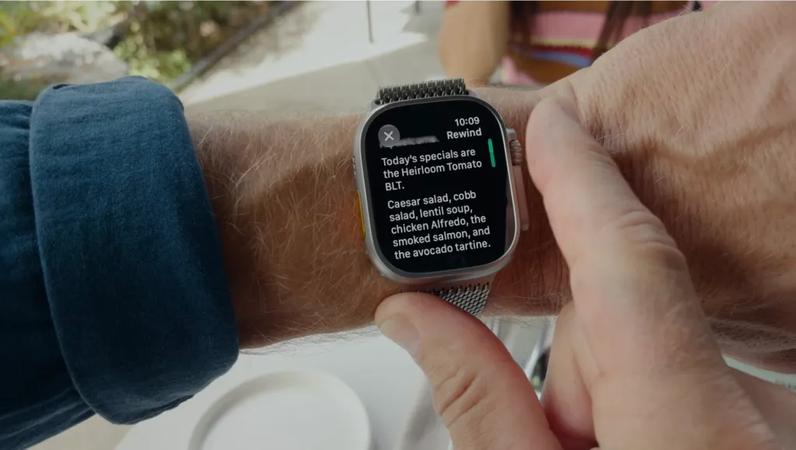
Apple is making a major push to get people comfortable with—and even excited about—the idea that their devices are always listening. At Wednesday’s “Surprise and Shine” iPhone event, where the company unveiled its latest hardware, the real headline wasn’t a foldable iPhone. Instead, it was how the tech giant, long known for championing privacy, has decided its watches will now handle live audio and turn spoken words into text. Does that mean you’re being recorded every time you chat with someone wearing an Apple Watch? Not exactly—though it might still make plenty of people uneasy. It also raises a bigger question: do consumers actually want this kind of feature, or did Apple rush ahead because it worried a rival like OpenAI would soon release its own AI-powered device? These days, a wave of startups is betting that AI transcription is a key reason people will embrace artificial intelligence. So far, that mostly means transcribing meetings, lectures, or interviews. Some companies, such as the AI pendant Friend or Amazon’s Bee, have gone further, offering always-on AI companions that passively jot down notes to help you remember your day. Apple is taking a slightly different path. With its new watch features—dubbed “audio intelligence,” “Live Rewind,” and “Siri Recap”—the company is walking a fine line between helpful accessibility and something that starts to feel uncomfortably invasive.
On its own, Audio Intelligence looks like a genuinely useful tool for people who are deaf or hard of hearing. It can alert watch owners to important sounds like sirens, alarms, doorbells, or a baby crying, all using on-device AI. This works even if the wearer doesn’t have their iPhone nearby, and in some cases it could be life-saving—like when a fire alarm or carbon monoxide detector goes off. It’s hard to imagine anyone objecting to this type of audio AI. 
But Live Rewind and Siri Recap step out of the assistive technology space and into murkier territory. While Apple’s privacy protections might make these features more acceptable to some, there’s still a concern that normalizing listening technology isn’t the smartest move for a company that built its brand on privacy. That’s especially true given the growing public backlash against surveillance tools like Flock cameras, AI data centers, and AI apps in general. Take Live Rewind, for example: by double-pressing the watch’s digital crown, you can jump back 15 seconds and get a transcript of what was just said. That text can then be saved to Apple’s new standalone Siri app, so you can look it up later. 
Apple suggests this could help you remember things like “a book recommendation, a colleague’s brilliant idea, or something you didn’t hear the first time.” But it also means you could essentially capture something someone said without them intending it to be recorded, and then keep a note of it. That raises consent concerns, both ethically and legally. AI device-maker Plaud, for instance, advises customers to get legally required permission before recording. Amazon’s Bee’s terms of service remind users that they’re solely responsible for following laws about minors’ data privacy—not Amazon. Since Apple isn’t saving audio, it’s unclear how courts might treat these text-only transcripts. They could potentially be used as evidence, but without the original audio, verifying or authenticating them could be tough. Plus, rules on evidence likely differ from state to state. Beyond the legal side, the idea that someone could always record from their watch has cultural ripple effects. Research already shows that recording devices, along with social media and data surveillance, have changed how people behave in real life. Knowing you might be recorded at any moment can stifle how openly you interact with others or express yourself. 
That said, snapping a photo or filming a video still requires a fairly obvious action—you have to lift your phone and point it at the scene. Grabbing a snippet of audio to turn into a transcript by just pressing the watch’s digital crown is a far subtler move, even if it does come with an audible chime and a full-screen microphone animation, as Apple notes. Another new watch feature, “Siri Recap,” uses ambient listening to “take high-level notes” of your conversations, which you can then review in the Siri iOS app. These notes automatically get a title, summary, and key points based on what was recorded and summarized by AI—they’re not exact transcripts. Apple suggests this could be handy for capturing meeting takeaways or notes from a parent-teacher conference. The company also tried to reassure users that it approached these listening features with privacy in mind. For example, Siri Recap isn’t always on by default, unlike some other AI wearables. You can choose when it’s active, like only at work or during certain hours, and you can switch it off or on anytime from Control Center. Importantly, Apple says it doesn’t create or store audio recordings, and the raw audio isn’t accessible even to Apple. It also doesn’t identify or attribute speakers, and it protects the generated transcripts and recaps with end-to-end encryption. Whether that’s enough to keep people from feeling creeped out is another story. Either Apple has struck the right balance between usefulness and privacy, or it’s about to face some serious consumer pushback.
RELATED ARTICLES


Comments
Please log in to leave a comment.

Когда важна не только идея, но и место https://maze.tattoo/catalog/n/nadpis/ Пирсинг в салоне татуировок «Классик» Процедуры совершенно безопасны для здоровья, ведь мастера соблюдают все санитарные нормы и придерживаются установленных законом правил https://maze.tattoo/catalog/y/ulitka/ Вы можете прийти в студию чтобы узнать конечную стоимость своей татуировки и познакомиться с мастером https://maze.tattoo/catalog/r/ Подробности у администраторов салона https://maze.tattoo/catalog/f/ Студия художественной татуировки как пространство свободы https://maze.tattoo/catalog/v/van-gog/