Airbnb Launches AI-Powered Search in Major Fall Update, CEO Brian Chesky Reveals Future of Travel Discovery and Voice AI
By admin | Oct 01, 2026 | 6 min read
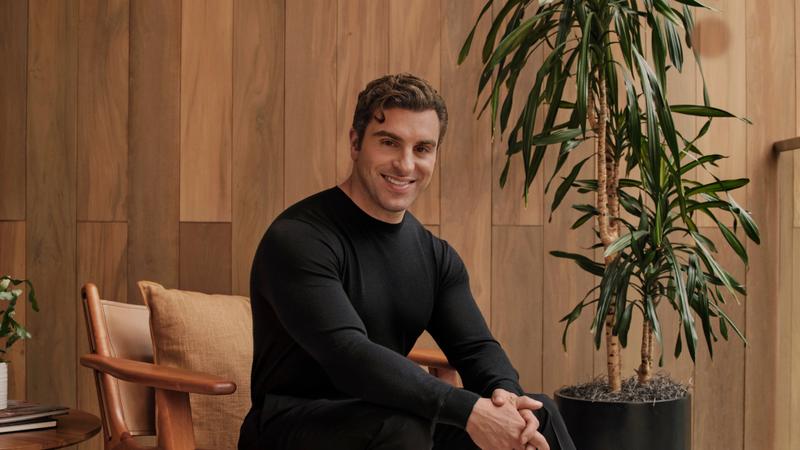
Airbnb unveiled its new AI-driven search feature this week as part of its autumn release, marking a meaningful move for a company that has taken a cautious and measured approach to artificial intelligence. Co-founder and CEO Brian Chesky has previously stated that a chatbot-only interface isn't suitable for travel discovery. With additional AI capabilities coming to the Airbnb app, I connected with Chesky via Zoom to discuss the company's strategy, the future of interfaces, why consumer AI still falls short, and the part voice will play.
Chesky's stance on chatbots remains unchanged. He explained that they aren't ideal for browsing or shopping since they present only a handful of options at a time, requiring multiple exchanges before arriving at a result. However, he doesn't view the current iteration of Airbnb's search as the ultimate version either—its interface will develop over time.
"I think that I've believed for a long time that a chatbot isn't the right interface for e-commerce. I think what you're seeing today is also not the endgame for e-commerce or for travel or shopping. I think that there's going to be some interface that is, you know, I don't want to call it a midpoint, but something between a chatbot and what you see in the first version we shipped," he said.
Chesky continued: "You know, a lot of people want some things people want to be fast and easy, like 'Book me a flight, I don't want to look at it.' With Airbnb, they enjoy looking at the product. Travel studies show that people actually derive more pleasure in planning and anticipating travel than they do traveling. So you don't want to take the inspiration and the browsing and the library experience of dreaming away."
Chesky identifies a second issue with chatbots: they're designed for a single user. He believes they aren't a collaborative interface, which is significant for a product frequently used with family and friends. Over the coming three to six months, the company's focus is to investigate interfaces that support "multiplayer" AI—meaning AI that multiple people, such as a group organizing a trip together, can use simultaneously.
Airbnb isn't alone in reconsidering what an AI interface should be. As AI tools advance, new interfaces are emerging in apps. Startups like Monogram and, more recently, Wabi are testing "generative" interfaces, which are screens an AI creates on the spot rather than ones a designer predetermined. Chesky believes people will encounter a blend of deterministic (pre-designed and predictable) and generative interfaces.
I asked Chesky how Airbnb is getting ready for consumer AI agents—tools like Instinct and Muse that perform tasks on a person's behalf. Agents will require strong software infrastructure on Airbnb's side, he said, and the company aims to become more agent-friendly. In his view, they could serve as effective lead generators.
"I don't necessarily know if I believe in a world that there's apps in the future, but I don't believe in a world where the apps become data layers of a universal simple UI because when you open your iPhone, there is a reason Airbnb's app is a different design than DoorDash, Shopify, and Amazon. Our interfaces should be adaptive to the utility and the function that we're doing. We want to make our app more agentic, and we want to build a lot more user interface controls," he said. "If I have an agent, but I also want like really great browse functionality, if I want to be able to message the host like an Airbnb, if I want to be able to compare, if I want to be able to verify my identity, if I want to be able to use a map feature, if I want to then be able to add other items, then if I want to stay in the platform, then either the agent has to do a handoff or the agent application would need to build a bit more of, I think, a robust software developer kit to bring the app to you, so to speak."
Chesky acknowledges there were worries about AI tools cutting companies like Airbnb out of the customer relationship, but he noted that chatbots have demonstrated strength in lead generation. The Airbnb CEO is also preparing for agent-to-agent interactions through the platform. He explained there might be some interactions within the platform and some with agents from other apps. His theory is that apps haven't always been interoperable unless companies made a business agreement. Conversely, agents are like "apps with faces," and when they communicate with each other, all apps can become interoperable.
"I think of the Airbnb app as one day becoming an agent, you know, where basically the explore tab has an agent, our customer service has an agent, we're developing another agent in another service area. Probably eventually there's going to be a macro Airbnb agent. And that will probably be interoperable with MCP [a standard that lets AI agents connect with other software] to other agents," Chesky noted.
Chesky contends the larger issue is that the industry lacks a genuine operating system built for AI. Currently people are creating AI apps for iOS, macOS, and Windows that aren't "AI operating systems." He believes that in an ideal scenario, AI would function at the kernel level—the core of an operating system—and all components like agents would interact with one another. At present, he said, the competition is to become the "quarterback," or primary AI agent that users turn to for everything.
"The problem with that model [of trying to become primary agent] is no one is developing a full operating system software developer kit. I'll give you an example," he continued. "ChatGPT, at the beginning of last year, tried to do their little app store. And I told Sam [Altman]: if you want to be an app store like the iPhone, you need to have a software developer kit and an operating system like the App Store. Otherwise, none of our functionality is going to exist. And of course, it didn't work very well," Chesky said.
"I've used Airbnb on Muse and Instinct," he went on. "And it doesn't work very well. I mean, even hotels don't work that well, but Airbnbs work even worse. So I don't think we've cracked consumer AI. And for consumer AI to be cracked, we have to crack at a lower substrate, and we need to make the agents- apps; all apps need to become agents; all must be interoperable; and all must have much richer user interfaces."
Chesky believes there are two misunderstandings in Silicon Valley: first, that the interface is disappearing and people will simply talk and type; second, that software will be entirely generative. His argument is that a designer can prompt better software than a consumer can. He also thinks that as long as the iPhone stays dominant and Apple and Google control the major platforms, apps will likely remain a central fixture.
"It's really up to Apple or Google, or somebody, to build a new platform for us to really make the true shift from apps to agents. Otherwise, we're going to have apps that have agents inside them, rather than the whole app being a robust agent that's interoperable with other agents," he said.
Before we concluded, I asked Chesky about voice, which is gaining traction as apps like Wispr Flow, Willow, and Superwhisper, a new wave of note-taking apps, and built-in dictation in AI tools get people talking to their devices more. He believes people will eventually speak to computers more than they type. Voice, he said, will play a key role for Airbnb in search and customer service, and the company intends to launch voice agents this fall to assist users. The company has been experiencing significant gains from using AI to ship features faster, he volunteered.
On a personal level, Chesky said AI has helped him obtain information faster, freeing him from numerous meetings. "I think AI is reducing communication layers. One of my jobs as CEO is try to get information. And the way I used to get information was having meetings. Now, I can just ask my AI and I don't need to have as many," he said.
RELATED ARTICLES

Comments
Please log in to leave a comment.

No comments yet. Be the first to comment!