First Magnet Installed in Sparc Fusion Reactor, Paving Way for 2027 Startup
By admin | Jan 06, 2026 | 6 min read
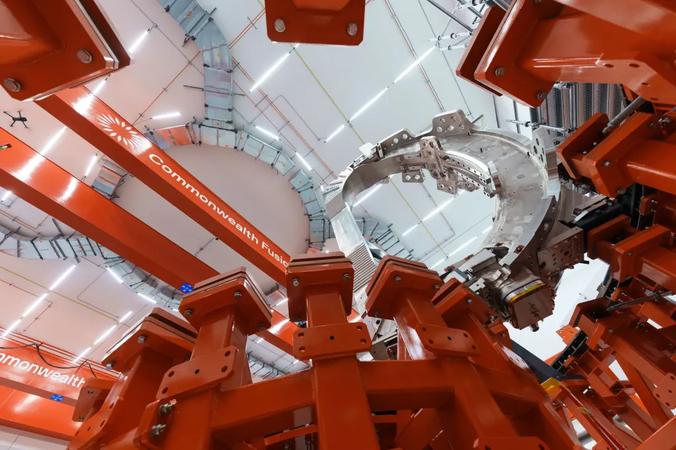
At CES 2026 on Tuesday, Commonwealth Fusion Systems (CFS) announced the installation of the first magnet for its Sparc fusion reactor, a demonstration device slated for activation next year. This magnet is the initial component of a set of 18 that will ultimately form a doughnut-shaped structure, generating a powerful magnetic field to contain and compress superheated plasma. The goal is for this plasma to release more energy than is required to heat and confine it. After many years of anticipation and setbacks, fusion power now seems within reach, with CFS and other companies competing to deliver the first electricity to the grid in the early 2030s. Success could mean access to nearly limitless clean energy from facilities similar in form to conventional power plants.
CFS co-founder and CEO Bob Mumgaard reported that key parts of Sparc’s magnets are finished, and the company plans to install all 18 by the end of this summer. “It’ll go bang, bang, bang throughout the first half of this year as we put together this revolutionary technology,” he said.

Once installed, the D-shaped magnets will stand vertically on a 75-ton, 24-foot-wide stainless steel ring called a cryostat, which was positioned last March. Each magnet weighs about 24 tons and can produce a magnetic field of 20 tesla—roughly 13 times stronger than a standard MRI machine. “It’s the type of magnet that you could use to, like, lift an aircraft carrier,” Mumgaard noted. To achieve that intensity, the magnets will be cooled to -253˚C (-423˚F), allowing them to safely carry over 30,000 amps of current. Inside the doughnut-shaped chamber, plasma will burn at temperatures exceeding 100 million degrees Celsius.
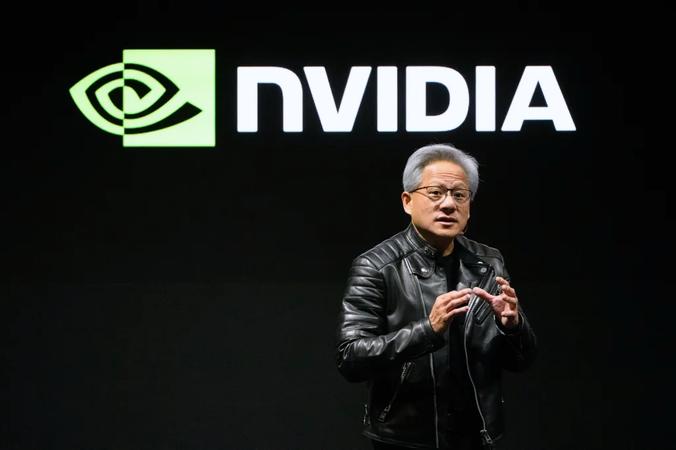
In preparation for Sparc’s startup, CFS revealed on Tuesday that it is collaborating with Nvidia and Siemens to create a digital twin of the reactor. Siemens is providing design and manufacturing software to help gather data for Nvidia’s Omniverse libraries. While CFS has already run many simulations to predict how different reactor components will perform, Mumgaard explained that those existing models operate in isolation. With the digital twin, he said, “these are no longer isolated simulations that are just used for design. They’ll be alongside the physical thing the whole way through, and we’ll be constantly comparing them to each other.”

The aim is for CFS to test experiments and adjust parameters in the digital twin before implementing them on the actual Sparc reactor. “It will run alongside so we can learn from the machine even faster,” Mumgaard added. Developing Sparc has required significant investment, with CFS raising close to $3 billion so far. This includes an $863 million Series B2 round last August backed by Nvidia, Google, and about three dozen other investors. The company’s first commercial-scale plant, named Arc, will be groundbreaking and is projected to cost several billion dollars more.
Mumgaard expressed hope that digital twin and AI technology will accelerate the timeline for delivering fusion power to the grid. “As the machine learning tools get better, as the representations get more precise, we can see it go even faster, which is good because we have an urgency for fusion to get to the grid,” he stated.
RELATED ARTICLES


Comments
Please log in to leave a comment.

No comments yet. Be the first to comment!