Elon Musk Reframes Tesla as an AI and Robotics Company Despite Record Car Sales
By admin | Aug 04, 2026 | 3 min read
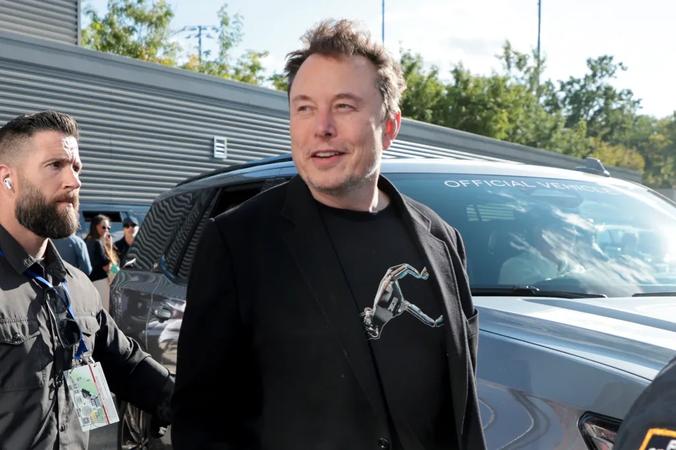
Elon Musk would like you to believe that Tesla isn't really a car company anymore—even if it still looks like one on the surface. The company delivered close to half a million vehicles in the last quarter, with roughly 70% of its revenue coming from car sales. Yet for years now, Musk has been pushing the narrative that Tesla is fundamentally an AI and robotics enterprise, even if some of that AI happens to be embedded in vehicles. And regardless of what the financial statements show, Musk's focus has clearly shifted toward the company's AI-driven initiatives—like the Optimus humanoid robot and fully autonomous robotaxis—while the day-to-day concerns of running an automaker have taken a backseat. The analysis draws on transcripts of Tesla's earnings calls from S&P Market Intelligence, stretching back to 2019, with each sentence categorized by topic using Co-Analyst, an AI tool designed for high-precision financial research, before tallying up the frequency of each subject.
The data reveals that Musk now devotes nearly half of his speaking time on these calls to artificial intelligence, robotaxis, and Full Self-Driving software. That's a significant jump from earlier years—in 2022, for instance, those topics typically accounted for just 15% to 20% of his remarks. Over that same stretch, Musk frequently argued that autonomy alone justified Tesla's soaring valuation. "If you value Tesla as just an auto company—fundamentally, it's the wrong framework," he said during the Q1 2024 earnings call. "If somebody doesn't believe Tesla is going to solve autonomy, I think they should not be an investor in the company."
Talk of robotics has also surged dramatically over the last three years. Tesla first revealed its work on the Optimus humanoid robot in 2021. In the year following that announcement, Musk spent only about 2% or less of his time discussing the project. But over the past year, Optimus has accounted for at least 10% of his comments, and on the Q3 2025 call, it consumed nearly a third of his focus. Musk ramped up his discussion of these futuristic ambitions just as Tesla's core automotive business began to stall. As a result, he now spends less than a third of his time on earnings calls talking about cars and manufacturing—and on that same Q3 call last year, that figure dropped below 20%.
Other Tesla executives who join the earnings calls, such as chief financial officer Vaibhav Taneja and vice president of engineering Lars Moravy, have been far slower to shift their attention. Even on recent calls, they've devoted around 30% of their time to the automotive business, with AI, robotaxi, and Full Self-Driving as their next most frequent topics. Their focus has evolved, but they remain well behind Musk when it comes to enthusiasm for AI and robotics—likely because those ventures aren't yet generating meaningful returns. These executives used to spend nearly half of their call time (or more) discussing the production and sale of vehicles. That shifted in 2024, as the car business faced mounting pressure from both legacy automakers and new Chinese competitors. Still, when they do join Musk in championing the future, they match his lofty tone. "The path to amazing abundance is ever challenging and requires making bold bets," Taneja said on the Q2 call this year. "Our progress will be non-linear. The future is going to be great."
RELATED ARTICLES

Comments
Please log in to leave a comment.
No comments yet. Be the first to comment!