SpaceX Acquires xAI to Build Space-Based Data Centers for AI
By admin | Feb 02, 2026 | 3 min read
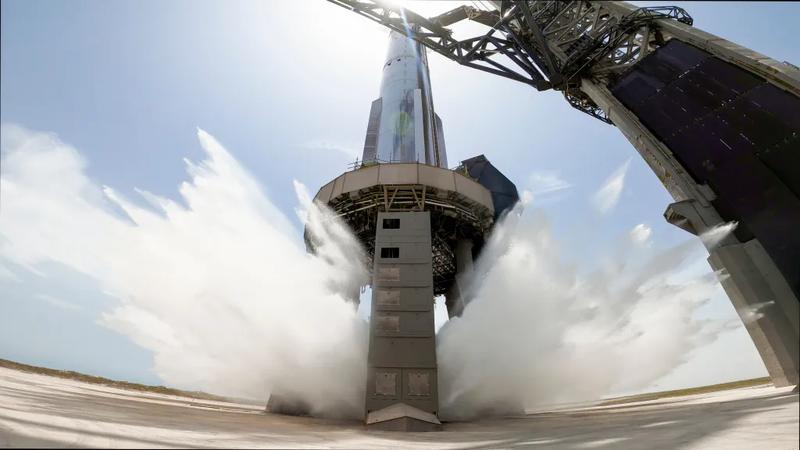
SpaceX has finalized the acquisition of Elon Musk's artificial intelligence venture, xAI, forming what is now the world's most valuable privately-held corporation, as confirmed in a company announcement on Monday. In a memo published on the aerospace firm's official site, Musk, who also serves as SpaceX's CEO, explained that the primary motivation behind the merger is to develop data centers in space—a concept that has captivated his focus in recent months. He stated, "Current advances in AI are dependent on large terrestrial data centers, which require immense amounts of power and cooling. Global electricity demand for AI simply cannot be met with terrestrial solutions, even in the near term, without imposing hardship on communities and the environment." (It is worth noting that xAI has faced criticism for allegedly contributing to such hardships in communities surrounding its data centers located in Memphis, Tennessee.)
According to an initial report by Bloomberg News, this consolidation places a combined valuation of $1.25 trillion on the new entity. SpaceX has been rumored to be preparing for an initial public offering potentially as soon as June of this year, though it remains uncertain how this merger might influence that schedule. Musk's public communication did not mention the IPO plans. The union merges two of Musk's enterprises, both navigating distinct financial pressures. Reports from Bloomberg indicate that xAI is currently operating at a monthly expenditure of approximately $1 billion. Meanwhile, Reuters data suggests that up to 80% of SpaceX's revenue stems from launching its own Starlink satellites.
Last year, xAI completed an acquisition of X, the social media platform also under Musk's ownership, with Musk asserting a combined valuation of $113 billion for that transaction. In his recent memo, Musk elaborated that establishing these orbital data centers will necessitate a continuous deployment of numerous satellites—though he did not specify an exact number—which is expected to secure a substantial and steady revenue stream for SpaceX moving forward. (This recurring revenue model appears particularly compelling when considering that Federal Communications Commission regulations mandate satellites be de-orbited every five years.)
While the long-term vision centers on space-based data infrastructure, SpaceX and xAI currently have divergent immediate priorities. SpaceX is actively working to demonstrate that its Starship rocket can safely transport astronauts to the moon and eventually to Mars. Concurrently, xAI is engaged in direct competition with industry leaders in artificial intelligence, such as Google and OpenAI. The intensity of this competition is significant; a Monday report from the Washington Post revealed that Musk eased certain restrictions on xAI's chatbot, Grok, a move that inadvertently enabled its use in generating non-consensual sexual imagery of adults and children.
Beyond these ventures, Musk also leads Tesla, The Boring Company, and Neuralink. In a previous financial commitment, both Tesla and SpaceX had invested $2 billion each into xAI.
RELATED ARTICLES


Comments
Please log in to leave a comment.

No comments yet. Be the first to comment!