Enigma emerges from stealth with a radically different approach to building general-purpose AI robotics foundation models
By admin | Jul 27, 2026 | 3 min read

Multiple companies in robotics are trying to solve one of AI's biggest challenges: developing foundational models that can perform tasks they were never explicitly trained for. Their strategies vary widely—some analyze millions of online videos, run computer simulations, or gather motion data from humans wearing sensor-equipped gloves while completing tasks. Enigma, a research lab that will publicly launch on Monday, is pursuing a radically different path. Instead of focusing solely on model capabilities, this startup, which is less than a year old, aims to study how humans interact with robots, hoping these interactions will lead to more intuitive interfaces and potentially a new kind of robotic intelligence. To fund this mission, Enigma raised a $70 million seed round led by Index Ventures and Ribbit Capital, with participation from Sarah Guo of Conviction Partners.
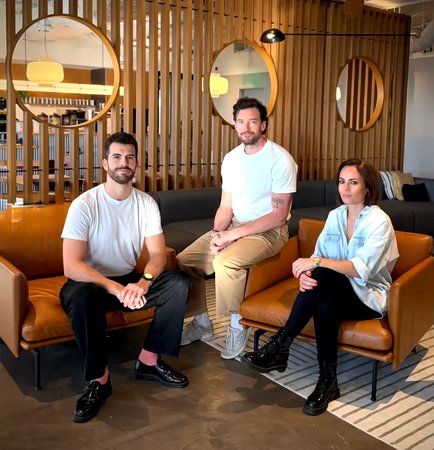
To explore how people naturally want to communicate with machines, Enigma is launching a large-scale experiment. Anyone worldwide can interact online with over 100 of its proprietary AI robots. These robots, housed in hangars in Israel and California, can perform actions like painting with a brush, engaging in sword fights, or conducting simple chemistry experiments by picking up and mixing flasks of liquids. Enigma says it has built both the robotic arms and their underlying models entirely from scratch. Jonathan Jacobi (pictured right), Microsoft's youngest-ever employee—recruited by Wiz founder Asaf Rappaport during his tenure there—co-founded Enigma with his longtime friend Gal Niv (pictured left). The two met as teens competing in hacking competitions and later became close friends while serving together in Israel's elite Unit 8200, where they focused on cybersecurity research.
When Jacobi and Niv decided to start a company last year, they chose to apply their technical skills to AI for robotics—a field where they had no direct experience but believed held the most exciting unsolved problems in technology. They assembled a team of what Jacobi describes as some of their "smartest friends" from Israel's tech ecosystem, including alumni from top AI labs, math Olympiad winners, and several people who left PhD programs to join. "There are a lot of robotics industry insiders participating in the next wave of embodied intelligence, but Jonathan and Gal are outsiders—they're not roboticists. It gives them more room for originality," said Shardul Shah, a partner at Index Ventures. "Someone who's an insider might start with teleoperation or dexterity, but Enigma begins from a very different place: 'What's the ultimate experience?' If you had to do your dishes and spent 15 minutes explaining to a robot where to put everything, everyone reaches the point of 'Forget it, I'll just do it myself,'" Jacobi said. "Right now, everyone is at that point—even with the most capable models."
Jacobi believes that manipulating robots should eventually be as intuitive as adjusting a car's volume knob. Users would be frustrated, he argues, if instead of turning a dial, they had to adjust volume by set percentages without knowing if the result would be too loud or too quiet. Enigma hopes that data from its online experiment will reveal an interface that becomes the robotics equivalent of that volume knob. The startup's public test will evaluate different ways for people to communicate with its robots. "We're going to learn a lot about what is the right way to interact with robots," Jacobi said. "Do we want to just talk to them over text or audio? Do we want to show them an example as a video? Or maybe do we want to tap, drag, and drop?"
Jacobi admits that Enigma's experiment is very open-ended. The hope is that by gathering real-world data on human-robot interaction, the startup will discover not only superior interfaces but also better ways to train its foundational AI model. The company might eventually figure out how humans prefer to communicate with robots. But for now, its business use case remains an enigma in its own right. While Jacobi declined to share specific use cases for Enigma's AI, he said the startup is already partnering with companies in healthcare, logistics, and entertainment.
RELATED ARTICLES


Comments
Please log in to leave a comment.
No comments yet. Be the first to comment!