On Thursday, AI video generation company Luma introduced Luma Agents, a new system engineered to manage complete creative projects from start to finish, spanning text, images, video, and audio. These agents are driven by the company's Unified Intelligence model family, which is built on an architecture trained as a single, multimodal reasoning system. The platform is being presented as a transformative tool for advertising agencies, marketing departments, design studios, and large enterprises.
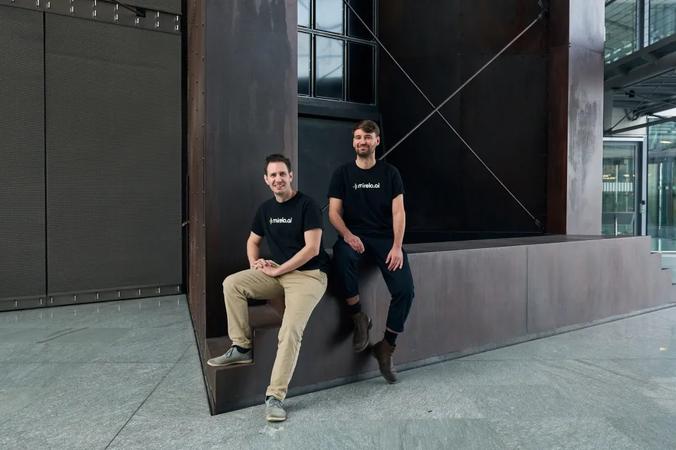
Luma states that its agents can plan and produce content across all these formats while seamlessly coordinating with other leading AI models. This includes Luma's own Ray 3.14, Google's Veo 3 and Nano Banana Pro, ByteDance's Seedream, and voice models from ElevenLabs. The foundation for these agents is Luma's Uni-1 model, the inaugural member of the Unified Intelligence family. According to Amit Jain, Luma's CEO and co-founder, Uni-1 has been trained on audio, video, images, language, and spatial reasoning. He noted that additional output capabilities for audio and video will be introduced in future model updates. "Our customers aren’t buying the tool, they’re redoing how business is done," Jain remarked. Image Credits:Luma AI
The company has already begun deploying this new agentic platform with several existing clients. These include major global ad agencies like Publicis Groupe and Serviceplan, as well as brands such as Adidas, Mazda, and the Saudi AI firm Humain. Jain emphasized that Luma Agents represent a significant advancement because they can maintain consistent context across various assets, team members, and creative revisions. The agents also possess the ability to evaluate and refine their own outputs, improving results through an iterative process of self-critique. Jain compared this capability to what has made coding agents so effective, stating, "You need that ability to evaluate your work, fix it, and do that loop until the solution is good and accurate."
Jain criticized the current typical workflow for AI in creative settings, arguing it doesn't deliver the accelerated benefits the industry anticipates. He described it as essentially being handed "100 models" and told to "learn how to prompt them." In contrast, Luma Agents eliminate the need for constant back-and-forth prompting for each iteration. Instead, the system generates extensive sets of variations, allowing users to guide the creative direction through conversational input. "With Unified Intelligence, because these models understand in addition to being able to generate, we are able to build a system that is able to do this sort of end-to-end work," Jain explained.
He illustrated the concept by comparing it to a human architect designing a building. As the architect draws, they form a rich mental model encompassing the structure, lighting, spatial dynamics, and human experience. Jain asserts that Unified Intelligence operates on this same foundational principle of deep, integrated understanding.
The system promises to dramatically accelerate creative processes. In one demonstration, Jain showed how a 200-word brief and a product image (a lipstick) led the agent to generate numerous ideas for ad campaign locations, models, and color schemes. In a more substantial real-world example, Luma Agents converted a brand's $15 million, year-long global campaign into multiple localized advertisements for different countries. This entire process was completed in just 40 hours for under $20,000, with all outputs passing the brand's internal quality and accuracy reviews.
While Luma Agents are now accessible via a public API, Jain indicated that the company plans to roll out access in a gradual, controlled manner. This phased approach is intended to ensure reliable service for all users and prevent disruptions to their workflows.





No comments yet. Be the first to comment!