Figma Launches Code Layers, Motion & Shaders, and AI-Powered Custom Plugin Creation
By admin | Jun 24, 2026 | 4 min read
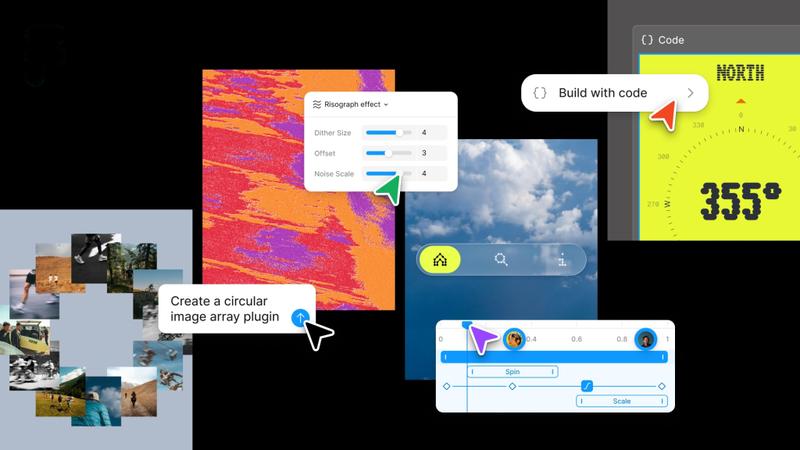
Figma rolled out a major update on Wednesday, introducing a dedicated code layer, support for motion and shaders, and the ability to create custom AI-powered plugins for a variety of tasks. The design platform has been working toward deeper code integration for some time. Last year, the company launched Figma Make, an AI-driven prototyping tool based on text prompts, and has since added integrations with Claude Code and Codex to smooth the transition between coding and design. Now, Figma is embedding code layers directly into its collaborative canvas, enabling teams to clone repositories and extract flows from code into design layers for testing.

According to Figma’s chief product officer, Yuhki Yamashita, these code layers make it easier for designers, product managers, and engineers to experiment with ideas rather than focusing on producing polished, production-ready code. “We think the multiplayer canvas is really powerful because this is an environment where you don’t really care about the quality of the code. If you’re rapidly exploring or need to explore a bunch of new directions, you can do that in this spatial way. We hope that this feature produces different behaviour not just with designers, but also with engineers and PMs,” he explained during a call. The update also brings native support for animations, transitions, and 3D transforms. Previously, designers had to create animations in other software and convert them into code that Figma could understand. Now, they can integrate these elements directly within the platform.

Users can also leverage AI to generate some of these assets, and the update adds the ability to apply shader effects and fills using AI. Figma acquired node-based tool Weavy last year, which allowed designers to run workflows across different models and compare outputs, and the company is now working to better integrate the two tools. Later this year, an update will let users generate Weavy workflows directly inside Figma. Additionally, Figma is expanding its AI assistant’s capabilities on the collaborative canvas. Users can now write text prompts to create repeatable skills that AI agents can execute. They can also connect external tools like Notion, Granola, Excel, and GitHub, or attach files to give the AI more context about their requests. The company is also introducing a feature that helps users build custom plugins—such as layout generators or vector path tracers—using simple prompts.
RELATED ARTICLES

Comments
Please log in to leave a comment.

No comments yet. Be the first to comment!