Everful Launches with $48.5M Series A to Connect Retailers with Chinese Factories, Eyes $100M Revenue
By admin | Nov 19, 2026 | 3 min read
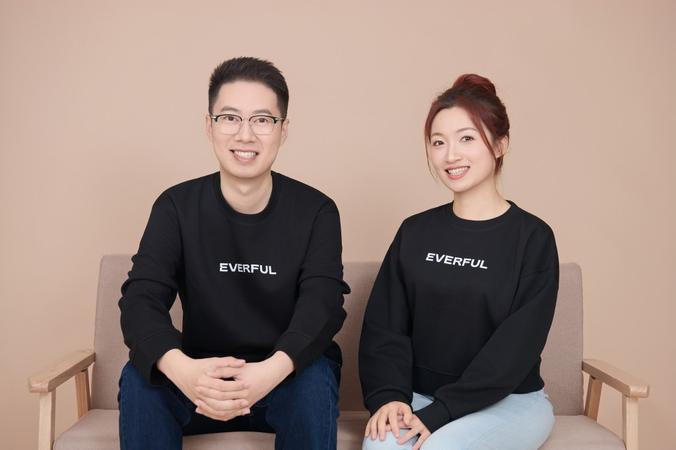
Everful, a startup with offices in San Francisco and Singapore, has secured $48.5 million in Series A funding. The company connects smaller retailers and brands with Chinese factories, handling the entire process from order placement through delivery. Vertex Ventures Southeast Asia & India and January Capital led the round, with existing investors Square Peg and Lightspeed also participating.
According to co-founder Sisi Song, Everful is on track to hit $100 million in annualized revenue by year's end—roughly two and a half years after launching. The company ships more than 5 million items monthly to customers across over 60 countries and collaborates with more than 30,000 factory partners. Its online wholesale catalog features upwards of 20 million products.
Song, a former Alibaba executive, co-founded Everful in 2024 with Kevin Han, a serial entrepreneur who previously sold a company to Amazon. What started as a jewelry wholesale operation has grown into a multi-category, factory-direct sourcing platform.
Retailers and brands frequently depend on intermediaries, confront steep minimum order requirements, and endure lengthy sourcing cycles—all of which lock up capital in inventory before sales trends become clear. While working as a venture investor at Bessemer Venture Partners, Song observed the widening gap between rapidly shifting consumer trends and traditional wholesale sourcing models. Her focus there centered largely on cross-border sourcing, where she encountered numerous startups in the space. That same gap inspired Everful's mission to streamline buying directly from factories via an AI-enabled platform.
The B2B sourcing sector is intensely competitive. Alibaba, the tech giant, links international buyers with manufacturers and suppliers, while Faire, a San Francisco-based wholesale tech platform, lets retailers buy wholesale inventory directly from brands. Everful's co-founders say their key differentiator is taking responsibility for the sourcing process rather than merely facilitating transactions.
"We take care of everything," Han said. "We handle sourcing, order consolidation, quality control, and logistics. That's something the marketplaces don't offer."
Everful is designed for smaller retailers and brands lacking dedicated sourcing teams, Song noted, and it also verifies the factories it partners with. While competitors offer services like quality inspection, logistics, and AI-powered sourcing, Everful seeks to weave these capabilities into a more streamlined purchasing experience—creating an end-to-end process that reduces the burden on retailers. Han added that Everful deploys AI agents to automate labor-intensive sourcing tasks, such as tracking consumer trends, identifying suppliers, coordinating orders across factories, and managing logistics.
Because Everful sources from Chinese factories, ongoing U.S.-China trade tensions and tariffs directly affect its business. Song said the co-founders have considered geopolitical issues since day one of building the company, shaping Everful's strategy from the outset and drawing on her experience at Alibaba and Bessemer Venture Partners. She cited the Trump administration's suspension of the de minimis exemption—which had allowed eligible shipments valued at $800 or less to enter the U.S. duty-free—as one example of a trade policy shift. Song explained that such changes could favor a model combining overseas sourcing with local retail sales.
"We're empowering local retailers and brands," she said. "Long-term cross-border commerce will be cross-border B2B sourcing plus local selling."
Everful intends to use the Series A funding to expand its footprint in the U.S. and Europe—particularly the U.K., France, and Italy—while investing in AI to automate product customization and other sourcing workflows. The company also aims to deepen integrations with e-commerce platforms, building on its Shopify integration as it works toward becoming an end-to-end infrastructure platform for global sourcing.
The startup employs roughly 70 full-time staff globally, including 45 in research and development. It has also assembled an AI operations team to bridge engineering and business functions.
RELATED ARTICLES

Comments
Please log in to leave a comment.

No comments yet. Be the first to comment!