Google DeepMind Acquires Hume AI Talent to Enhance Gemini's Voice Features
By admin | Jan 22, 2026 | 2 min read
Another promising AI startup has seen its key talent absorbed by an established industry player. Under a new licensing arrangement, Google DeepMind is welcoming the CEO and several lead engineers from voice AI company Hume AI. CEO Alan Cowen and approximately seven other engineers will join DeepMind to enhance the voice features of Gemini. The remaining team at Hume AI will continue providing its technology to other AI firms.
Cowen noted that Hume AI plans to release new models in the coming months and is projected to reach $100 million in revenue this year. This talent-focused acquisition represents the latest instance of a major AI company securing top expertise from the market while avoiding regulatory attention by hiring a startup’s team rather than purchasing the entire company. Last year, Google brought on the CEO and key researchers from the viral AI coding startup Windsurf, and OpenAI has acquired several startup teams in recent months, including those from Convogo and Roi. The Federal Trade Commission has recently indicated it will scrutinize such arrangements more closely.
The agreement also highlights voice technology as an emerging frontier in AI. Hume AI’s distinctive strength lies in its model’s capacity to interpret a user’s emotions and mood through vocal cues. In 2024, the startup introduced its Empathetic Voice Interface, a conversational AI designed with emotional intelligence. To date, Hume AI has raised nearly $80 million.
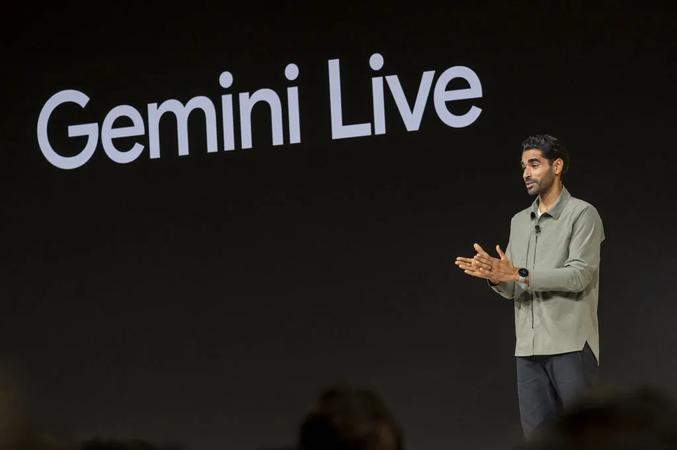
Hume AI is not alone in advancing voice-focused models. Google has been progressively refining its Gemini Live feature, which enables users to engage in conversations with the chatbot. Last month, Google launched a new native audio model for the Live API, improving the system’s ability to manage complex workflows. Other industry players are also investing significantly in voice capabilities. OpenAI is reportedly revamping its audio models ahead of the planned launch this year of an audio-first personal device developed in collaboration with Jonny Ive’s io. Recent leaks suggest the device may take the form of earbuds.
Last year, Meta accelerated its AI audio initiatives by acquiring startup Play AI. The company’s Ray-Ban smart glasses increasingly rely on voice and audio functions for tasks such as clarifying conversations in noisy environments and enabling hands-free control for calls, messaging, music, and photography. This acquisition is expected to further drive demand for voice-enabled applications.
Interest in voice technology continues to grow. Earlier this month, AI voice generation startup ElevenLabs reported surpassing $330 million in annual recurring revenue. This article has been updated to include comment from Hume AI.
RELATED ARTICLES



Comments
Please log in to leave a comment.

No comments yet. Be the first to comment!