Bee AI Assistant Launches With Intuitive Voice Recording and Smart Gesture Controls
By admin | Jan 13, 2026 | 8 min read
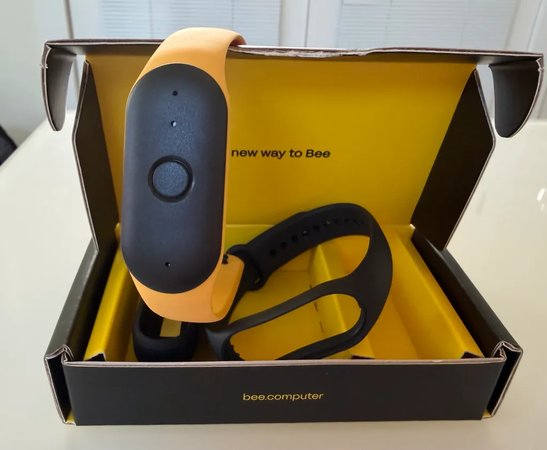
During initial testing with a Bee review unit, the device proved straightforward to operate. Recording is activated or stopped with a simple button press. Within the companion app, users can customize a double-press to bookmark a conversation segment, process the ongoing discussion, or perform both actions. A press-and-hold gesture can also be configured to either leave a voice note or interact with the AI assistant. The app currently prompts users to enable voice notes, a step we followed.
Similar to other AI tools like Plaud, Granola, Fathom, Fireflies, and Otter, Bee is capable of listening to, recording, and transcribing audio conversations. Its distinguishing feature is that it avoids providing just an overview or a raw transcript. Instead, it divides the audio into distinct sections and generates a summary for each part. For example, an interview might be segmented into categories such as the introduction, detailed product information, industry trends, and other discussion topics. Each section is highlighted with a unique background color for easier visual distinction while scrolling. Tapping on any section reveals the precise transcription. 
Labeling speakers in the app was not immediately intuitive. We discovered that tapping on a conversation segment allowed us to confirm if we were the speaker, but this functionality is more limited compared to professional AI transcription services that allow labeling each participant individually. Furthermore, Bee deletes the audio file after transcription, which makes it unsuitable for scenarios where audio playback is necessary to verify accuracy. However, Bee is not necessarily designed as a professional tool. Amazon envisions it as an AI companion that integrates into daily life. By connecting with Google’s services, Bee can link a recorded conversation to a specific task. For instance, after meeting someone at a conference, it might suggest adding them on LinkedIn or researching their product. 
The device also supports leaving voice notes for yourself, offering an alternative to typing reminders in a notes app. Another section of the app allows users to revisit memories from previous days, while a “Grow” section provides personalized insights as the AI learns more about you. Users can also verify and contribute to a “facts” section about themselves, somewhat mirroring the memory features found in other AI chatbots. Amazon has announced plans to release additional features for Bee throughout the coming year. 

By default, Bee does not continuously listen, a design choice that contrasts with wearables like the Friend AI pendant, which faced criticism for always-on recording. The intended use involves asking for permission before recording a conversation, unless in a public setting where recording is generally anticipated. When recording is active, a green light turns on to notify others that the device is in use. The sports band included with Bee felt somewhat insubstantial; it detached twice during wear, even during sedentary activities like riding in a taxi. The clip-on pin accessory appears more robust, though we have not tested it yet. Overall, the mobile app’s design is notably more polished and user-friendly than Amazon’s in-house applications, such as the Alexa mobile experience.
Nevertheless, the core idea that we require a dedicated AI device to record conversations for personal insights remains largely unproven. It is unclear whether such devices hold appeal for consumers outside professional contexts like meetings and interviews. Moreover, if AI listening devices become commonplace, it would likely necessitate a cultural shift regarding acceptable recording etiquette. Currently, recording video of strangers in public, while often legal, is generally frowned upon; similarly, recording audio with an AI device without prior consent may be viewed as inappropriate or intrusive. Not everyone will adhere to these social norms, potentially leading individuals to modify their speech in public spaces.
For example, at CES, while speaking with a representative at the Soundcore booth, they jokingly remarked, “Say that louder into my microphone,” pointing to a discreetly pinned AI device that was already recording, after appreciating a comment about a competitor’s product. This interaction highlighted the strange reality that everyday conversations could eventually become permanently “on the record,” with or without consent. Bee’s market reception—whether strong or subdued—will help Amazon gauge if this is a future consumers truly desire.
RELATED ARTICLES

Comments
Please log in to leave a comment.

No comments yet. Be the first to comment!