OpenAI's 2017 Pivot to For-Profit: Inside the Power Struggle Between Musk and Altman
By admin | May 06, 2026 | 6 min read
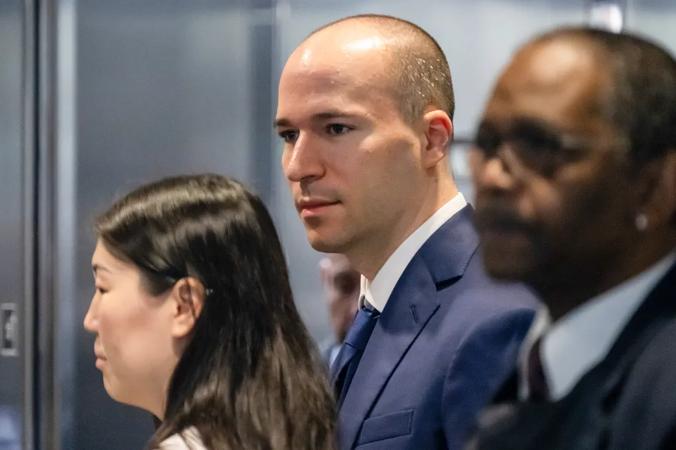
In late August 2017, the key players at OpenAI—then a modest nonprofit research lab—convened to discuss a major pivot: creating a for-profit arm to commercialize their technology and secure the funding needed to pursue artificial general intelligence (AGI). At the time, Elon Musk was pushing for full control of the company and had just gifted each of his cofounders a Tesla Model 3. Greg Brockman, the CTO, viewed this as a strategic move to win their favor while Musk and Sam Altman were locked in a struggle for support over their competing visions for the company's future. Ilya Sutskever, the head of research, had even commissioned a painting of a Tesla to present to Musk during the meeting as a goodwill gesture. But the mood quickly soured. When Musk learned that the others would not concede to his demand for control, Brockman recalled that he became angry and upset. After sitting in silence for several minutes, Musk reportedly said, "I decline." According to Brockman, the SpaceX and Tesla founder then "stood up and stormed around the table…I thought he was going to hit me. He grabbed the painting and started to storm out of the room. And then he turned around and said, 'When will you be departing OpenAI.'"
Brockman and Sutskever did not leave or commit to Musk's vision. In response, Musk halted his regular donations to the company's operating budget and, within six months, resigned from the board—though he continued to pay for the office space OpenAI shared with Neuralink until 2020. As the current legal battle over OpenAI's future unfolds, attention has centered on this critical period in 2017, when the organization's original cofounders clashed over who would steer its destiny, ultimately leading to Musk's lawsuit against his former partners. Sam Altman has yet to testify, but OpenAI president Greg Brockman spent two days on the stand, often referencing a personal journal that offers a rare glimpse into the life of a 30-year-old tech executive locked in a bitter dispute with Elon Musk. "It's very painful," Brockman said of the journal's exposure, describing it as "deeply personal writings that were never meant for the world to see. [But] there's nothing in there I'm ashamed of."
Such cutthroat negotiations between startup founders are rarely aired so publicly, especially when the company goes on to reshape the world like OpenAI. A recent taste of this rancor emerged when OpenAI's lawyers shared a text message Musk sent to Brockman two days before the trial began: "By the end of this week, you and Sam will be the most hated men in America. If you insist, so it will be." The jury won't see that note, but Musk's lawyers have done their best to channel its spirit. They are trying to convince the court that Altman and Brockman "stole a charity," while OpenAI's legal team argues that Musk had the exact same plan in mind. The spark for all of this was when an OpenAI model defeated the top human player in the video game DOTA II. Brockman said that victory convinced everyone in the organization that computing power was the key to building powerful AI tools, but that raising funds purely as a nonprofit would not suffice. This led to discussions about a for-profit subsidiary, with Musk demanding "unequivocal" control—at least initially. The other founders proposed equal shares or possibly more equity tied to a cash investment. Another idea floated was linking OpenAI to Tesla's AI work. Shivon Zillis, an OpenAI advisor who acted as a go-between for Musk and the team, said there were more than 20 variations on the plan. But when the founders refused to give Musk control, their partnership unraveled. "It should not be the case that there exists one person with full and absolute control over OpenAI," Brockman testified.
Brockman and Sutskever even discussed a plan to remove Musk from OpenAI's board to move forward, resulting in a November 2017 journal entry that Musk's lawyers have zeroed in on. "Can't see us turning this into a for-profit without a very nasty fight," Brockman wrote. "[I'm] just thinking about the office and we're in the office. And his story will correctly be that we weren't honest with him in the end about still wanting to do the for profit just without him…. btw another realization from this is that it'd be wrong to steal the non-profit from him. to convert to a b-corp without him. that'd be pretty morally bankrupt. and he's really not an idiot."
That "steal the non-profit" line might seem damning, but according to Brockman, the context was whether to try and oust Musk from the board. Ultimately, they did not. Musk voluntarily left the board in February 2018, concluding that "OpenAI is on a path of certain failure" and saying he planned to focus more on AI at Tesla. Brockman described his journal reflections as an attempt to determine if he could be satisfied with his work life. "This is the only chance we have to get out from Elon," he wrote during the talks. "Is he the 'glorious leader' that I would pick. We truly have a chance to make this happen. Financially what will take me to $1B."
That last reflection was also seized upon by Musk's lawyers as evidence that Brockman was more concerned with personal wealth than the nonprofit's mission. Brockman noted that his current stake in the company is worth nearly $30 billion, which gave Steve Molo, Musk's lead trial attorney, an opening to berate him. "Why you didn't take the $29 billion more than the billion you said you would be good with, and donate that to the charity," Molo demanded. "Look at what we accomplished," Brockman replied. "The OpenAI non-profit has over $150 billion of OpenAI equity value. That is something we have built through hard work, blood, sweat and tears, all this time since Elon has left."
Molo also focused on emails where Brockman said he would donate $100,000 to OpenAI—a pledge he never fulfilled. Ironically, Brockman might be best known to the public for making the largest donation of the 2025 political cycle: $25 million to MAGA Inc., a SuperPAC supporting President Donald Trump, though that didn't come up in the trial. Molo mocked Brockman's description of the charged meeting over Musk's control as Musk being "mean" to Brockman, and suggested that Brockman didn't grasp the governance issues as well as Musk, a serial founder, did. Brockman, however, countered that Musk didn't understand AI. "He did not and does not know AI," he testified, describing Musk's dismissal of an early demonstration of the software that would become ChatGPT. "We did not think he was going to spend the time required to actually get good at it."
"The fact that Elon saw this very early version of the research, that really set all these things in motion, [and] didn't recognize that spark—that was exactly the kind of thing that was critical to avoid happening in this environment," Brockman said. In 2019, OpenAI created a for-profit arm and used it to raise $1 billion from Microsoft. Over the next four years, the company raised an additional $13 billion from the software giant, fueling its rise as the leading AI frontier lab. It also boosted the net worth of the company's executives and employees, as well as the assets held by OpenAI the nonprofit. Ultimately, those deals fueled Musk's suspicions that Altman and Brockman had outmaneuvered him, leading him to file his lawsuit in 2024. The trial is expected to continue through next week.
RELATED ARTICLES
Comments
Please log in to leave a comment.
No comments yet. Be the first to comment!