India Surpasses 100 Million Weekly ChatGPT Users, Becomes Key Global Market for OpenAI
By admin | Feb 15, 2026 | 3 min read
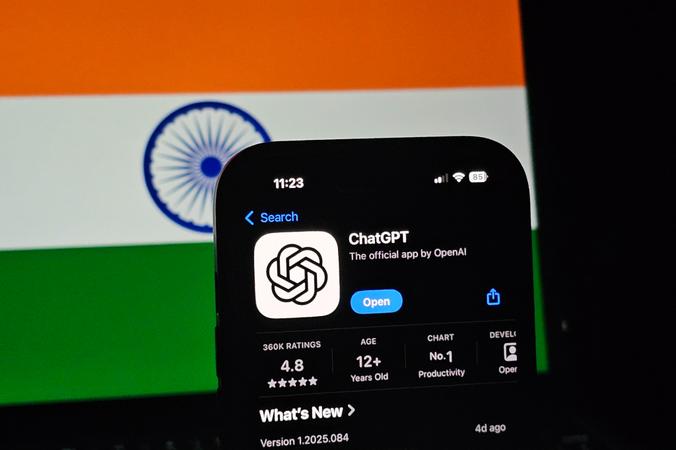
India has reached 100 million weekly active ChatGPT users, establishing the country as one of OpenAI’s biggest markets worldwide, according to CEO Sam Altman. His remarks came just before a major government-led AI summit. In a Sunday article for the Times of India, Altman detailed ChatGPT’s expanding presence in the country as OpenAI prepares to join the five-day India AI Impact Summit, starting Monday in New Delhi. Altman will be at the event with top executives from several leading global AI companies.
This growth aligns with OpenAI’s strategy, shared by other major AI firms, to tap into India’s youthful demographic and its base of over a billion internet users to drive international expansion. After laying groundwork for several months, the maker of ChatGPT established a New Delhi office in August 2025 and has since tailored its offerings for India’s cost-conscious consumers. This included introducing a ChatGPT Go tier priced below $5, which was later offered free for one year to users in India.
In his article, Altman noted that India is now ChatGPT’s second-largest user base after the United States, underscoring the nation’s increasing importance in OpenAI’s global plans. This update follows a broader surge in the platform’s usage, which hit 800 million weekly active users by October 2025 and is reportedly nearing 900 million. Altman also pointed to students as a major driver of adoption, revealing that India has the largest number of student users of ChatGPT globally.
Indian students have become a crucial growth segment for top AI companies overall, as competitors hurry to integrate their tools into educational settings and learning processes. Similarly, Google has focused on this market, providing Indian students with a complimentary one-year subscription to its AI Pro plan in September 2025. Additionally, India represents the highest global usage of Gemini for learning, as stated last month by Chris Phillips, Google’s vice president and general manager for education.
Altman wrote, “With its focus on access, practical AI literacy, and the infrastructure that supports widespread adoption, India is well positioned to broaden who benefits from the technology and to help shape how democratic AI is adopted at scale.” However, ChatGPT’s rapid rise also points to a wider challenge for AI companies in India: turning broad adoption into lasting economic value.
Government efforts like the IndiaAI Mission—a national program designed to boost computing capacity, support startups, and speed up AI use in public services—aim to bridge these gaps. Still, the country’s price-sensitive market and infrastructure limitations have made monetization and large-scale implementation more difficult compared to developed economies.
“Given India’s size, it also risks forfeiting a vital opportunity to advance democratic AI in emerging markets around the world,” Altman cautioned, noting that unequal access and adoption could allow AI’s economic benefits to become concentrated among too few. He also indicated that OpenAI intends to strengthen its collaboration with the Indian government, mentioning that new partnerships would soon be announced to expand AI access nationwide. While details were not provided, he emphasized that the goal is to extend reach and help more people apply AI tools in practical ways.
The India AI Impact Summit is anticipated to attract a diverse range of global technology and political leaders, such as Anthropic CEO Dario Amodei, Google’s Sundar Pichai, and prominent Indian business leaders like Mukesh Ambani and Nandan Nilekani. Expected political attendees include Emmanuel Macron, Sheikh Khaled bin Mohamed bin Zayed Al Nahyan, and Luiz Inácio Lula da Silva, highlighting India’s goal to become a central voice in worldwide AI discussions.
For international AI firms, including OpenAI, the summit reflects how India’s enormous user base is increasingly shaping the evolution of the technology. A request for comment to OpenAI received no response.
RELATED ARTICLES


Comments
Please log in to leave a comment.

No comments yet. Be the first to comment!