Nvidia CEO Jensen Huang Reveals a Massive $200 Billion New TAM Opportunity
By admin | May 21, 2026 | 3 min read
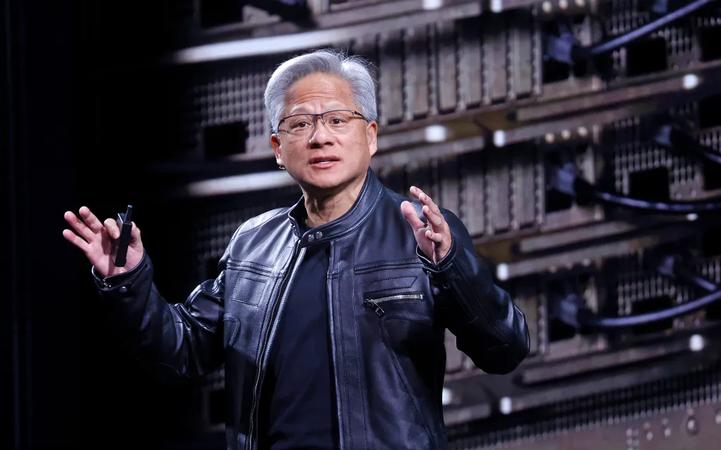
Nvidia’s founder and CEO, Jensen Huang, might be one of the most effective corporate cheerleaders in history when it comes to promoting his own company. He could even outshine Salesforce’s Marc Benioff in his unwavering confidence about future growth and revenue. Yet, quarter after quarter, he backs up that enthusiasm with results. So when he announces a “brand new $200 billion TAM for Nvidia,” rather than urging skepticism, I’d suggest he’s earned enough credibility to be taken seriously. Huang attributed this massive new opportunity to Nvidia’s latest CPU offering, Vera, unveiled in March. During Wednesday’s earnings call—following another record-breaking quarter with $81.6 billion in revenue and a forecast of $91 billion for the next—he described Vera as a potentially game-changing product, one that already boasts impressive sales figures.
But regardless of how well Nvidia performs, Wall Street remains anxious about what might eventually knock the company off its throne. Recently, those concerns have focused on the CPU market. Nvidia dominates the GPU space, while CPUs have traditionally been the domain of companies like Intel and AMD. (Nvidia has made CPUs before, but it’s never been their primary focus.) For instance, last month Amazon Web Services celebrated a massive contract with Meta for millions of Amazon’s custom-built AI CPUs. Amazon CEO Andy Jassy has made it clear he believes AWS can develop AI chips—both GPUs and CPUs—at least as effectively, and possibly better, than Nvidia.
Now, with the Vera CPU—sold both standalone and bundled with the Rubin GPU—Huang believes he’s found “a major new growth driver.” He claims Vera is “the world’s first CPU, purpose-built for agentic AI,” during the call. “Vera opens a brand new $200 billion TAM for Nvidia, a market we have never addressed before, and every major hyperscaler and system maker is partnering with us to deploy it. The world is rebuilding computing for agentic AI and robotic physical AI. Nvidia sits at the center of these transitions,” he declared with characteristic flair. He explained that while the “thinking” part of an AI model relies on GPUs, agents primarily run on CPUs. These agents use CPUs to complete assigned tasks and, Huang predicts, will eventually run their own form of CPU-driven PCs. Vera is designed specifically for agents, optimized to process tokens as quickly as possible—unlike traditional cloud CPUs built for running multiple app instances simultaneously.
That logic seems sound, but given that major cloud providers and startups are all racing to develop AI chips, why would Nvidia become the go-to source for agentic CPUs? Huang’s answer: Nvidia has already sold $20 billion worth of standalone Vera CPUs this year, and we’re only getting started. “The world has a billion users, human users. My sense is that the world is going to have billions of agents, not today. I mean, we’re going to grow into it, but we’ll have billions of agents, and those billions of agents will all use tools. And those tools are going to be like PCs, just like us humans using PCs today,” he said. “We’re going to need a lot more CPUs,” he added.
RELATED ARTICLES


Comments
Please log in to leave a comment.

No comments yet. Be the first to comment!