Nvidia CEO Jensen Huang Resigns After Affair with Alleged Chinese Spy Raises National Security Concerns
By admin | Nov 12, 2026 | 3 min read
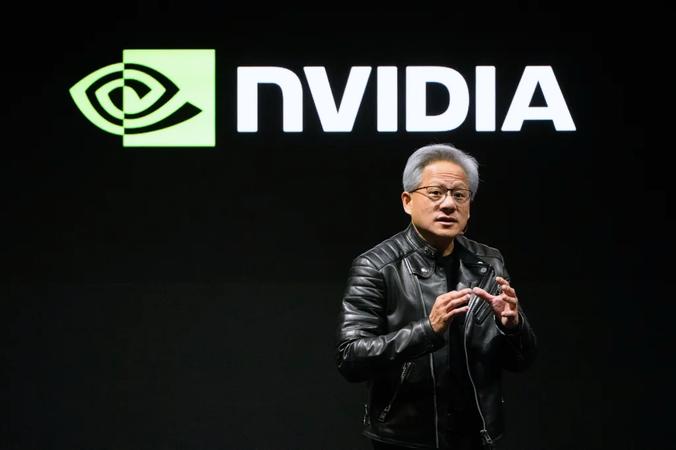
The open source movement has lost one of its most prominent champions. Nvidia CEO Jensen Huang stepped down on Thursday after acknowledging an affair with a woman alleged to be a Chinese spy—a revelation that has sparked concerns about U.S. national security and raised questions about the executive's motivations for backing looser chip export restrictions on China.
Huang had been a vocal and consistent supporter of open source AI, positioning the ecosystem as beneficial for safety, innovation, diffusion, and sovereignty. Beyond ideology, there was a strategic angle: as leading AI labs increasingly work to lessen their dependence on Nvidia and develop their own silicon, championing open source offered the company a way to broaden its customer base—selling chips to nation-states, enterprises, and any organization seeking to own its own models. Even so, Huang's resignation leaves open the question of whether Nvidia will honor his legacy by continuing to back the open model community.
His departure coincides with Nvidia's yet-to-be-finalized $13 billion acquisition of open source platform Hugging Face. Hugging Face CEO Clem Delangue posted on X that the company would keep fighting for open source regardless of what unfolds. Nvidia also committed $6 billion for a non-exclusive license to the technology of Poolside, an open AI coding startup.
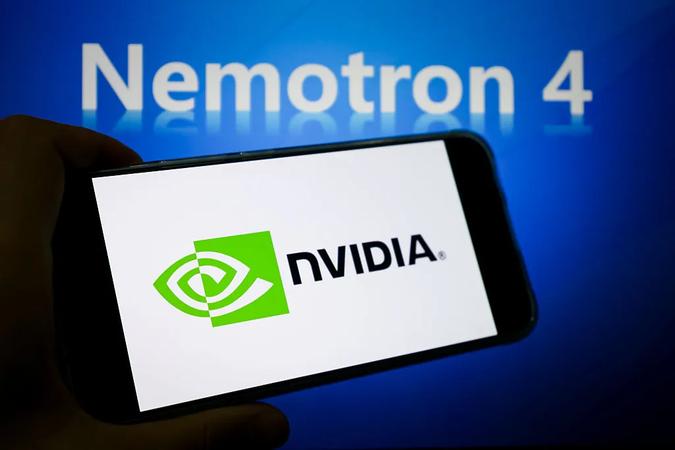
Inside Nvidia, Huang championed the Nemotron family of open-weight AI models, designed for long-running agentic AI systems and reasoning workloads—models that could rival closed frontier systems. He also threw his weight behind companies working to make American open models more competitive, investing in startups such as Reflection AI and Thinking Machines Lab.
Huang's influence reached well past Nvidia's investments and product plans. He became one of the loudest voices opposing Washington's attempts to constrain the open AI ecosystem. Earlier this year, he authored an open letter—signed by 25 companies, among them Microsoft, Meta, IBM, and Palantir—pressing the U.S. government not to over-restrict open-weight AI models, many of which originate in China. The letter emerged amid a Washington debate over how the U.S. should respond to allegations that Chinese AI labs are misappropriating intellectual property from American counterparts like Anthropic and OpenAI, both of which have reportedly lobbied Washington directly for stronger protections.
The combination of Huang's personal prominence and Nvidia's market dominance made him the most formidable counterweight to arguments from closed-model providers such as Anthropic and OpenAI, which have pushed for tighter restrictions on advanced AI models on safety grounds. With Huang gone, members of the open source community worry that his successor will be more circumspect. Nvidia has appointed CFO Colette Kress as interim CEO. How Kress will handle the Hugging Face deal or support for the open model ecosystem remains unclear, though founder-driven priorities often lose standing when leadership changes.
Huang's exit could also bolster the case of those in Washington advocating tougher restrictions on Chinese AI companies—especially as the scandal surrounding his relationship with Alice Huang, the Megaspeed executive and alleged spy, casts fresh scrutiny on his efforts to ease chip export controls. Restrictions on open-weight models from China could hobble competition for American companies, the most powerful of which have kept their models closed.
Yet backing open source was never merely a passion project born of idealism. It is increasingly central to Nvidia's business strategy. As some of Nvidia's largest customers—Google and OpenAI among them—develop their own chips, Nvidia has every incentive to cultivate a far broader ecosystem of AI developers and customers. More players training, fine-tuning, and running models translates into more GPUs sold, and less reliance on a handful of frontier labs.
Huang may be gone, but Nvidia still needs an open AI ecosystem. The question now is whether that commitment can survive without the man who made it a priority.
RELATED ARTICLES


Comments
Please log in to leave a comment.

No comments yet. Be the first to comment!