Apple's iMessage for Business Gets a New Challenger as Linq Launches RCS-Powered Customer Communication Platform
By admin | Feb 02, 2026 | 4 min read
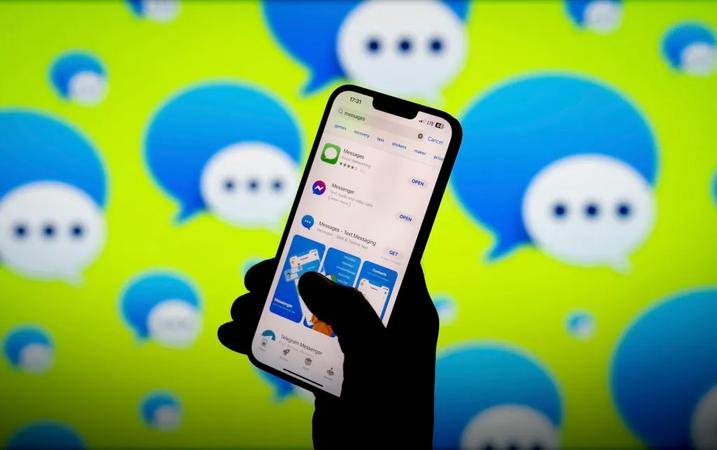
It’s possible to have created something truly valuable without fully realizing it until customers show their demand. Linq, based in Birmingham, Alabama, began as a digital business card and lead-capture tool for sales teams. After several strategic shifts, the company identified a new opportunity last year: helping businesses move beyond basic SMS to communicate with customers via iMessage and RCS.
While Apple already offers business messaging through its Messages for Business service, and Twilio has built an $18.26 billion business facilitating company-to-customer texting, those interactions often feel impersonal—displayed in gray bubbles with obvious branding. Linq’s clients wanted something different: the ability to send messages that appear in the familiar blue bubbles of iMessage, adding a layer of authenticity to conversations.
Founded by former Shipt executives Elliott Potter (CEO), Patrick Sullivan (CTO), and Jared Mattsson (President), Linq responded to this feedback. In February 2025, it launched an API that lets businesses message customers natively within iMessage, unlocking features like group chats, emojis, threaded replies, images, and voice notes.
But finding product-market fit wasn’t the end of the story. The rise of AI agents opened an even larger opportunity. A key catalyst was an AI assistant named Poke, which can manage tasks, answer questions, and handle scheduling directly inside iMessage. “In spring of last year, this company came to us, called the Interaction Company of California, and they were building this AI assistant called Poke,” Potter explained. When Poke went viral after its September launch, Linq was flooded with requests from AI companies wanting to connect their chatbots and assistants directly through iMessage, RCS, and SMS.
This presented a strategic choice: continue serving B2B clients with a steady revenue stream, or pivot to become an infrastructure layer for the booming AI agent market. “We still love our sales customers, and we love that use case,” Potter said. “But our choices were, do we stay a spoke of this wheel, or do we build the hub? Do we focus on being the infrastructure layer for all these different applications of programmatic messaging?”
Potter believes consumers are experiencing app fatigue. With Linq’s technology, people can interact with AI assistants directly within their existing messaging apps, eliminating the need to download another application. Developers also benefit, as they can build for a messaging-native interface instead of creating standalone apps. “Poke.com, along with others, have proved that AI has gotten good enough,” Potter noted. “You don’t need a traditional app anymore to do things. Really, you just need an interface that will let you talk to an intelligent enough AI, maybe connect it to some of your systems, and just tell it what to do, and give it feedback.”
Linq chose to pivot. Since then, its customer base has grown by 132% quarter-over-quarter, with average account expansion of 34%. AI agents on its platform now reach 134,000 monthly active users, facilitating over 30 million messages per month. The company reports a net revenue retention rate of 295% with zero churn.
To support its growth, Linq announced a $20 million Series A funding round on Monday, led by TQ Ventures with participation from Mucker Capital and several angel investors. The capital will be used to expand the team, develop a new go-to-market strategy, and continue building its technology. The company’s valuation was not disclosed.
Despite the promising traction, Linq’s current model relies on building atop Apple’s platform—a relationship that carries inherent uncertainty. There is always a possibility that Apple could restrict third-party AI chatbots on iMessage, similar to moves other platforms have made. Additionally, while iMessage is dominant in the U.S., global audiences rely on services like WhatsApp, WeChat, Telegram, and Signal.
Potter says Linq’s vision extends far beyond any single messaging channel. “Our vision for the platform is everything you need to build conversational tech, and that’s not limited to a few channels. Right now, we have programmatic voice, iMessage, RCS, SMS. That’s just the beginning. Our ambition is, wherever your customers are, you should be able to talk to them, be it Slack, email, Telegram, WhatsApp, Discord, Signal—anywhere your customers are and can converse.”
Andrew Marks, co-founding Partner of lead investor TQ Ventures, endorsed this direction in a statement: “By making AI-to-human communication as frictionless as texting a friend, Linq is enabling an entirely new category of companies. Linq’s founding team is extraordinary, and we have no doubt in their ability to execute on this massive opportunity.”
RELATED ARTICLES



Comments
Please log in to leave a comment.

No comments yet. Be the first to comment!