ChatGPT Emerges as Surprising Health Advisor, Revealing AI's Medical Potential
By admin | Feb 03, 2026 | 3 min read
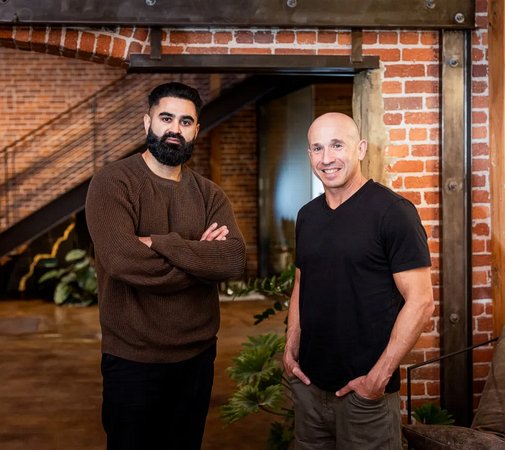
A rising trend sees individuals increasingly turning to OpenAI's ChatGPT and similar large language models for health-related inquiries, frequently finding that these chatbots offer surprisingly valuable medical guidance. KJ Dhaliwal, who sold the South Asian dating platform Dil Mil for $50 million in 2019, explains that his awareness of inefficiencies within the U.S. healthcare system began in childhood while serving as a medical translator for his parents. He viewed the emergence of LLMs as a chance to address these issues, leading to the launch of Lotus Health AI in May 2024. This free, around-the-clock primary care service operates in 50 languages.
This week, Lotus revealed a $35 million Series A funding round co-led by CRV and Kleiner Perkins, increasing its total raised capital to $41 million. While many already use AI for initial health consultations, Lotus advances further by not only facilitating conversations but also enabling actual medical services such as diagnoses, prescription writing, and specialist referrals. Essentially, the company is creating an AI-driven medical practice that holds licenses to operate across all 50 states, carries malpractice insurance, maintains HIPAA-compliant systems, and has comprehensive access to patient records.
A major distinction is that AI handles most of the workload, programmed to ask the same detailed questions a human doctor would. To counter the known issue of AI hallucinations, every final diagnosis, lab order, and prescription is reviewed by board-certified physicians from leading institutions like Stanford, Harvard, and UCSF. Lotus has built an AI model that, akin to OpenEvidence, integrates the latest evidence-based research with individual patient histories and clinical responses to formulate personalized treatment plans.
The platform acknowledges the boundaries of virtual care. In emergencies, it directs users to the closest urgent care facility or emergency room. If an in-person examination is necessary, patients are referred to a local physician, as Dhaliwal noted. Entrusting a substantial part of medical decision-making to AI represents a bold venture, especially considering healthcare's strict regulatory landscape, such as rules limiting doctors to practicing only in states where they are licensed.
CRV general partner Saar Gur, who led the investment and joined the board, remarked, "There are many challenges, but it’s not SpaceX sending astronauts to the moon." Gur, an early backer of companies like DoorDash, Mercury, and Ring, believes that telemedicine frameworks solidified during the pandemic, together with recent AI advancements, position Lotus to overcome many regulatory and technical obstacles. "It’s a big swing," Gur said, adding that the appeal lies in Lotus's attempt to completely rethink the primary care model.
With a shortage of primary care physicians, Lotus asserts it can manage ten times the patient volume of a conventional practice, even while capping consultations at 15 minutes. Although not alone in developing an AI doctor—competitors include Lightspeed-backed Doctoronic—Lotus currently sets itself apart by providing all services at no cost. Dhaliwal mentioned that future monetization could involve sponsored content or subscriptions, but for now, the emphasis is solely on refining the product and expanding its user base rather than generating revenue.
RELATED ARTICLES
Comments
Please log in to leave a comment.

No comments yet. Be the first to comment!