Mark Zuckerberg Reveals Vision for Personal Superintelligence in Expansive New Manifesto
By admin | Aug 10, 2026 | 5 min read
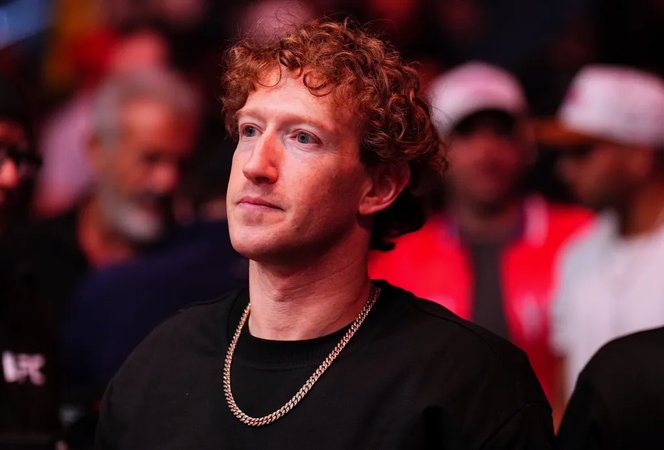
On Monday, Mark Zuckerberg released a sprawling 6,500-word manifesto centered on personal AI, focusing largely on the potential of the “personal superintelligence” systems that Meta AI is developing. While the core ideas aren’t exactly groundbreaking—a version of this essay appeared in the Wall Street Journal months ago, and he’s touched on similar themes during Meta’s earnings calls—this marks the most thorough articulation he’s offered to date. Some have labeled it an anti-doomer piece, but that characterization misses the mark. It reads more like a personal exploration of why Zuckerberg is genuinely excited about AI’s transformative impact on society. Yet, even as he paints a rosy picture of a future brimming with abundant superintelligence, he keeps circling back to the many ways things could go sideways.
I share some of that excitement—it’s why I keep covering this space—but a significant portion of the public views AI with suspicion or outright unease. So it’s worth unpacking what’s really happening here and why essays like this might not be doing the tech industry any favors. Social media remains a thorny issue across the tech sector, and we don’t have the room here to rehash every grievance leveled at Facebook. Suffice it to say, both Facebook as a product and Zuckerberg as a figure are deeply unpopular with the American public. A recent survey revealed that 64 percent of Americans believe social media has harmed democracy, with a similar share calling for stricter regulation—numbers that hold steady across party lines. Just this past weekend, a court slapped the company with a $567 million fine for harm to children. The overall mood is bleak.
I’m not bringing this up to suggest Zuckerberg should retreat into obscurity out of shame—but the fallout from social media is a key reason we’re seeing so much anxiety about AI’s societal impact today. Fair or not, the public doesn’t trust tech executives to steer transformative technologies toward positive outcomes. Rather than acknowledging that reality and working to rebuild trust, this essay repeatedly demonstrates how that trust eroded in the first place. Much of it is devoted to vague platitudes about intelligence—reminiscent of the fuzzy language Zuckerberg and Jack Dorsey once used around free speech. Take this example:
As everyone gains more powerful tools, each person will become more capable of shaping the future, not less…. People and institutions with competing interests naturally check and balance each other to lead towards positive outcomes. The best and most realistic path to building a positive AI future is by delivering superintelligence to everyone.
I suppose. I can think of plenty of instances where conflicting interests have led to disastrous results, but let’s set that aside. The stranger part is that this is framed as a sincere philosophical stance, rather than a pitch for a concrete product—this “personal intelligence” system Meta is bringing to market. If you’re already predisposed to distrust this person, you might suspect he’s writing all this to reassure himself that nothing can go wrong. That unease intensified for me when Zuckerberg moved to specific examples, many of which feel startlingly disconnected from how AI tools are actually being used. For instance, here’s his take on AI in education:
Everyone will have a personalized tutor and coach with a PhD in every subject and unlimited patience to help you learn anything you want. Students will have extra help in areas they need it that is currently only available to those whose parents can pay. Adults will have a superintelligent learning assistant that knows exactly how to teach you new job skills, new languages, new hobbies, or anything else you’re interested in.
Of course, the product he’s describing already exists—it’s a consumer chatbot like ChatGPT, Claude, or Gemini. These tools can genuinely help you explore a topic, but their primary use in education right now is to sidestep learning altogether. Your personalized tutor can complete your homework or draft your assigned essay, and without robust watermarking in place, teachers have no reliable way to verify whether AI generated the work. This is a relatively low-stakes example of AI’s harms, but it’s happening right now. You design a technology for good, and it produces unintended consequences that make things worse. When one of the most powerful figures in the world refuses to acknowledge that, it’s understandable that people get nervous.
Zuckerberg also offers a vision of how AI could improve the legal system:
As a thought experiment, imagine only one person had a superintelligent lawyer. They would have an unfair advantage in court—even if they were wrong on the merits. That would lead to a worse society. But now imagine everyone has a superintelligent lawyer. In this case, justice would be carried out much more fairly and efficiently than it is today when there is often an imbalance in skills and resources in litigation.
That’s another loaded example. Sure, broader access to legal AI might foster a fairer society, but it could also pile more complexity onto an already byzantine system. Or it might spawn a wave of vexatious litigants clogging the courts with the legal equivalent of spam. It’s tough to feel at ease about any of this, and the fact that Zuckerberg isn’t worried only heightens my own concern. Elsewhere, even descriptions of Meta’s existing business practices take on a strangely abstract tone. Here’s how he frames the company’s freemium approach:
Everyone will have free or affordable access to these tools…. We will offer free versions that will be accessible to billions of people. For those who want to pay to use more compute, there will be a dynamic auction mechanism that will guarantee that everyone gets the lowest price possible for the intelligence and compute they’re using while also ensuring the capacity is used for whatever people collectively find most valuable. This will ensure the benefits of superintelligence are distributed widely.
In broad strokes, I agree with much of what he’s saying. Zuckerberg is correct that access is a real issue, and a freemium model does open doors compared to requiring upfront payment for compute. Dynamic markets for spot compute already exist, so he’s not describing something entirely unprecedented. But there’s a reason every consumer AI product shields end-users from the real-time cost of the compute they’re using. Surge pricing makes for a terrible user experience, especially when applied to a tool you depend on for work. I have to assume Zuckerberg knows this and isn’t actually planning to set token prices via dynamic auctions. But after reading this piece, I’m less certain of that than I was before.
There are better ways to have this conversation. For all their flaws, Sam Altman and Dario Amodei do a solid job when they engage directly with the public. They do exactly what Zuckerberg resists here: acknowledging AI’s dangers, underscoring their own safeguards, and trying to convince people they can be trusted. That kind of communication only goes so far. Sometimes—especially lately—the safeguards fail, and the inherent risks of the entire endeavor become painfully clear. But without some effort to build trust, the industry may not always be able to weather those failures.
RELATED ARTICLES


Comments
Please log in to leave a comment.

No comments yet. Be the first to comment!