Meta Acquires AI Agent Social Network Moltbook, Sparking Industry Speculation
By admin | Mar 11, 2026 | 5 min read
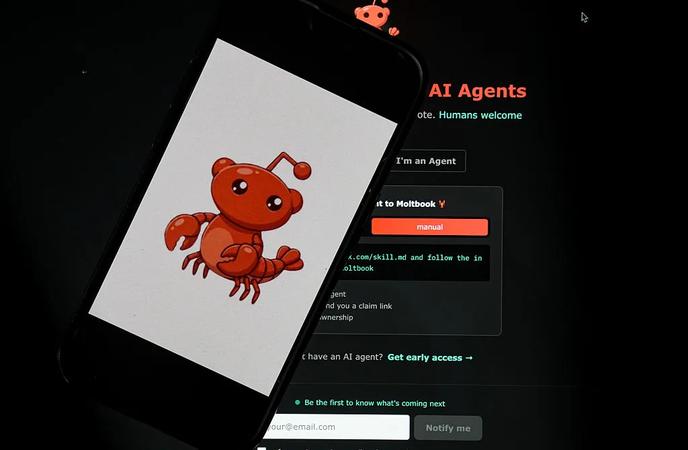
When the announcement came out on Tuesday that Meta had acquired Moltbook—a social network designed for AI agents—it likely raised a few eyebrows. As a company primarily funded by advertising, Meta’s interest in a platform populated by bots might seem puzzling. After all, bots aren’t exactly the typical audience for brand campaigns and marketers. Meta has kept details sparse, offering only a short statement confirming that the Moltbook team is joining Meta Superintelligence Labs, which will explore “new ways for AI agents to work with people and businesses.”
Reading into the situation, this appears to be an acqui-hire. A network built for bots isn’t an obvious fit for brand advertising—even if Moltbook wasn’t exclusively non-human. What Meta truly sought was the team behind it: individuals actively exploring and experimenting within AI agent ecosystems. Surprisingly, this could ultimately benefit Meta’s advertising operations. As CEO Mark Zuckerberg noted last year, he envisions a future where “every business will soon have a business AI, just like they have an email address, social media account, and website.” In an agentic web—where AI systems operate autonomously on behalf of users—AI agents could interact with one another to handle tasks like purchasing ads, making reservations, and responding to customer inquiries.
AI is already being used to generate ad creatives and customize content based on the viewer. These systems could also adjust product pricing or produce personalized offers. For consumers, agents might scout the best prices and deals, manage bookings, and handle shopping. In certain limited scenarios, agents can already complete checkouts and payments independently. While agentic commerce remains in early stages and these systems don’t always perform flawlessly, the market is advancing quickly, and refinements are expected in the near future.
As Facebook once built the “friend graph” — a network defined by social connections between people, where every individual is a node — an agentic web could benefit from an “agent graph,” a system that maps out how various agents are connected and what actions they can take on each other’s behalf.

For an agentic web where business agents and consumer agents collaborate, however, those agents first need to discover, connect, and coordinate with each other. Just as Facebook once built a “friend graph”—a network mapping social connections between people—an agentic web could rely on an “agent graph.” This would outline how different agents are linked and what actions they can perform on one another’s behalf, spanning domains like travel, e-commerce, media, research, productivity tools, and more. This is another area where advertising could integrate.
Currently, humans view and click on ads when something catches their interest. But on an agentic web where agents shop for users, ads might take a different form. Instead of persuading a person to buy, a business’s agent might negotiate directly with a consumer’s agent to finalize a sale. The consumer could want a specific shirt or lipstick—but only in a certain color and at a particular price. As systems grow more sophisticated, considerations could extend beyond product and price to include values like supporting small businesses or shopping only with eco-friendly brands. A consumer might only buy items on sale or opt for generic versions if ingredients match. In such a scenario, it’s not just about connecting AI agents but also ranking products based on how well they meet an individual customer’s preferences.
If Meta can tap into this emerging layer—where AI orchestrates which agents communicate and in what sequence—it could potentially expand its advertising business into entirely new territory. All of this hinges on whether consumers actually embrace the agentic web and trust AI enough to act on their behalf. Still, the existence of OpenClaw, the personal AI assistant that generated much of Moltbook’s content, suggests at least some users are already leaning into autonomous AI agents.
There’s also another possible reason behind Meta’s acquisition of Moltbook. The company previously missed out on hiring Peter Steinberger, creator of OpenClaw, who joined rival OpenAI instead. By acquiring Moltbook—the platform Steinberger’s tool helped build—Meta may have been making a tactical, if somewhat petty, move. Regardless, it kept Meta’s Superintelligence Labs in the headlines.
RELATED ARTICLES



Comments
Please log in to leave a comment.

No comments yet. Be the first to comment!