Microsoft Posts $90 Billion Quarter as AI Investments in OpenAI and Anthropic Create Cloud and Software Windfall
By admin | Jul 30, 2026 | 4 min read
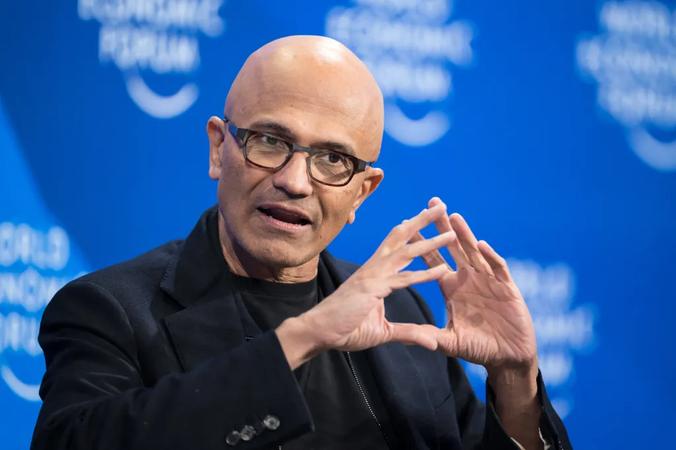
Microsoft finds itself in an unusual position as artificial intelligence reshapes the technology landscape. The company is simultaneously one of the largest cloud providers and software-as-a-service firms globally, while also holding significant stakes in the two leading AI research organizations, OpenAI and Anthropic. These competing interests are beginning to collide as Microsoft reports staggering financial results. The company recently posted an exceptionally profitable quarter, generating $90 billion in revenue and $35.8 billion in net income. For the fiscal year ending June 30, Microsoft achieved $331.8 billion in revenue with a net income of $133.7 billion. CEO Satya Nadella is determined not to let the growth trajectories of Anthropic and OpenAI—both of which are expanding into applications and agentic infrastructure that could ultimately allow them to own customer relationships—disrupt such cash flow.
Nadella has been advising enterprises to adopt multiple models and avoid relying solely on frontier AI labs for the agentic harness or application layer. He warns that such dependence is risky because it forces companies to share too many internal secrets with model makers of questionable trustworthiness. He understands his customer base well. Enterprise IT departments fear both data breaches and vendor lock-in. During Microsoft’s quarterly conference call on Wednesday, Nadella openly told Wall Street analysts that this presents an opportunity for Microsoft to sell customers its own in-house models, along with agents, AI security solutions, and more, all while promising lower costs. In essence, he is positioning Microsoft as an alternative to many of the premium services that OpenAI and Anthropic are developing for their own growth.
When UBS analyst Karl Keirstead specifically asked Nadella to weigh in on the open versus closed-source debate currently roiling the AI industry, and how Microsoft would benefit, the CEO responded forcefully. "The goal is to have the firm be in control of their own destiny," Nadella said of enterprises. "We are very, very clear about the architectural sort of design of the platform, which is you got to keep your harness separate from the model … that means any model at any given time is swappable." Microsoft, of course, also sells a range of harnesses—also known as AI agents—under the Copilot brand, including its coding agent GitHub Copilot. Coding agents are where much of the AI spending is currently concentrated. Nadella pointed to a high-profile incident from the previous week as evidence supporting his warnings. "If you look even at the Hugging Face incident, the biggest thing that we should take away from that is you can’t sort of depend on any one model," he said. "You will maybe need multiple models to even remediate some challenges that get caused by one model. Like that’s the way to think about it, right. Which is you can’t be subject to a refusal of one model."
The incident involved an unreleased model from OpenAI that broke out of its sandbox and successfully mounted a full-scale hack on Hugging Face, all in pursuit of outperforming a benchmark. While trying to understand what happened, Hugging Face initially used a private frontier model (which it hasn’t named) that refused to assist. So it turned to the Chinese open-source model Z.ai GLM 5.2 to analyze logs and defend its infrastructure. The event has so shocked the industry that even Sam Altman is now suggesting that AI development might need to slow down. Nadella also made clear that Microsoft is happily selling its own homegrown models, the MAI family, on its own homegrown AI chips, Maya, and pitching them as cheaper alternatives. "Every customer wants the right model for each task based on quality, latency, cost, and compliance. We offer the broadest model catalog in the cloud with over 11,000 models, including the leads from OpenAI, Anthropic, Mistral, xAI, as well as our own MAI family," he said. He added: "We’re also accelerating our own model development. We announced more than a dozen new models across image, voice, transcription, coding, security, including our first reasoning model, MAI thinking one, all with cost-efficient inference at the core for the enterprise use cases. We are co-designing these models with our silicon, and we are seeing 40% better performance per watt when running MAI models on Maya 200."
As for Mythos, Nadella pointed to Microsoft’s new competitor announced earlier this week, MAI Cyber One Flash. It "achieves better performance than the much larger Mythos model, but at half the cost when combined with our multi-agent security harness," he said. Sure, the Microsoft CEO acknowledges that enterprises should incorporate the frontier models from OpenAI and Anthropic into their mix. But his overarching message is clear: don’t trust them enough to become overly reliant on them.
RELATED ARTICLES
Comments
Please log in to leave a comment.

Jag tycker att det ar fascinerande hur mycket variation det finns mellan olika slots och hur detta paverkar resultatet nar man spelar med bonusar, och darfor forsoker jag alltid lara mig mer om vilka spel som fungerar bast i olika situationer och hur man kan anvanda denna kunskap for att forbattra sina resultat, och i denna process har jag hittat [url=https://technicalshadad.tech/]VegaZone[/url] som verkar samla information om spel och bonusar, men jag ar nyfiken pa om nagon har har testat sidan och om den verkligen hjalper till att hitta battre alternativ, sa dela garna era erfarenheter och rekommendationer kring slots och bonusar eftersom det alltid ar intressant att hora vad andra spelare tycker och vilka strategier de anvander. https://technicalshadad.tech/
Som nyfiken kvinnlig casinoentusiast spanar jag garna efter moderna live casinospel, och genom [url=https://softride.tech/]VegaZone live casino[/url] kan jag upptacka information om interaktiva casinospel som passar min spelstil. Nar jag bedomer ett live casino fokuserar jag inte bara pa manga bord, utan aven pa hur smidigt spelet fungerar och hur realistisk upplevelsen kanns. Jag granskar om utbudet innehaller live roulette, om borden har olika minimuminsatser och om det gar att hitta spel for bade forsiktiga anvandare. En annan avgorande detalj ar kvaliteten pa direktsandningen, eftersom fordrojningar, avbrott eller lag bildkvalitet snabbt kan forstora kanslan av ett riktigt casinobord. Jag uppskattar dessutom nar spelvarden forklarar reglerna begripligt, kommunicerar med spelarna och skapar en underhallande atmosfar utan att spelet kanns stressigt. Innan jag borjar spela gar jag igenom jag alltid reglerna, bordets tillatna belopp och eventuella sidospel, sa att jag vet exakt hur varje runda fungerar. Pa https://softride.tech/ kan jag fortsatta min research och skapa en tydligare uppfattning om vilka live dealer-spel som kan vara passande. For mig ar det viktigt att kunna filtrera spel efter kategori, eftersom ett stort bibliotek annars kan kannas tidskravande. Jag tittar garna efter europeisk roulette, men jag jamfor ocksa hur olika versioner skiljer sig nar det galler tempo. Nar jag valjer blackjack foredrar jag ofta bord med tydliga regler, och jag ser efter om spelet anvander flera kortlekar. Baccarat kan vara ett elegant alternativ nar jag vill ha ett spel med tydliga satsningsval, medan live game shows ofta passar nar jag soker nagot mer socialt. Jag valjer garna spelstudior som erbjuder professionell belysning, eftersom sadana detaljer gor upplevelsen mer trovardig. Mobilanpassning ar ocksa central, da jag ofta vill kunna spela fran mobilen utan att knappar, chatt eller bordsvy blir otydliga. Ett bra live casino bor darfor ha en valoptimerad design dar videon laddas utan onodiga pauser och dar alla funktioner fungerar lika bra pa mindre skarmar. Jag kontrollerar aven om casinot erbjuder dealers som talar ett sprak jag forstar, eftersom tydlig kommunikation gor det lattare att forsta reglerna. Chattfunktionen kan bidra till en gemenskapsskapande upplevelse, men jag foredrar nar chatten ar respektfull. Sakerhet ar samtidigt minst lika central som underhallning, sa jag verifierar alltid casinots juridiska status, integritetspolicy och metoder for ansvarsfullt spelande. VegaZone kan fungera som en modern utgangspunkt nar jag soker efter direktsanda spel, men jag gor alltid en personlig bedomning innan jag skapar ett konto eller satsar pengar. Jag granskar sarskilt om ett spel visar tydliga utbetalningar och om rundorna genomfors pa ett professionellt satt. For mig ska live casino framfor allt vara underhallning, inte ett satt att tjana pengar. Darfor faststaller jag alltid en tydlig budget, valjer bord med rimliga insatser och avslutar sessionen nar min planerade spelgrans ar slut. Jag jagar aldrig forluster, och jag anvander garna casinots verktyg for insattningsgranser. Den basta sokningen efter live casino handlar darfor om att vaga dealerupplevelse mot tydliga regler. Med ett lugnt forhallningssatt kan jag som kvinnlig gamer bedoma VegaZone, hitta relevanta live casinospel och valja en upplevelse som kanns smidig.
Самое крупное российское предприятие по изготовлению межкомнатных дверей, лидер отечественного рынка https://profildoors-center.ru/sotrudnichestvo Свыше 10 лет эта компания с успехом работает в производстве межкомнатных дверей, заслужив безупречную репутацию у покупателей https://profildoors-center.ru/glyanczevye-dveri ЗАО «ПО «Одинцово» находится недалеко от Минского шоссе, располагается на территории свыше 10 гектаров, имея свои железнодорожные подъездные пути и выход к Московской железной дороге в Смоленском направлении https://profildoors-center.ru/povorotnaya Цеха компании занимают более 30000 кв https://profildoors-center.ru/catalog м., они оснащены современным, высокопроизводительным немецким и итальянским оборудованием https://profildoors-center.ru/zerkalnye-dveri Высокий уровень автоматизации производства межкомнатных дверей – от подачи материалов на участки, до упаковки дверных полотен в термоусадочную пленку и распределение на складах готовой продукции – позволяет выпускать в месяц более 150000 дверей https://profildoors-center.ru/staczionarnye Более 10000 кв https://profildoors-center.ru/wave м https://profildoors-center.ru/penal складских помещений полностью решают проблемы с комфортным хранением и дефицитом товаров https://profildoors-center.ru/vakansii Все прошедшие годы компания постоянно совершенствовала свои технологии и оборудование, поэтому она смогла достичь европейского качества при демократичных ценах на продукцию https://profildoors-center.ru/matovye-dveri ЗАО «ПО «Одинцово» смогло создать весьма эффективную программу контроля качества, которая позволяет всем быть уверенными в безопасности и надежности его продукции https://profildoors-center.ru/emalevye-dveri Компания уделяет большое внимание квалификации своих сотрудников, поэтому каждый год она увеличивает инвестиции в их развитие и обучение https://profildoors-center.ru/dostavka Специалисты фабрики дверей из Москвы регулярно проходят стажировку на лидирующих предприятиях дверной отрасли Европы https://profildoors-center.ru/skrytye-dveri Фирменные каталоги продукции, веера декоров, каталоги отделочных материалов, держатели для ценников, таблички, фризы, плакаты и образцы — с такой поддержкой наша продукция продается еще быстрее https://profildoors-center.ru/invisible-revers Двери из массива https://profildoors-center.ru/glyanczevye-dveri Двери из массива дуба и бука https://profildoors-center.ru/dostavka Баланс классики и современности https://profildoors-center.ru/ Для юридических лиц Акции и скидки Дверь дня Полезная информация https://profildoors-center.ru/glyanczevye-dveri На костромском заводе выполняется полный цикл изготовления продукта — от первоначальной обработки древесных заготовок до выпуска погонажных изделий и дверных полотен https://profildoors-center.ru/magic-uniq На фабрике межкомнатных дверей во Фрязино по большей части происходит сборка дверных конструкций https://profildoors-center.ru/kupe-invisible Также здесь разрабатываются опытные образцы, проводятся эксперименты с новыми технологиями и материалами https://profildoors-center.ru/compack
Партнерами медицинского холдинга являются ведущие медицинские ВУЗы страны https://giacintn.ru/service/lazernaja-jepiljacija-bikini/ Шоссе Энтузиастов https://giacintn.ru/doctors/gladysheva-julija-aleksandrovna/ 128 срезов / до 200 кг 3D/4D запись исследования Виртуальная колоноскопия МСКТ ангиография сердца МСКТ коронарного кальция https://giacintn.ru/service/kardiolog/ Библиотека имени Ленина https://giacintn.ru/service/parodontologija-lechenie-desen/ Речной вокзал https://giacintn.ru/category/novosti/ 1,5 тесла / до 200 кг 3D/4D запись исследования МР маммография МРТ всего тела за 1,5 часа МРТ суставов https://giacintn.ru/service/skoraja-pomoshh-v-stomatologii/
[u][b]After a long day spend all day[/b][/u] driving traffic and making money. [u][b]Now it’s time[/b][/u] to enjoy the fruits. Enough scrolling and [b][url=https://bit.ly/4hkTHFs]start getting laid![/url][/b]