Microsoft CEO Satya Nadella Reimagines AI as "Bicycles for the Mind" in 2026 Vision
By admin | Jan 05, 2026 | 3 min read
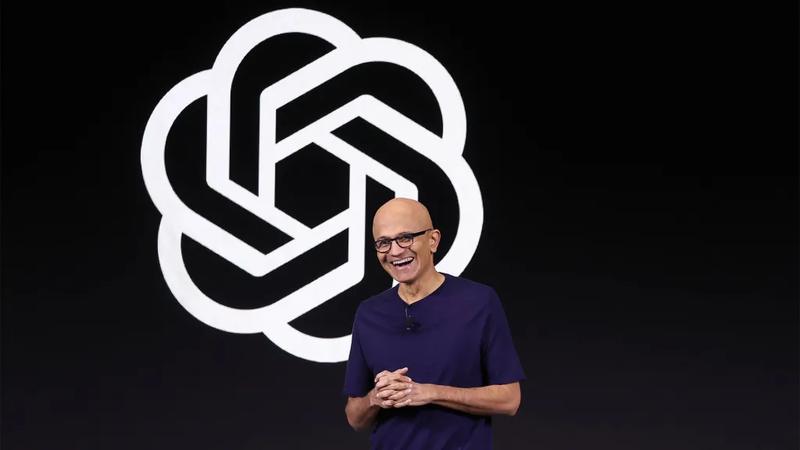
Just a few weeks after "slop" was declared the word of the year, Microsoft CEO Satya Nadella shared his vision for artificial intelligence in 2026. In a thoughtful post on his personal blog, Nadella proposed moving beyond the "slop" label and instead viewing AI as "bicycles for the mind."
He elaborated, "A new concept that evolves 'bicycles for the mind' such that we always think of AI as a scaffolding for human potential vs a substitute." He further argued, "We need to get beyond the arguments of slop vs sophistication and develop a new equilibrium in terms of our 'theory of the mind' that accounts for humans being equipped with these new cognitive amplifier tools as we relate to each other."
Essentially, Nadella is advocating for a dual shift in perspective: the public should stop dismissing AI output as low-quality "slop," and the tech industry must cease framing AI as a human replacement. His ideal narrative positions AI as a productivity tool that assists rather than substitutes for people.
However, this framing faces a significant contradiction. A common marketing tactic for AI agents is to highlight their potential to replace human labor, which is used to justify their cost. Concurrently, prominent AI leaders have issued stark warnings about the technology triggering massive unemployment. For example, in May, Anthropic CEO Dario Amodei cautioned that AI could eliminate half of all entry-level white-collar jobs, potentially raising unemployment to 10-20% within five years—a warning he reiterated last month.
The accuracy of such dire predictions remains uncertain. As Nadella suggests, most current AI tools are used by workers rather than replacing them outright, provided humans are willing to verify the AI's output for accuracy. A frequently referenced study is MIT's ongoing Project Iceberg, which aims to quantify AI's economic impact on employment.
Project Iceberg estimates that AI is currently capable of performing roughly 11.7% of tasks that constitute paid human labor. While this figure is often interpreted as AI replacing nearly 12% of jobs, the project clarifies it is measuring the proportion of job tasks that can be delegated to AI, then calculating the associated wages. Examples cited include automated paperwork for nurses and AI-assisted code writing.
This is not to say certain roles are unaffected. Professions like corporate graphic artists and marketing bloggers have felt significant impact, and unemployment rates for new graduate junior coders are notably high. Yet, it's also true that highly skilled artists, writers, and programmers often produce superior work when leveraging AI tools, as the technology cannot yet replicate human creativity.
Interestingly, as 2026 approaches, emerging data indicates that the jobs most exposed to AI are thriving. Vanguard's 2026 economic forecast report found that "the approximately 100 occupations most exposed to AI automation are actually outperforming the rest of the labor market in terms of job growth and real wage increases."
The report concludes that individuals who skillfully use AI are enhancing their value, not making themselves obsolete. The irony is that Microsoft itself contributed to the "AI-takes-jobs" narrative last year. The company laid off over 15,000 employees in 2025, despite reporting record revenues and profits, and cited its AI success as a factor. In a public memo following these results, Nadella stated Microsoft needed to "reimagine our mission for a new era," listing "AI transformation" as a top business objective alongside security and quality.
The reality of 2025's AI-related job losses is more complex. As the Vanguard analysis notes, these cuts were less about internal AI efficiency and more about standard corporate restructuring—shifting investments from slower-growing areas to faster-growing ones. Microsoft was not alone; research indicated AI was cited as a reason for nearly 55,000 U.S. layoffs in 2025, with major cuts at companies like Amazon and Salesforce.
Finally, in defense of "slop," many who enjoy social media memes and AI-generated short videos might argue that producing entertaining, lighthearted content is one of AI's most engaging applications, even if not its most profound.
RELATED ARTICLES

Comments
Please log in to leave a comment.

No comments yet. Be the first to comment!