Omilia challenges AI-first approach in customer support automation
By admin | Aug 06, 2026 | 2 min read
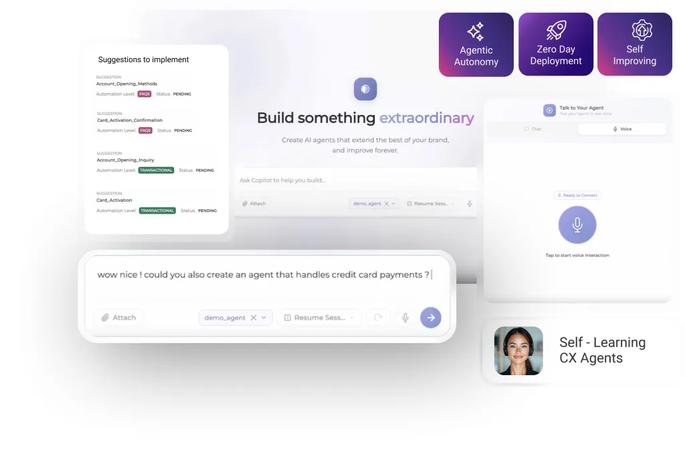
The customer support landscape has seen a wave of startups—Sierra, Decagon, and Parloa among them—racing to embed AI into call handling, chat, and messaging so businesses can manage higher volumes of inquiries. Yet Athens-based Omilia, which has focused on automating voice interactions and support workflows since 2002, argues that applying AI indiscriminately can be inefficient. CEO Dimitris Vassos points out that many incoming support requests are simple, like checking an account balance, and don't require the firepower of large language models.
“We’ll use whatever tool is needed to win the customer service battle. Companies like Sierra and Decagon brand themselves as generative AI firms, and their whole approach is built around deploying that technology, which limits them. You might have a bazooka, but if the enemy is close, you need a knife. That’s the reality of the contact center—you need a mix of tools,” he explained.
Omilia has broadened its focus to include self-learning agents that operate across multiple customer touchpoints. To fuel that expansion, the company has secured a $67 million Series B round led by Expedition Growth Capital. This marks its second fundraising effort, following a $20 million raise from Grafton Capital in 2020. Since then, Omilia has grown its annual recurring revenue tenfold, reaching $60 million.
Vassos attributes the company’s edge to strong unit economics for both its own operations and its clients. That discipline, he says, has meant fewer large capital injections compared to rivals. “Over the next few years, the companies delivering real ROI will come out on top. We’re fine with not being as flashy as ElevenLabs or Sierra on LinkedIn right now. Our focus is steady growth and laying the groundwork for a billion-dollar revenue company within three years,” he said.
Omilia’s client roster includes Capital One, Discover, RBC, DWP, and PSEG. Vassos noted that quick-service restaurants adopting voice-based ordering have become a major focus. Taco Bell is already a client, with Omilia’s technology deployed across more than 1,000 locations. He added that the company is in discussions with two more U.S. QSR chains.
AI rollouts, however, can be unpredictable. In Taco Bell’s case, a reported glitch in its ordering system allegedly let a customer place an order for 18,000 cups of water last year. Vassos disputes that this ever happened, saying Omilia’s logs show no such incident. We’ve reached out to Taco Bell for clarification and will update this piece if we hear back.
The fresh funding will go toward opening a new U.S. office—a market that contributes a significant portion of Omilia’s revenue—and strengthening its go-to-market efforts. The company is also hiring a chief revenue officer, chief marketing officer, and a VP of revenue operations. Currently employing around 500 people, Omilia expects that number to climb to 600 by year’s end.
RELATED ARTICLES



Comments
Please log in to leave a comment.

No comments yet. Be the first to comment!