AI Glossary: Decoding LLMs, RAG, RLHF, and OpenAI's New 'Opaque Recurrence
By admin | Sep 07, 2026 | 10 min read
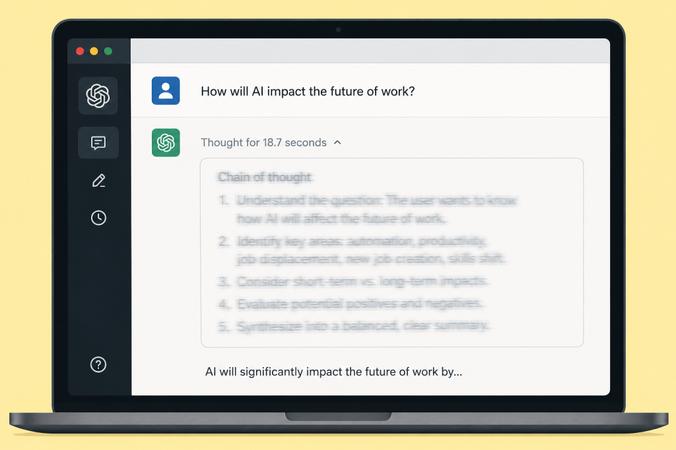
Artificial intelligence is fundamentally reshaping our world while simultaneously creating an entirely new vocabulary to describe its own evolution. Attend virtually any product meeting, investor pitch, or industry panel today, and you'll hear discussions peppered with acronyms like LLMs, RAG, and RLHF—and, just recently, phrases such as "opaque recurrence," the reasoning method in OpenAI's new Astra model that has AI safety experts concerned. The terminology advances so rapidly that even highly knowledgeable technology professionals can find themselves feeling uncertain. We refresh this guide regularly as the field progresses, so treat it as a living reference—much like the AI systems it covers.
**AGI**
Artificial general intelligence, or AGI, remains a somewhat ambiguous concept. In broad terms, it refers to AI that exceeds average human capability across many—if not most—domains. OpenAI CEO Sam Altman has characterized AGI as the "equivalent of a median human that you could hire as a co-worker." Meanwhile, OpenAI's charter describes AGI as "highly autonomous systems that outperform humans at most economically valuable work." Google DeepMind offers yet another interpretation, viewing AGI as "AI that's at least as capable as humans at most cognitive tasks." Feeling confused? Don't worry—even leading researchers at the forefront of AI development are still grappling with these definitions.
**AI agent**
An AI agent is a tool that leverages AI technologies to complete a sequence of tasks on your behalf—going beyond what a standard AI chatbot can accomplish. This might include filing expense reports, reserving flights or restaurant tables, or even writing and maintaining software code. As we've noted previously, this emerging field contains many moving parts, so "AI agent" can mean different things to different people. The necessary infrastructure to fully deliver on its envisioned capabilities is still under development. At its core, however, the concept points to an autonomous system that may draw upon multiple AI technologies to execute multi-step objectives.
**API endpoints**
Consider API endpoints as "buttons" located on the back end of a software application that other programs can activate to trigger specific functions. Developers rely on these interfaces to build integrations—for instance, allowing one application to retrieve data from another, or enabling an AI agent to control third-party services directly without requiring a human to operate each interface manually. Most smart home devices and connected platforms possess these hidden buttons, even though everyday users never see or interact with them. As AI agents become increasingly sophisticated, they are growing more adept at discovering and utilizing these endpoints independently, creating powerful—and occasionally unforeseen—automation opportunities.
**Chain of thought**
When presented with a straightforward question, the human brain can often respond without much deliberation—such as identifying which animal is taller between a giraffe and a cat. Yet in many situations, you might need pen and paper to arrive at the correct answer because intermediate steps are involved. For example, if a farmer has chickens and cows that together total 40 heads and 120 legs, you'd likely need to jot down a simple equation to solve it (the answer being 20 chickens and 20 cows). In the context of AI, chain-of-thought reasoning for large language models entails breaking a problem into smaller, intermediate components to enhance the quality of the final result. This approach typically takes longer to produce an answer, but the outcome is more likely to be accurate, particularly in logic-based or coding scenarios. Reasoning models are built from traditional large language models and optimized for chain-of-thought processing through reinforcement learning. (See: Large language model)
**Coding agents**
This represents a more specialized category than a general "AI agent," which refers to a program capable of taking autonomous actions step-by-step to accomplish a goal. A coding agent is a tailored version applied specifically to software development. Rather than merely suggesting code for a human to review and manually incorporate, a coding agent can write, test, and debug code on its own, managing the kind of iterative, trial-and-error work that typically consumes a developer's schedule. These agents can operate across entire codebases, identifying bugs, executing tests, and deploying fixes with minimal human supervision. Think of it as hiring an exceptionally fast intern who never sleeps and never loses concentration—though, as with any intern, a human still needs to review the final output.
**Compute**
While somewhat multifaceted in meaning, compute generally refers to the essential computational power that enables AI models to function. This type of processing fuels the AI industry, providing the capacity to train and run its powerful models. The term often serves as shorthand for the hardware that supplies this computational capability—such as GPUs, CPUs, TPUs, and other infrastructure components that form the foundation of the contemporary AI sector.
**Deep learning**
A subset of self-improving machine learning where AI algorithms are constructed with a multi-layered, artificial neural network (ANN) architecture. This design allows them to identify more complex correlations than simpler machine learning approaches, such as linear models or decision trees. The structure of deep learning algorithms draws inspiration from the interconnected neural pathways found in the human brain. Deep learning AI models can recognize significant characteristics within data on their own, rather than depending on human engineers to define these features beforehand. The architecture also accommodates algorithms that learn from mistakes and, through iterative repetition and adjustment, enhance their own outputs. However, deep learning systems demand substantial amounts of data to produce good results—often millions of examples or more. They also typically require longer training periods compared to simpler machine learning algorithms, which means development costs tend to run higher. (See: Neural network)
**Diffusion**
Diffusion serves as the technology underlying many art-, music-, and text-generating AI models. Drawing inspiration from physics, diffusion systems gradually "destroy" the structure of data—such as photographs, songs, and other content—by introducing noise until nothing recognizable remains. In physics, diffusion occurs spontaneously and irreversibly; sugar dissolved in coffee cannot be restored to cube form. However, diffusion systems in AI aim to learn a kind of "reverse diffusion" process that restores the original data, thereby gaining the ability to reconstruct information from pure noise.
**Distillation**
Distillation is a method used to transfer knowledge from a large AI model using a 'teacher-student' framework. Developers send requests to the teacher model and record its outputs. These responses are sometimes compared against a dataset to assess their accuracy. The collected outputs are then used to train the student model, which learns to approximate the teacher's behavior. Distillation can produce a smaller, more efficient model based on a larger one with minimal loss in quality. This approach is likely how OpenAI developed GPT-4 Turbo, a faster iteration of GPT-4. While all AI companies employ distillation internally, some organizations may have also used this technique to catch up with frontier models. Distillation performed on a competitor's model typically violates the terms of service for AI APIs and chat assistants.
**Fine-tuning**
This refers to the continued training of an AI model to enhance its performance for a more specific task or domain than was previously the primary focus of its training—usually by introducing new, specialized (i.e., task-oriented) data. Many AI startups use large language models as a foundation for building commercial products but aim to increase utility for a particular sector or function by supplementing earlier training cycles with fine-tuning based on their own domain-specific knowledge and expertise. (See: Large language model [LLM])
**GAN**
A GAN, or Generative Adversarial Network, is a type of machine learning framework that supports key developments in generative AI, particularly in producing realistic data—including deepfake tools, among others. GANs employ a pair of neural networks: one draws on its training data to generate an output that is then passed to the other model for evaluation. The two models are essentially programmed to compete against each other. The generator attempts to get its output past the discriminator, while the discriminator works to identify artificially generated content. This structured competition can optimize AI outputs to appear more realistic without requiring additional human oversight. That said, GANs perform best for narrower applications (such as creating realistic images or videos) rather than general-purpose AI.
**Hallucination**
Hallucination is the AI industry's preferred term for when models fabricate information—literally generating content that is incorrect. Unsurprisingly, this poses a significant challenge to AI quality. Hallucinations produce generative AI outputs that can mislead users and potentially create real-world risks—with potentially dangerous outcomes (imagine a health-related query that returns harmful medical advice). The tendency for AIs to invent information is believed to stem from gaps in training data. Hallucinations are fueling a push toward increasingly specialized and/or vertical AI models—that is, domain-specific AIs requiring narrower expertise—as a strategy to reduce the likelihood of knowledge gaps and minimize misinformation risks.
**Inference**
Inference refers to the process of running an AI model. It involves setting a model loose to make predictions or draw conclusions based on previously observed data. To be clear, inference cannot occur without training; a model must first learn patterns within a dataset before it can effectively extrapolate from that training data. Various types of hardware can perform inference, ranging from smartphone processors to high-end GPUs to custom-designed AI accelerators. However, not all hardware can run models equally well. Very large models would take an impractical amount of time to generate predictions on, say, a laptop compared to a cloud server equipped with premium AI chips. [See: Training]
**Large language model (LLM)**
Large language models, or LLMs, are the AI models powering popular AI assistants such as ChatGPT, Claude, Google's Gemini, Meta's AI Llama, Microsoft Copilot, and Mistral's Le Chat. When you converse with an AI assistant, you're interacting with a large language model that processes your request directly or with assistance from various available tools, such as web browsing or code interpreters. LLMs are deep neural networks composed of billions of numerical parameters (or weights, discussed below) that learn the relationships between words and phrases, creating a representation of language—essentially a multidimensional map of words. These models are built by encoding patterns discovered across billions of books, articles, and transcripts. When you provide a prompt to an LLM, the model generates the most probable pattern that corresponds to your input. (See: Neural network)
**Memory cache**
Memory cache refers to an important process that enhances inference (the process by which AI works to generate a response to a user's query). In essence, caching is an optimization technique designed to make inference more efficient. AI is driven by intensive mathematical calculations, and every time those calculations are performed, they consume more power. Caching aims to reduce the number of calculations a model might need to run by storing particular calculations for future user queries and operations. Various types of memory caching exist, though one of the more prominent is KV (key value) caching. KV caching operates within transformer-based models, increasing efficiency and producing faster results by decreasing the time (and algorithmic effort) required to generate answers to user questions. (See: Inference)
**Model Context Protocol (MCP)**
Model Context Protocol, or MCP, is an open standard that enables AI models to connect with external tools and data—such as your files, databases, or applications like Slack and Google Drive—without requiring developers to build a custom connector for every individual pairing. Think of it as a USB-C port for AI. Anthropic introduced MCP in 2024 and subsequently handed it over to the Linux Foundation. Since then, it has been adopted by OpenAI, Google, and Microsoft, making it one of the most rapidly spreading standards in recent AI history.
**Mixture of Experts (MoE)**
Mixture of Experts is a model architecture that divides a neural network into many smaller, specialized sub-networks, or "experts," activating only a select few for any given task. Rather than routing every request through the entire model—like summoning your whole office for every question—an MoE model includes a built-in "router" that selects just the right specialists for the job. This approach enables the creation of enormous models that remain relatively fast and economical to run, since only a fraction of the network is active at any given moment. Mistral AI's Mixtral model is a well-documented example; OpenAI's newer GPT models are also widely believed to employ some version of this strategy, although the company has never officially confirmed it. (See: Neural network, deep learning)
**Neural network**
A neural network refers to the multi-layered algorithmic structure that underpins deep learning—and, more broadly, the entire surge in generative AI tools following the emergence of large language models. While the concept of drawing inspiration from the densely interconnected pathways of the human brain as a design framework for data processing algorithms dates back to the 1940s, it was the more recent rise of graphical processing hardware (GPUs)—driven by the video game industry—that truly unlocked the potential of this theory. These chips proved highly suitable for training algorithms with significantly more layers than was previously possible, enabling neural network-based AI systems to achieve far superior performance across numerous domains, including voice recognition, autonomous navigation, and pharmaceutical discovery. (See: Large language model [LLM])
**Neuralese**
A hypothetical worst-case scenario where a model reasons entirely in its internal numerical representations rather than human-readable language, rendering its thinking a complete black box. No commercially available model currently operates this way—OpenAI has stated that its Astra model (released in September 2026 and notable for its early adoption of the "opaque recurrence" reasoning technique) maintains a legible chain of thought, and the company has pushed back on comparisons to neuralese. However, safety researchers point to Astra's use of opaque recurrence—defined just below—as a genuine first step in that direction, which explains why the term has gained traction since reporting surrounding Astra's launch emerged.
**Opaque recurrence**
Opaque recurrence occurs when an AI model repeatedly loops the same query through its internal layers rather than reasoning step-by-step in plain language. This approach is more efficient—smaller models can perform beyond their expected capacity while consuming less compute—but it leaves far fewer readable traces than a standard chain of thought (that running commentary you observe after asking a chatbot for assistance). This raises concerns for safety researchers, since those logs serve as a crucial tool for detecting misbehavior—and this technique could make such oversight considerably more difficult. (See: Chain of thought)
**Open source**
Open source refers to software—or, increasingly, AI models—where the underlying code is made publicly available for anyone to use, inspect, or modify. In the AI world, Meta's Llama family of models stands as a
RELATED ARTICLES


Comments
Please log in to leave a comment.
CarPlay и Android Auto https://airoc.ru/mondeo-4-RM-1713m/ ФАКТ2: В 2016 году, в максимальной комплектации Camry Elegance, инженеры Toyota установили оригинальное ГУ на Android с завода! С яндекс навигатором! И кстати у них вышло очень достойно https://airoc.ru/creta-2k-rx-2010/ Если бы вы у вас была такая комплектация, вы бы поняли насколько примитивна штатная заводская навигация и скудны функции оригинального головного устройства https://airoc.ru/category/shtatnye-magnitoly-android/opel/magnitoly-opel-korsa/ А еще если вы покупали свой автомобиль новым, то знаете сколько стоила вам эта опция штатной навигации... За эти деньги можно купить и установить 2-3 достойных штатных магнитолы на Android https://airoc.ru/AQ-3002/ Визуальная диагностика автомобиля OBD-2 Основные функции и преимущества: Вот для всего того же, плюс уникальные для автомобиля функции штатного головного устройства https://airoc.ru/cx-5-2k AU-2420/ — В основном просто расширить функционал — навигацию, «музыку», громкую связь https://airoc.ru/AR-H3168_4k/ Особенно это хотят сделать на праворульных машинах, как я уже сказал https://airoc.ru/blog/novaya-seriya-avtomagnitol-rm-/ Потому что штатные магнитолы, может, и хорошие по качеству компонентов и сборки, и «музыку» позволяют нормально апгрейдить, но непосредственно в плане мультимедиа очень слабые и устаревшие https://airoc.ru/category/shtatnye-magnitoly-android/hyundai/creta-2016-2021/ Даже совсем свежие машины с такими урезанными по функционалу магнитолами https://airoc.ru/solaris-AQ-2021-n20/ Максимум, что могут предложить — камеры да громкую связь https://airoc.ru/rav4-AQ-1130CH/ Те машины, что подороже, могут еще иметь CarPlay и Android Auto, но только проводные https://airoc.ru/category/shtatnye-magnitoly-android/bmw/bmw-x5-e70-2006-2010/ Кто-то как раз для того, чтобы работал беспроводной CarPlay или Android Auto, меняют «голову» https://airoc.ru/pajero-sport-AB-2616/ Я бы даже сказал, многие именно из-за этого Android в машину и устанавливают — смартфоны сейчас есть у каждого https://airoc.ru/shtatnaya-magnitola-cardroid-rd-3707fs-dlya-volkswagen-polo-silver/
Тату салон в Москве https://maze.tattoo/catalog/a/akvarel/ Студия BlackFly 3200 ? Для нас татуировка – это нечто особенное, уникальное, ведь работают здесь настоящие профессионалы, невероятно креативные, творческие личности https://maze.tattoo/catalog/a/ Каждая их tattoo становится шедевром https://maze.tattoo/catalog/p/ Фото: shutterstock https://maze.tattoo/catalog/t/tigr/ com https://maze.tattoo/catalog/v/vasilek/ ТАТУ САЛОН В МОСКВЕ https://maze.tattoo/catalog/k/krysy/ Пирсинг https://maze.tattoo/piercing/
Обычное ТВ и FM Радио c удобным сенсорным управлением и чистым приемом Громкая связь, с синхронизацией контактов через аккаунт Google (iPhone тоже поддерживается) и отображением при вызове не только имени, но и фото контакта! Drom https://airoc.ru/category/shtatnye-magnitoly-android/kia/kia-soul_1/ ru — всероссийский автомобильный портал ФАКТ2: В 2016 году, в максимальной комплектации Camry Elegance, инженеры Toyota установили оригинальное ГУ на Android с завода! С яндекс навигатором! И кстати у них вышло очень достойно https://airoc.ru/octavia-a7-rs-3201/ + Встроенный интернет https://airoc.ru/ceed-jd-2k-rx-2328/ Часто в планшетах сразу есть разъемы под сим карты, а про смартфоны и так понятно https://airoc.ru/mazda-cx-7-2k AU-2402/ В 2017 году уже придут модели со встроенным 4G модемом и разъемами под сим карты https://airoc.ru/sportage-4-rd-2319f/ с помощью USB камеры, с записью на SD-карту, USB флешку или жесткий диск https://airoc.ru/category/shtatnye-magnitoly-android/suzuki/suzuki-grand-vitara-2005-2016/ Управление с экрана, возможность воспроизведения во время записи https://airoc.ru/elantra-6-4g-2016/ ВСЕ штатные функции оригинальных головных устройств: камера заднего вида, кнопки руля и др https://airoc.ru/qashqai-2-x-trail-3-4g-1212/ через CAN шину Из минусов этого решения все остальное: