OpenAI Claims Its New Reasoning Model Solved a 78-Year-Old Unsolved Erdős Geometry Problem
By admin | May 20, 2026 | 2 min read
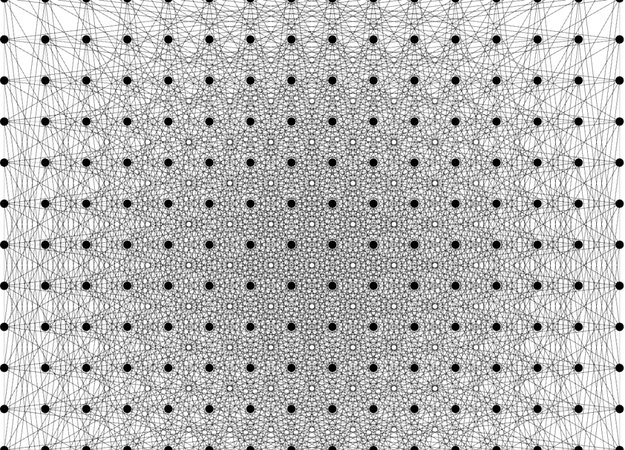
OpenAI has announced that its latest reasoning model produced an original mathematical proof, disproving a long-standing unsolved conjecture in geometry first posed by Paul Erdős in 1946. If this claim seems familiar, that’s because it’s not the first time the company has made such a bold assertion. Seven months ago, OpenAI’s former VP, Kevil Weil, posted on X: “GPT-5 found solutions to 10 previously unsolved Erdős problems and made progress on 11 others.”
As it turned out, GPT-5 hadn’t actually solved those problems—it had merely rediscovered existing solutions already documented in academic literature. This led to criticism from rivals like Yann LeCun and Google DeepMind CEO Demis Hassabis, prompting Weil to quickly remove his premature post. This time, however, OpenAI appears to have avoided repeating the same mistake. Alongside the announcement, the company published supporting remarks from mathematicians such as Noga Alon, Melanie Wood, and Thomas Bloom—who maintains the Erdos Problems website and had previously described Weil’s post as “a dramatic misrepresentation.”
“For nearly 80 years, mathematicians believed the best possible solutions looked roughly like square grids,” OpenAI stated on X. “An OpenAI model has now disproved that belief, discovering an entirely new family of constructions that performs better.”
The company claims this marks “the first time AI has autonomously solved a prominent open problem central to a field of mathematics.” According to OpenAI, the proof was generated by a new general-purpose reasoning model, not a system specifically designed for mathematical problem-solving or tailored to this particular challenge. The company views this as significant because it suggests AI systems are now better equipped to maintain long, complex chains of reasoning and connect ideas across disciplines in ways researchers might not have previously considered. This capability could have far-reaching implications for fields like biology, physics, engineering, and medicine.
“AI is helping us to more fully explore the cathedral of mathematics we have built over the centuries,” Bloom said in a statement. “What other unseen wonders are waiting in the wings?”
RELATED ARTICLES


Comments
Please log in to leave a comment.
No comments yet. Be the first to comment!