AI Agents Fall Short in New Benchmarks: Claude Fable 5.2 and ChatGPT-6 Astra Struggle With Complex Tasks
By admin | Nov 11, 2026 | 3 min read
AI agents are generating a lot of excitement, but their actual capabilities fall short of what vendors claim. Benchmarking efforts for agents assigned complex work reveal they generally aren't dependable enough to operate without close oversight. LiveBench 2.0 indicates Claude Fable 5.2 and ChatGPT-6 Astra completed 82.9 and 75.6 out of 100 tasks, respectively, while a test by AI infrastructure firm EON, which evaluated agents in a simulated corporate setting, found that the best-performing model, Claude Opus 4.8, achieved 76.8% task accuracy.
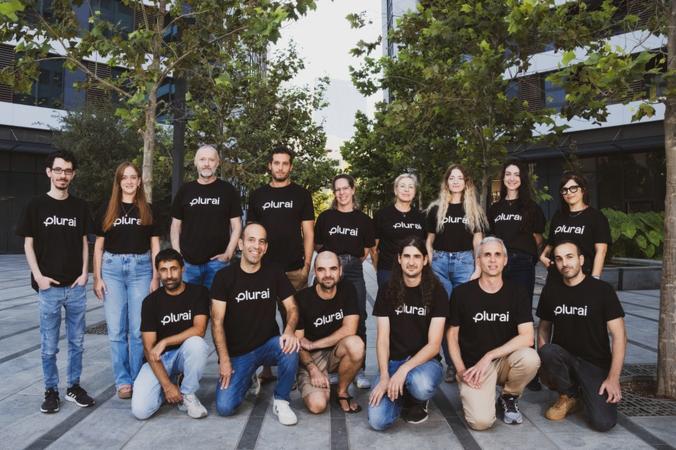
Now a startup called Plurai aims to improve those figures using the same approach that made self-driving cars a reality: simulations built on synthetic data derived from a company's own digital systems, designed to ready models for challenging edge cases. Co-founders Ilan Kadar and Elad Levi previously worked at Nexar, an autonomous driving technology developer. Kadar collaborated with Waymo to simulate and evaluate its end-to-end deep learning driving software. "Since we saw the same pattern, the same pitch was that we want to build this simulation layer."
On Wednesday, the startup announced it had secured $13 million in seed funding to pursue that goal. Team8 led the round, with U&I, Velocity and Mercer also participating. Much like end-to-end models trained to drive cars, AI agents are probabilistic systems working in unpredictable environments. When prompted by customers, agents handling travel bookings may disregard spending policies. Or, when asked to query a single database, agents can reliably deliver an answer, but pulling together information from multiple data sets tends to cause problems. A lengthy conversation with a customer service bot can overload an agent with excessive context and send it down wrong paths.
To address this, Plurai builds a digital twin of a company's electronic systems, including the knowledge base and tools an agent will use in production. It then charts all the possible agent flows and uses that graph to prepare the model through evaluations and fixes for potential edge cases. The platform integrates with existing agentic tools such as Claude Code, Codex, Copilot and Cursor. Yet Kadar says the company's true potential lies in using the data it collects to post-train small, open-weight models customized to each customer's needs. Tests conducted with Nvidia and Nebius demonstrated the company's models beating mid-tier frontier models at lower cost. "We can take a large language model, we can take the task, decompose it into a smaller task using the simulation, train [an open-weight] model, and using the simulation, verify that the quality is higher or comparable to the frontier model, and an order or two orders of magnitude cost reduction," he said.
Reah Miyara, a Google DeepMind researcher who backed Plurai as an angel investor, said the company's advantage stems from understanding failure modes in production and generating synthetic data to tune models. As businesses seek to optimize their AI spending, Plurai's approach could deliver a genuine benefit, since IT leaders are recognizing that "frontier-capable models are out of distribution with my specific data, and the cost of these things isn't sustainable in the long term," Miyara said. Plurai hopes parallels between AI agents in physical and digital settings prove telling: while powerful general AI models are giving robots remarkable abilities, they aren't yet reliable enough for broad deployment. At the same time, robots powered by AI models built for specific tasks are already in the field, serving customers and collecting valuable real-world data. "My view is that no matter how smart OpenAI and Anthropic model will be - and they will be much smarter - they will not know your business and your policy," Kadar said.
RELATED ARTICLES



Comments
Please log in to leave a comment.

No comments yet. Be the first to comment!