Salesforce Debuts Koa: First Reasoning AI Model Built With Nvidia for Enterprise Sales and Marketing
By admin | Sep 15, 2026 | 3 min read
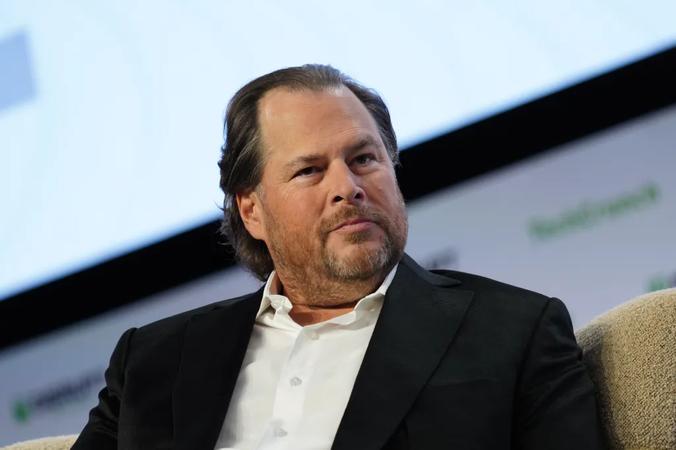
Salesforce used its massive Dreamforce conference this week to unveil Koa, a new AI model that represents one of the event's most significant reveals. Built atop Nvidia's open-weight Nemotron architecture, Koa marks Salesforce's entry into reasoning models—its first ever. The two companies collaborated to post-train the system specifically for excellence in sales, marketing, and customer support functions.
Koa illustrates a growing rift between what enterprise customers need from AI and what the leading AI labs are producing. While proprietary labs push enterprises to funnel their files, code, prompts, and feedback directly into their models—often at substantial cost—Salesforce is taking a different approach. Through Koa, the company offers its enterprise clients:
- An open-weight option instead of closed frontier models - A system trained for specific workplace tasks rather than abstract mathematical challenges - A model built without ingesting any real customer data, eliminating leak risks - Reduced AI expenses through more efficient token usage - Automatic routing through an AI "gateway" based on task requirements - Full compliance with each customer's data and security protocols within Salesforce's ecosystem
Koa will serve as an alternative model within Salesforce's Agentforce platform, where businesses construct agents to manage routine operations like responding to customer inquiries or booking appointments. As one executive put it, "But reasoning has always been something that we've relied on the frontier model providers for. Until now."
Previously, when an agent required reasoning for extended or complex tasks, those requests would be directed to frontier models like Claude or ChatGPT via Agentforce's AI gateway—the system responsible for routing requests to appropriate models. "One of the reasons we hadn't done this before, train our own enterprise-grade frontier model - we always wanted to - but the challenge has always been the lack of a pre-trained base model to start with. Until Nemotron came along, there was no sovereign American pre-trained model that was available, one, and two, that was state of the art, and, three, that had clear data provenance. We have no idea what Qwen trains on," explained Govindarajan, referencing Alibaba's widely-used Chinese open-weight model.
Post-training transforms a general-purpose model into one deeply knowledgeable about sales and customer support. To achieve this without using actual customer data, Salesforce and Nvidia generated synthetic data that replicated customer behavior patterns. "We actually simulated a customer service environment with a persona customer service professional, including irate customers that call into the customer service center, all the way to a sales professional who's trying to close a deal," Govindarajan described.
The goal is for Koa to outperform Claude or ChatGPT on the specific work tasks Salesforce customers want agents to handle—while consuming fewer tokens and reducing costs. "It's kind of the trifecta of things that you need to have: sovereign AI, time to first token, efficient reasoning, for the tokenomics of it all."
That said, Salesforce maintains its relationships with Anthropic and OpenAI. The company simultaneously announced ClaudeForce, a partnership with Anthropic enabling businesses to use Claude as their AI interface while keeping their data stored and secured within Salesforce's infrastructure.
RELATED ARTICLES
Comments
Please log in to leave a comment.
No comments yet. Be the first to comment!