Microsoft CEO Warns: Companies Fully Dependent on Proprietary AI Labs Will Not Survive
By admin | Jul 27, 2026 | 3 min read
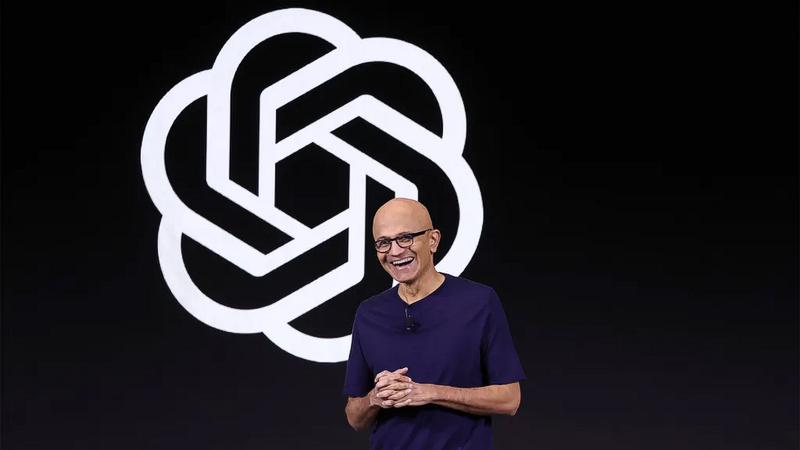
On Sunday, Microsoft CEO Satya Nadella reinforced the stark warning he issued earlier this month to businesses leveraging artificial intelligence—and this time, he took it even further. Companies that depend entirely on proprietary AI labs for their AI needs will ultimately fail, he predicts. Speaking on CNN’s *Fareed Zakaria GPS*, Nadella was asked by Zakaria what constitutes a company sharing too much with an AI model provider. In response, Nadella urged businesses to be cautious about everything they hand over, from their data to their prompts. He advocated for a system where “every time you use the model, all of the metadata around it is retained by you, so that you could use all of that to train perhaps your own weights or your own open, own model.” (Weights refer to a model’s trained parameters—essentially its brain. Nadella’s point: companies should keep their usage data so they can eventually build their own model.)
“Any firm that doesn’t have this control, I will claim will not remain a firm because you’ve essentially outsourced your thinking,” he added. In short, Nadella says companies without their own models—or without an AI infrastructure layer known as AI gateways to separate their prompts from the model itself—will be in trouble. He specifically advises businesses to stop relying on AI labs’ built-in coding tools, called harnesses. (Examples include Anthropic’s Claude Code and OpenAI’s ChatGPT Codex.)
“By keeping the harness separate from the model and the context and memory separate from the model, you absolutely can use multiple models for what they’re great at. At the same time, any one model can go away, and you can still continue to be in control of your own destiny,” Nadella said. Notably, Microsoft is an investor in the two largest AI labs, Anthropic and OpenAI. Coding agents are a particularly popular way for enterprises to use AI models and are reportedly generating substantial revenue for the model makers. Yet Nadella is telling enterprises not to rely too heavily on them. Microsoft, of course, would benefit from this warning, as its cloud business now sells the kind of alternative infrastructure he recommends. Despite the obvious self-serving fear tactic, his point is valid. Enterprises are increasingly recognizing that they need multiple model options—especially cheaper ones—and are turning to open-weight models, whose underlying code is publicly available, allowing them to fine-tune and run the models on their own hardware. This, in turn, means they will also need ways to manage multiple models and coding agents that aren’t tied to a specific provider.
But Nadella’s observation isn’t just about runaway budgets. He anticipates that once a company has “outsourced its thinking” to a model, there’s little to stop the AI lab from eventually offering a competing service of its own. This risk grows as enterprises adopt AI agents and give them access to the inner workings of the company. It’s the kind of warning that the startup industry has been shuddering about for years: What’s to stop model makers from wiping out startups by copying and competing with them? In May, for example, when OpenAI CEO Sam Altman offered to invest in every Y Combinator startup in its latest cohort by providing AI credits, seed investor Jason Calacanis issued a similar buyer-beware warning. “If you take these tokens, there’s a non-zero chance that OpenAI will study exactly what your startup is doing, copy your idea and put your app into their free offering. This is the classic platform playbook—be careful, founders,” he posted. Now Nadella is making that same case to enterprises.
One caveat: Nadella’s concern about oversharing with AI models applies only to businesses—not individuals. When Zakaria specifically asked how everyday people could protect themselves, Nadella shrugged it off, saying that sharing data is simply the price consumers pay for using a service, especially a free one. “To some degree there’s got to be some value exchange in the consumer space where you’re getting something for free, maybe for your data. That’s sort of how the advertising business model has worked,” Nadella said.
RELATED ARTICLES


Comments
Please log in to leave a comment.

I have been wondering whether it's truly realistic to comfortably use online casino games without lag on an older smartphone, given that most recently released iGaming products appear engineered primarily with flagship devices as the baseline. It's honestly been a recurring thought whenever I open one of these sites, since not everyone has access to the newest smartphone, even so the default in these platforms tends to be that hardware isn't a limitation. Wanting an actual answer instead of just guessing, I went ahead and tested it out personally on [url=https://aquavitae.bar/]aquavitae.bar[/url], largely because a few people mentioned that the platform behaved reasonably even on older devices. Honestly, it performed much smoother than I had anticipated, considering that my device is a few years old and hardly a powerhouse — the kind of thing most tech sites would immediately dismiss trying for anything demanding. With a little trial and error, I noticed that running through the default browser in place of a separate app gave considerably fewer slowdowns, which made sense, given that installed software generally hog more background resources while just sitting idle. Dialing back the graphics settings where possible also took a lot of the strain off, particularly on slower processors which struggle under constant visual effects. Worth mentioning too, shutting down unused processes right before loading a session seemed to protect just enough breathing room to make everything loading without interruption. Another thing I picked up on that a decent internet connection played a bigger role than I initially assumed, because even a reasonably modern phone, a spotty connection can still lead to lag. Reducing additional apps running simultaneously during running a session seemed to introduce extra lag, meaning clearing them out in advance is a small habit that makes a real difference. If anyone is dealing with the same issue, the link is https://aquavitae.bar/ — surprised me in a good way even on my several-years-old device, and there's a good chance it's worth testing no matter if your setup is nowhere near a flagship model. Overall, it seems that a smooth experience on budget devices is mostly a matter of a handful of small adjustments instead of needing an expensive phone from the outset.