Space Compute Startup Starcloud Reaches $1.1B Unicorn Status in Record Time
By admin | Mar 30, 2026 | 3 min read
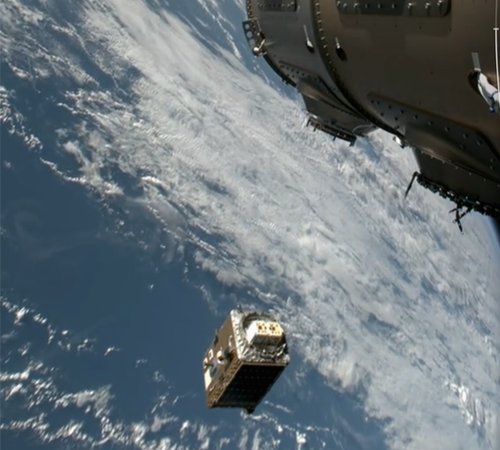
Starcloud has achieved a $1.1 billion valuation in its latest funding round, marking it as one of the fastest Y Combinator graduates to reach unicorn status. The Series A investment, secured 17 months after its demo day, was spearheaded by Benchmark and EQT Ventures. This move underscores growing investor enthusiasm for relocating data centers to space, a trend fueled by earthly resource limitations and political hurdles. However, this ambitious model relies on technology yet to be fully proven and requires substantial capital investment.
To date, Starcloud has raised $200 million. The company launched its inaugural satellite, equipped with an Nvidia H100 GPU, in November 2025.
EMBED_PLACEHOLDER_0
Later this year, the company plans to launch a more advanced iteration, Starcloud 2. This version will feature multiple GPUs, including an Nvidia Blackwell chip and an AWS server blade, alongside a bitcoin mining computer. Furthermore, Starcloud has begun development on a dedicated data center spacecraft, named Starcloud 3, designed to launch aboard SpaceX's Starship rocket.
This three-ton spacecraft, operating at 200 kilowatts, is engineered to fit within the "pez dispenser" deployment system used for Starlink satellites. CEO Philip Johnston believes it could become the first orbital data center to achieve cost parity with ground-based facilities, targeting an energy cost of approximately $0.05 per kilowatt-hour—provided commercial launch costs fall to around $500 per kilogram.
A significant hurdle is that Starship is not yet operational. Johnston anticipates commercial access opening in 2028 or 2029. This timeline reflects a broader industry challenge: advanced space-based computing will remain prohibitively expensive until a new generation of rockets achieves high launch frequency, a milestone that may not arrive until the 2030s. "If it ends up being delayed, we’ll just carry on launching the smaller versions on Falcon 9," Johnston stated. "We’re not going to be competitive on energy costs until Starship is flying frequently."
Johnston outlines two primary business models. The first involves selling processing power to other spacecraft in orbit; for instance, its first satellite analyzes data for Capella Space's radar spacecraft. The second, envisioned for when launch costs decrease, is to have powerful distributed orbital data centers compete for workloads currently handled by terrestrial facilities.
This highlights the nascent state of the industry. When Nvidia CEO Jensen Huang recently unveiled the Vera Rubin Space-1 chip modules, he did not mention that none have been produced or shared with partners. Currently, only dozens of advanced GPUs are in orbit, compared to the nearly 4 million Nvidia sold to terrestrial hyperscalers in 2025. For perspective, SpaceX's 10,000-strong Starlink network generates about 200 megawatts of power, while over 25 gigawatts of data center capacity is under construction in the U.S. alone.
Johnston contends that Starcloud holds a significant lead, having deployed the first terrestrial-grade GPU in orbit. This milestone allowed the company to train an AI model and run a version of Gemini in space, a claimed first. Beyond performance, Johnston emphasizes the invaluable operational data gained from running powerful chips in the space environment—knowledge hard-won after an Nvidia A6000 GPU failed during launch.
The technical challenges are extensive, encompassing efficient power generation and cooling for high-temperature chips. Starcloud-2 will feature the largest deployable radiator ever flown on a private satellite, and Johnston expects at least two more variants of this spacecraft to launch. Another major hurdle is synchronization: the largest data center workloads, like AI training, require hundreds or thousands of GPUs working in unison. Achieving this in orbit will necessitate either massive individual spacecraft or highly reliable laser links between formations of smaller craft. Most companies in this field expect these complex workloads to follow after simpler inference tasks are established in space.
The competitive landscape includes companies like Aetherflux, Google’s Project Suncatcher, and Aethero—which launched Nvidia’s first space-based Jetson GPU in 2025. However, the most formidable potential competitor is SpaceX itself, which has sought U.S. government permission to operate up to a million satellites for distributed space computing.
While competing directly with SpaceX is a daunting prospect, Johnston sees potential for coexistence. "They’re mainly planning on serving Grok and Tesla workloads. It may be at some point that they offer a third party cloud service, but what I think they are unlikely to do is what we’re doing [as] an energy and infrastructure player."
RELATED ARTICLES



Comments
Please log in to leave a comment.

No comments yet. Be the first to comment!