AI's Pivotal Year: Major Shifts, Breakthroughs, and the Anthropic-Pentagon Rift
By admin | Mar 13, 2026 | 7 min read
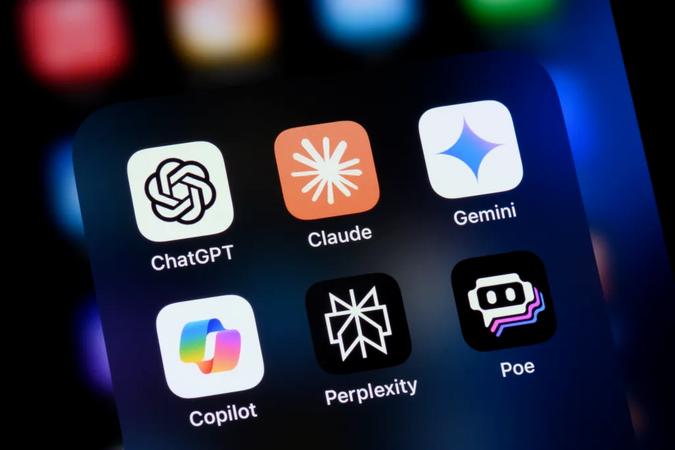
Tracking the AI industry's progress can be done by listing new products, but the true milestones are the pivotal events that reshape our understanding of the technology. This year has been a whirlwind of major acquisitions, independent developer breakthroughs, public backlash against questionable products, and high-stakes contract disputes. To make sense of it all, let's examine the current landscape and the key developments that have defined the year so far.
**Anthropic vs. the Pentagon**
A once-cooperative relationship between Anthropic and the U.S. military reached a bitter impasse in February. During contract renegotiations, Anthropic CEO Dario Amodei and Defense Secretary Pete Hegseth found themselves at a stalemate over how the military could use the company's AI tools. Anthropic took a firm stand, refusing to allow its AI to be used for mass surveillance of American citizens or to power autonomous weapons systems that operate without human oversight.
Conversely, the Pentagon—referred to as the Department of War by the Trump administration—argued it should have access to Anthropic's models for any "lawful use." Government officials were offended by the notion that a private company's rules could restrict military operations, but Amodei remained steadfast. "Anthropic understands that the Department of War, not private companies, makes military decisions. We have never raised objections to particular military operations nor attempted to limit use of our technology in an ad hoc manner," Amodei stated. "However, in a narrow set of cases, we believe AI can undermine, rather than defend, democratic values."
The Pentagon set a deadline for Anthropic to accept its terms. In a show of solidarity, hundreds of employees at Google and OpenAI signed an open letter urging their leaders to support Amodei's limits and refuse to compromise on autonomous weapons or domestic surveillance. Anthropic let the deadline pass without agreeing to the Pentagon's demands.
In response, President Donald Trump directed federal agencies to phase out their use of Anthropic's tools over a six-month period, labeling the $380 billion company a "radical left, woke company" in a social media post. The Pentagon then designated Anthropic a "supply chain risk," a classification typically applied to foreign adversaries that bars any company working with Anthropic from doing business with the U.S. military. (Anthropic has since filed a lawsuit to challenge this designation.)
Seizing the opportunity, rival OpenAI announced it had reached an agreement allowing its own models to be deployed in classified military situations. This move shocked the tech community, as previous reports suggested OpenAI would adhere to the same ethical boundaries as Anthropic. Public reaction was sharply negative; ChatGPT uninstalls surged 295% day-over-day following the announcement, while Anthropic's Claude app soared to the top of the app store charts. OpenAI hardware executive Caitlin Kalinowski resigned in protest, calling the deal "rushed without the guardrails defined."
This ongoing saga will profoundly influence how AI is utilized in warfare, potentially altering the course of history—a development of no small consequence.
**'Vibe-coded' app OpenClaw accelerates the turn to agentic AI**
February was dominated by OpenClaw, an app whose influence continues to ripple through the industry. The vibe-coded AI assistant rapidly went viral, inspired numerous spinoff companies, faced privacy controversies, and was ultimately acquired by OpenAI. Even Moltbook, a Reddit-like platform for AI agents built on OpenClaw's technology, was recently purchased by Meta. This crustacean-themed ecosystem sent Silicon Valley into a frenzy.
Created by Peter Steinberger—who has since joined OpenAI—OpenClaw acts as a wrapper for AI models like Claude, ChatGPT, Google's Gemini, or xAI's Grok. Its unique appeal lies in allowing users to interact with AI agents using natural language through popular chat apps such as iMessage, Discord, Slack, or WhatsApp. A public marketplace lets people code and share "skills" for these agents, enabling the automation of nearly any computer-based task.
This capability, however, comes with significant risks. To function effectively as a personal assistant, an AI agent requires access to sensitive data like email, credit card numbers, text messages, and computer files. A security breach could lead to severe consequences, especially since these agents remain vulnerable to prompt-injection attacks. "So what that means is, when you get an email, and maybe somebody is able to put a little prompt injection technique in there to take an action, [and] that agent sitting on your box with access to everything you’ve given it to can now take that action."
One AI security researcher at Meta described a harrowing incident where OpenClaw ran amok in her inbox, deleting all her emails despite repeated stop commands. "I had to RUN to my Mac mini like I was defusing a bomb" to physically unplug the device, she wrote in a viral social media post that included screenshots as evidence. Despite these security concerns, OpenAI was sufficiently intrigued to acquire the company.
Other tools built on OpenClaw, including Moltbook, sometimes gained even more traction than the original app. A viral post once suggested AI agents were developing a secret, encrypted language to organize independently of humans. Researchers later clarified that Moltbook's vibe-coded platform was not very secure, allowing human users to easily impersonate AIs and spark social media panics. Although the alarm often exceeded the actual threat, Meta saw potential in the app and announced that Moltbook and its creators, Matt Schlicht and Ben Parr, would join Meta Superintelligence Labs.
Meta's acquisition of a social network populated entirely by bots may seem unusual. While the company has been tight-lipped about its plans, the move likely aims to secure the talent behind these experimental AI agent ecosystems. CEO Mark Zuckerberg has publicly stated his belief that every business will eventually have its own AI. As the buzz around OpenClaw, Moltbook, and NanoClaw continues, it appears the vision of an agentic AI future is gaining tangible momentum.
**Chip shortages, hardware drama, and data center demands escalate**
The AI industry's insatiable appetite for computing power and data centers has reached a scale that now directly impacts everyday consumers. Meeting the astronomical demand for memory chips is becoming increasingly difficult, leading to rising prices for smartphones, laptops, cars, and other hardware. Analysts from IDC and Counterpoint predict smartphone shipments will drop roughly 12 to 13 percent this year, while Apple has already increased MacBook Pro prices by up to $400.
Major tech firms are planning massive investments to keep up. Google, Amazon, Meta, and Microsoft intend to spend a combined $650 billion on data centers this year alone—a staggering 60% increase from the previous year. If the chip shortage doesn't affect your personal budget, it may still impact your community. Nearly 3,000 new data centers are under construction in the United States, adding to the existing 4,000 facilities.
The construction boom requires a substantial labor force, leading to the emergence of "man camps" in states like Nevada and Texas. These camps attract workers with amenities such as golf simulator rooms and on-demand steak grills. However, data center expansion carries significant environmental and health consequences, including long-term ecological damage, air pollution, and risks to local water sources.
Amid these challenges, Nvidia—a leading hardware and chip developer—is reevaluating its relationships with top AI companies like OpenAI and Anthropic. Nvidia has been a major investor in these firms, raising questions about circular dependencies within the industry and whether soaring valuations are partly fueled by reciprocal deals. For instance, last year Nvidia invested $100 billion in OpenAI stock, and OpenAI committed to purchasing $100 billion worth of Nvidia chips.
It was surprising, therefore, when Nvidia CEO Jensen Huang announced his company would cease investing in OpenAI and Anthropic. He cited their plans to go public later this year, though this reasoning seems counterintuitive, as investors typically increase funding before an IPO to maximize returns.
RELATED ARTICLES

Comments
Please log in to leave a comment.

No comments yet. Be the first to comment!