Meta's Muse and OpenAI's Dots Spark a Consumer AI Comeback as Instinct Hits $10 Billion Valuation
By admin | Sep 30, 2026 | 4 min read
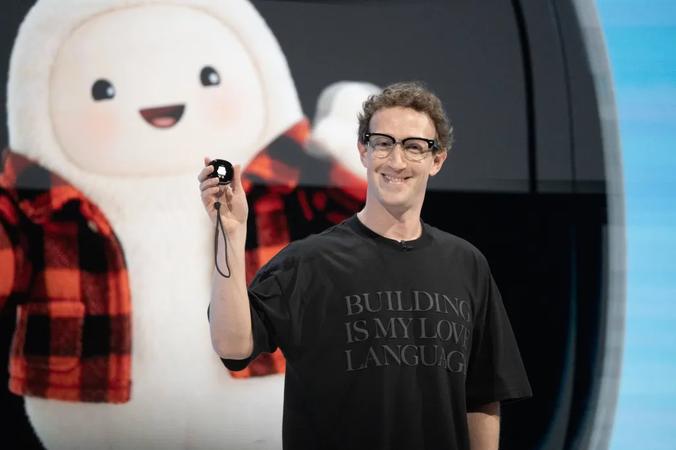
This week has made it possible to argue that consumer AI is experiencing a resurgence. Meta's personal AI assistant, Muse, along with its plush-style mascot Jolly, has become an unexpected success. OpenAI's Dots, which launched just yesterday, seems to be pursuing the same cartoonish personal assistant concept. Meanwhile, the emerging Instinct assistant achieved a $10 billion valuation based on its agentic errand-running capabilities, which focus on booking travel, making restaurant reservations, and cancelling subscriptions.
The optimistic case is straightforward to make. Agentic AI has at last become dependable enough to manage routine tasks. Companies are increasingly marketing this service to ordinary people, who are receiving real value from it. From an investor's perspective, this bears a strong resemblance to the ChatGPT launch in 2022—the fundamental strength of AI creating an entirely new product category. Naturally, many would want to participate.
But there's a reason frontier labs have become cautious about consumer AI—and it's not due to inadequate technology. Even remarkably popular tech products are beginning to reach a limit on how much consumers are willing to spend, and it remains unclear whether superior models actually translate into a more profitable consumer business. The outcome has been an industry-wide move toward the Anthropic approach, concentrating on enterprise contracts and expanding sector by sector.
If products such as Muse and Instinct are resisting that pattern, it's because they're less focused on monetization. However, the fundamental economics of consumer AI aren't improving, and anyone entering this business will eventually have to confront them. A reminder of those economics came from Andreessen Horowitz's semiannual State of Markets report, which drew its data from a PNC research report released this summer. Through two charts, they illustrate the gradually increasing percentage of consumers who pay for AI services, together with the gradually increasing amounts they spend. As of May, 2.2% of consumers were paying for AI, with an average monthly spend of $31.
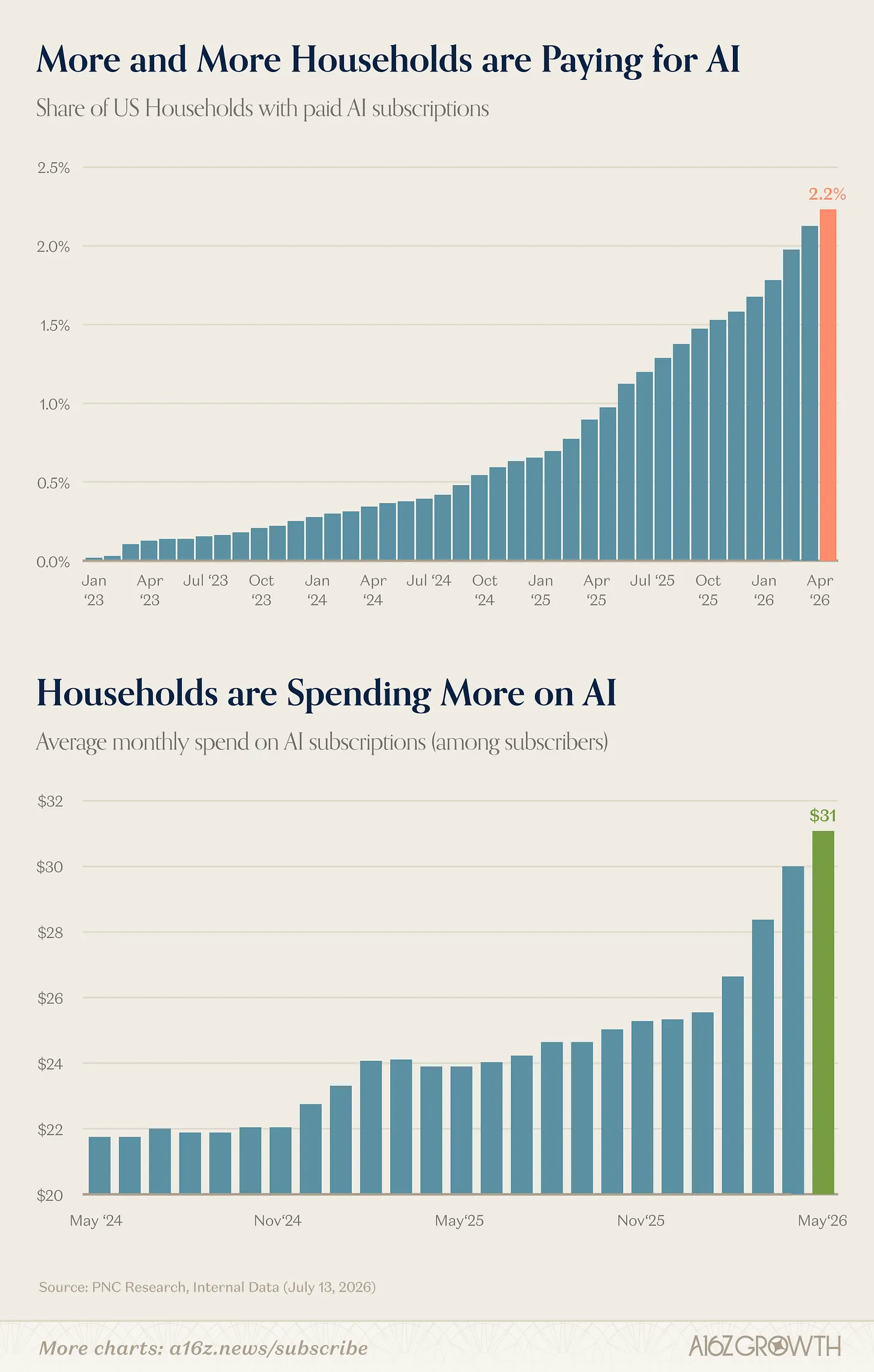
Andreessen presents this positively, noting, "it's still so early when it comes to mature AI adoption and utilization." There's substantial room for growth. Yet in both charts, the rate of growth appears notably linear. Even as models achieve enormous improvements, there isn't much change in the number of customers willing to pay for AI or the amount they're prepared to spend. The massive performance leap from GPT-5.2 to Astra, for example, is hardly noticeable on the chart.
The per-consumer figures are less dramatic, but still well below the typical break-even threshold. If Netflix serves as the benchmark for a market-saturated online service (at 325 million subscribers), then $34 per customer only yields $11 billion in annual revenue—less than a third of OpenAI's operating costs. If you believe PNC is underestimating adoption, Bank of America provides comparable numbers. In March, the firm determined that approximately 3% of U.S. consumers paid for AI, a 40% increase from the prior year. A Menlo survey from September offers a somewhat more optimistic picture, finding that a quarter of adults use AI daily and half of those users pay for it.
The issue with the consumer approach relates less to revenue than to cost. AI is an exceptionally expensive technology to run, especially when compared to lightweight predecessors like social networking or cloud computing. Even hundreds of millions of paying customers doesn't ensure breaking even. To its credit, OpenAI appears to have adjusted well to these realities. The company's extensively reported shift toward enterprise has been largely effective, with enterprise bookings reportedly doubling since July. Even the Dots launch included a significant enterprise component, demonstrating how the new personal agent could benefit software engineers and agency creatives. Selling popular-but-inexpensive consumer services to businesses at a markup is a long-established method for making money, and OpenAI seems to be following that strategy.
It's more difficult to determine what this means for Muse and Instinct. Muse benefits from the powerhouse of Meta's personalized ad targeting, providing more monetization options and more time before it becomes a pressing concern. Notably, Meta is already investigating the enterprise angle. Instinct has a distinct plan involving taking a portion of purchases made through the agent, which could raise the ceiling. Presumably it will also be able to sidestep the expense of training a frontier model, which will provide considerable help. However, the harsh economics of consumer AI impose a firm limit on how large the company can realistically grow without accessing enterprise revenue. It's a lesson the major labs have already absorbed, and it's one of the few aspects of the industry that doesn't appear to be shifting.
RELATED ARTICLES


Comments
Please log in to leave a comment.

No comments yet. Be the first to comment!