Voice AI startup AethexAI raises $3M to bring human-like customer support to Africa and the Middle East
By admin | Jun 03, 2026 | 4 min read
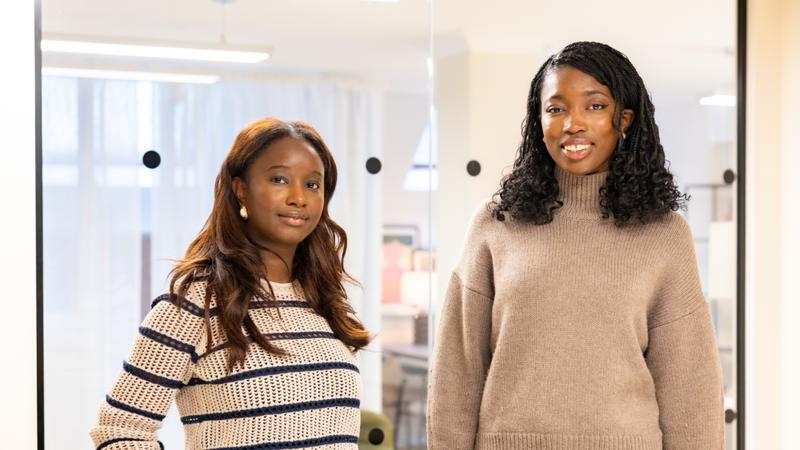
Customer support and service have become two of the most dynamic areas in voice AI today. However, creating a product that sounds convincingly human and responds without noticeable lag proves far more challenging in certain markets than others—and most major players were never designed with Africa and the Middle East in mind. AethexAI, a startup founded last year to bridge this gap, has secured $3 million in pre-seed funding led by 4DX Ventures, with additional backing from Enza Capital, Dorm Room Fund, Mojo Ventures, and the Stanford GSB 26 Fund. Individual investors include Stanford faculty members, telecom executives, and AI researchers from Anthropic. Instead of relying on existing orchestration tools like Vapi or LiveKit, the company built its own compact model and orchestration layer from scratch to handle the localized dialects of English, French, and Arabic spoken across its target markets—a decision driven by the unique demands of operating in the region. The startup is also launching its platform for enterprises to test its technology and sign up for services, alongside APIs and SDKs for developers to experiment with its models.
The company was founded by Mariama Diallo and Ayooluwa Odemuyiwa. CEO Diallo previously worked at Goldman Sachs and later joined YC-backed ModelML as a product and growth hire. CTO Odemuyiwa graduated from Caltech, worked at Meta, and enrolled at Stanford Business School before co-founding the startup. The pair wanted to build something for emerging markets and began searching for opportunities. Businesses worldwide are racing to adopt AI tools to automate parts of their operations, but this doesn't always succeed. In Egypt, a call center automated a significant share of its calls but rolled the system back due to poor results, the founders discovered. Several support centers in Africa told them that finding and hiring engineers to automate calls at the right cost was a persistent challenge.
"The latency and jitter we saw on automated calls in this region were outrageous. If we had become orchestrators, we might have had to use large models hosted outside the region, resulting in higher latency," the founders explained. AI labs that deploy their latest models usually spend millions training them and acquiring data. AethexAI found a solution for both issues. Rather than pursuing the largest possible models, it decided that small models are sufficient to address the latency problem while maintaining accuracy. The company developed its own Kora series, with parameters ranging from 300 million to 1.7 billion—a fraction of the size of typical large language models, which is precisely the point. To train these models, the startup used anonymized recordings from a call center partner. It also shipped hard drives to radio stations across Africa to collect more audio data. To keep costs down, it built a contributor network of university students to annotate data and pronounce local names. As a result, the startup now handles more than 17,000 calls per day.
On the business side, the company carefully guides clients who are new to voice AI through the process, offering onsite demos and workshops to help them identify the best use cases for automation. "We always tell customers that we cannot be everything for everybody right now. We're small. When we start talking to a company, we ask them to pick one use case that is the most important to them to start with," Diallo said. The startup is open to working across all industries, but currently, a significant portion of its use cases involves calls for debt collection, customer activation, or KYC—Know Your Customer verification, the standard identity-checking process used by banks and telecoms. The company is hiring forward-deployed engineers on a contract basis to serve local markets and building channel partnerships with telecom providers to handle telephony for voice AI calls. Plug-and-play solutions, it says, simply won't work here.
Walter Badoo, co-founder and managing partner of 4DX Ventures, argues that the Africa and Middle East market is fundamentally different from the markets most voice AI companies were built to serve. "Enterprises in Africa and the Middle East process roughly three times the call volume of their Western counterparts, as voice is still the dominant channel for customer interaction," he said. "Incumbent systems were built for Western markets characterized by high-end GPU infrastructure, standard English and European speech environments, and enterprise workflows common in the US and Europe. That creates real gaps when enterprises need systems that handle dialects, code-switching, and informal speech patterns, and that work within their existing telephony infrastructure and their actual price points."
Put another way, while companies like ElevenLabs, Deepgram, Sierra, and Cognigy are expanding globally at a fast pace, the markets they were built for and the markets they are entering aren't always the same thing. Startups like AethexAI are betting that the gaps—models specialized in local dialects, on-the-ground partnerships, and infrastructure built for the region—represent a market opening that the giants have neither the incentive nor the architecture to close.
RELATED ARTICLES


Comments
Please log in to leave a comment.

No comments yet. Be the first to comment!