XCENA Launches Revolutionary Chip to Eliminate Costly AI Data Relay Bottlenecks
By admin | May 29, 2026 | 3 min read
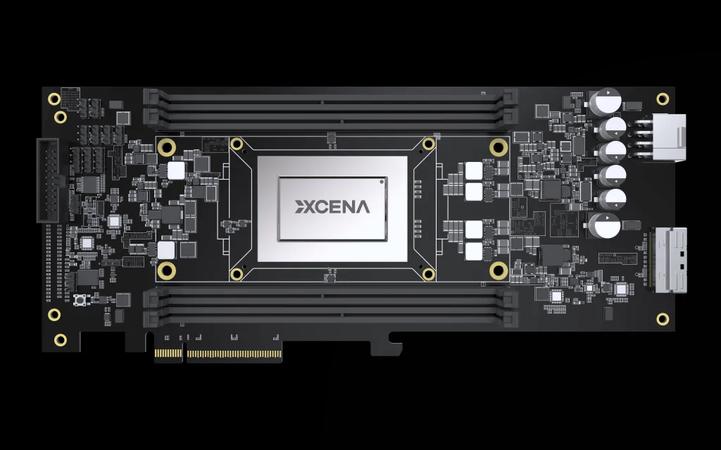
Every time you ask ChatGPT a question, your request sets off a high-speed relay race through your data. Information leaves memory, moves through a CPU for initial processing, travels to a GPU for heavy number-crunching, and then returns—and this entire loop repeats for every single word the AI generates. The fundamental bottleneck here is structural: it forces every request to route through some of the most expensive and power-hungry chips in the industry. That inefficiency is exactly what XCENA, a startup with offices in South Korea and the U.S., aims to fix. Founded four years ago, the company has designed a chip that brings computing power much closer to DRAM—the fast, short-term memory chips that store data a processor is actively using. This allows routine data operations to happen near memory, avoiding the costly round trips between CPUs, GPUs, and memory. If it works at scale, the impact on AI infrastructure costs could be massive, which explains the surge in investor interest globally. Indeed, XCENA just raised $135 million in a Series B round at a valuation of $570 million, bringing its total funding to $185 million.
EMBED_PLACEHOLDER_0
XCENA CEO Jin Kim co-founded the startup in 2022 alongside CTO Dohun Kim and CPO Harry Juhyun Kim. All three are veterans of Samsung and SK Hynix, the memory giants that supply chips powering Nvidia’s GPUs. “CPUs and GPUs have both gotten smarter over the decades. Memory never did,” Kim said. “The recent rise in memory prices and related stocks points to a broader shift in AI infrastructure toward memory-centric architectures.” (This month, the three companies that dominate the global memory chip market—Samsung, SK Hynix, and Micron—each crossed a trillion-dollar valuation for the first time.)
XCENA is betting its business on the thesis that “inference isn’t just a compute problem; it’s increasingly a memory scaling problem,” Kim explained. The company’s chip, the MX1, connects to the CPU through CXL (Compute Express Link)—essentially a dedicated express lane between the processor and memory—processing data before it ever needs to leave the memory module. It brings compute to the data, not the other way around. The company claims that what used to require 10 servers could potentially run on just one. “While GPUs excel at matrix multiplication—the heavy math behind AI model training—much of the surrounding data orchestration, including preprocessing, KV cache management [the system that stores prior conversation context so a model doesn’t have to reprocess it], and data caching, still runs on CPUs. Our chip handles those tasks directly within the memory module itself,” Kim said.
Demand for memory solutions has surged since the second half of last year, and the company believes the timing is working in its favor. Conversations with several global memory vendors are in early stages, though Kim declined to name them. The company’s ideal customers are hyperscalers spending tens of billions a year on AI infrastructure, where even a small gain in memory efficiency can mean hundreds of millions in savings. The MX1 is still a prototype. Mass production chips are scheduled to roll off Samsung’s foundry lines by the end of 2026, with the company expecting to generate revenue starting in 2027.
While neural processing unit (NPU) makers are competing to challenge Nvidia for training workloads, XCENA is targeting the memory-intensive layer that sits underneath all of it. XCENA’s closest rivals include Astera Labs and Marvell, both Nasdaq-listed companies working on next-generation memory connectivity. Marvell is a large, established player already working in the same space, Kim said, adding that the differentiator comes down to intellectual property. “We have thousands of cores,” Kim said. Based on public specs, Marvell’s approach relies on a handful of general-purpose cores by comparison. Those cores are built on RISC-V—an open-source chip design blueprint—and optimized specifically for data processing, with each core deliberately kept small and efficient. Beyond the cores themselves, XCENA designs its own internal memory hierarchy, interconnect bus, and DRAM controller—a level of vertical integration that most chip companies, including larger rivals, typically outsource.
Seoul-based VC firms Altinum and IMM Investment co-led the Series B round, along with Corstone Asia and existing investors SBI Investment and Mirae Asset Capital. The company, which has more than 90 staff across offices in Pangyo, a tech hub outside Seoul, and in Sunnyvale, is also in conversations with international investors about additional funding.
RELATED ARTICLES



Comments
Please log in to leave a comment.

No comments yet. Be the first to comment!