Arcee AI Launches Trinity: A Massive 400B Parameter Open-Source Foundation Model
By admin | Jan 28, 2026 | 6 min read
A prevailing view in the tech sector is that the dominant players in the AI model market are already established: major corporations like Google, Meta, Microsoft, and to some extent Amazon, alongside their preferred model creators, primarily OpenAI and Anthropic. However, the small 30-person startup Arcee AI challenges this perspective. The firm has introduced a new, fully open-source foundation model named Trinity, released under a permanent Apache license. Arcee asserts that with 400 billion parameters, Trinity ranks among the largest open-source foundation models ever developed and released by a U.S.-based company. According to benchmark tests performed on base models with minimal post-training, the company states Trinity performs comparably to Meta’s Llama 4 Maverick 400B and Z.ai's GLM-4.5, a leading open-source model from China’s Tsinghua University. 
Similar to other cutting-edge models, Trinity is optimized for coding and multi-step agentic processes. However, despite its substantial scale, it is not yet a full competitor to the most advanced systems because it currently processes only text. By contrast, Meta’s Llama 4 Maverick already supports multiple modalities, including text and images. Arcee explains that before expanding into additional AI modes, the priority was to create a base large language model capable of impressing its core audience: developers and academic researchers. A key objective is to attract U.S. companies of all sizes away from selecting open models originating from China. "Ultimately, the winners of this game, and the only way to really win over the usage, is to have the best open-weight model," said Atkins. "To win the hearts and minds of developers, you have to give them the best."
Benchmark results indicate that the Trinity base model, currently in preview as further post-training is completed, is competitive and in some instances slightly outperforms Llama in evaluations of coding, mathematics, common sense, knowledge, and reasoning. The progress Arcee has achieved to emerge as a competitive AI lab is notable. This large Trinity model follows two smaller versions launched in December: the 26-billion-parameter Trinity Mini, a fully post-trained reasoning model for tasks from web applications to agents, and the 6-billion-parameter Trinity Nano, an experimental model designed to explore the limits of compact yet conversational AI.
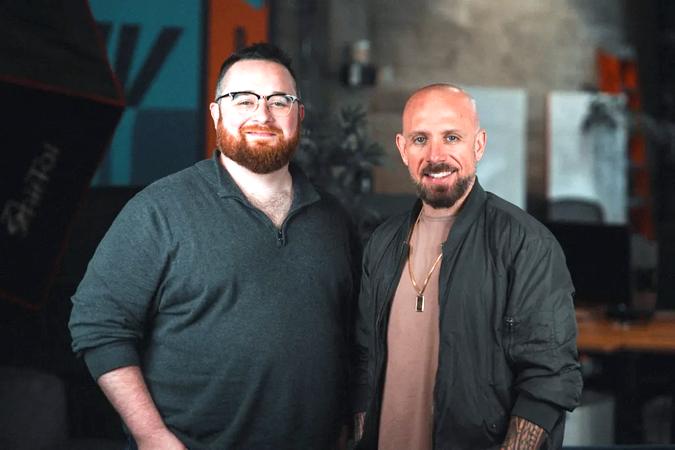
Remarkably, Arcee trained all these models within six months for a total cost of $20 million, utilizing 2,048 Nvidia Blackwell B300 GPUs. This expenditure came from the approximately $50 million the company has raised to date, according to founder and CEO Mark McQuade. That sum represented "a lot for us," noted Atkins, who led the model development. He acknowledged, however, that it is modest compared to the investments being made by larger AI labs. The six-month timeline "was very calculated," said Atkins, whose background prior to LLMs involved building voice agents for automotive applications. "We are a younger startup that’s extremely hungry. We have a tremendous amount of talent and bright young researchers who, when given the opportunity to spend this amount of money and train a model of this size, we trusted that they’d rise to the occasion. And they certainly did, with many sleepless nights, many long hours."
McQuade, a former early employee at the open-source model platform HuggingFace, explains that Arcee did not initially set out to become a new U.S. AI lab. The company originally focused on model customization for major enterprise clients such as SK Telecom. "We were only doing post-training. So we would take the great work of others: We would take a Llama model, we would take a Mistral model, we would take a Qwen model that was open source, and we would post-train it to make it better" for a company’s specific needs, he stated, including implementing reinforcement learning. As their client portfolio expanded, however, Atkins indicated that developing their own model became essential, and McQuade grew concerned about dependence on other companies' technologies. Concurrently, many of the top-performing open models were coming from China, which made U.S. enterprises cautious or legally restricted from using them. The choice to build independently was a significant one. "I think there’s less than 20 companies in the world that have ever pre-trained and released their own model" at the scale and level Arcee targeted, McQuade remarked.
The company began cautiously, first collaborating with training firm DatologyAI on a small 4.5-billion-parameter model. The success of that project provided the confidence to pursue more ambitious efforts. Yet with Llama already available in the U.S., why is another open-weight model necessary? Atkins points to Arcee’s commitment to the open-source Apache license, which ensures its models will remain permanently open. This stance follows comments from Meta CEO Mark Zuckerberg last year suggesting the company might not always release its most advanced models as open source. "Llama can be looked at as not truly open source as it uses a Meta-controlled license with commercial and usage caveats," Atkins says. This has led some open-source advocates to argue that Llama does not fully comply with open-source principles. "Arcee exists because the U.S. needs a permanently open, Apache-licensed, frontier-grade alternative that can actually compete at today’s frontier," McQuade emphasized.
All Trinity models, regardless of size, are available for free download. The largest version will be offered in three variants. Trinity Large Preview is a lightly post-trained instruct model, optimized to follow human instructions for general chat applications rather than merely predicting text. Trinity Large Base is the pure base model without any post-training. Finally, TrueBase is a model stripped of any instruct data or post-training, allowing enterprises or researchers to customize it without needing to reverse-engineer existing data, rules, or assumptions.
Arcee AI plans to eventually provide a hosted version of its generally released model with what it describes as competitively priced API access. That release is expected within six weeks as the startup continues to refine the model’s reasoning capabilities. API pricing for Trinity Mini is set at $0.045 per million input tokens and $0.15 per million output tokens, with a rate-limited free tier also available. Alongside these offerings, the company continues to provide post-training and customization services for clients.
RELATED ARTICLES


Comments
Please log in to leave a comment.

No comments yet. Be the first to comment!