Tony Fadell Reveals Why He Rejected Rabbit R1, Humane AI Pin, and Limitless Pendant — 'Father of the iPod' Calls Them Discontinued Gen 1 AI Failures
By admin | Oct 07, 2026 | 5 min read
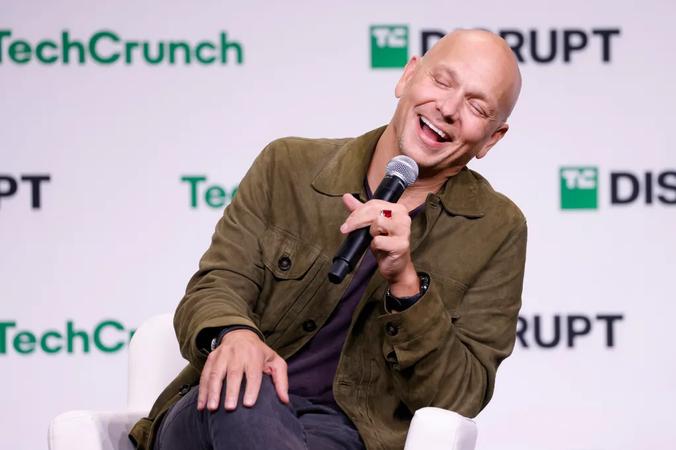
At the first-ever MIT Future Fest, Tony Fadell took to the stage and displayed a slide featuring three examples of AI gadgets that were heavily hyped but have already been killed off: the Rabbit R1, the Humane AI pin, and the Limitless pendant.
"These were kind of the 'Gen 1' AI products, and because of my background, these companies called me and asked me to help them," Fadell explained. "I didn't."
It makes sense that these companies would seek out Fadell's guidance. He's known as the "father of the iPod," a co-creator of the iPhone, and the founder of Nest, the smart thermostat company that Google acquired.
"You have to really understand what you're trying to do, what pain you're trying to solve," he said. "In each of these cases, each one of them didn't meet any kind of need — it was just interesting technology for geeks, and you're like, 'Okay, that's neat, but it doesn't really apply to my life.'"
These early AI devices sold the promise of having a personal assistant at your fingertips, but in practice, they didn't function very well. And even if they had worked, most people have never had an assistant and have no idea how they would use — or come to trust — a personal robot helper.
"It's less than 0.01% of the world population that has ever had a human [assistant] do anything, and so when [companies] say, 'Oh, we want an assistant,' that's a bunch of people who have assistants saying it," he said. "Most consumers don't even know what an assistant is."
Fadell then broke it down for the 99.99% of us: hiring a personal assistant you can actually trust isn't as simple as picking the most impressive resume off the top of a stack.
"It took me a couple of years first to understand how best to utilize [an assistant], and then to trust them with the most sensitive data, and have them be an agent where they're setting up meetings with people and working with my bank," he said. "I understand we have this vision of the future, but there's a lot of steps to get the general consumer and even the general business on this path."
It's tricky to discuss the challenges of building trust with a personal assistant without coming across as a bit privileged, but Fadell makes a valid point. When you bring on a human assistant, you don't hand over your bank account credentials on the first day. We're moving toward a future where anyone can have a personal AI assistant, but these tools are only useful if we can trust them to be completely secure. Right now, building trust with an AI assistant appears even more difficult than relying on a human one. Meta recently rolled out Muse, its general-purpose AI assistant, but users have good reason to be cautious. A security researcher quickly uncovered a serious flaw in Muse after it launched, and a recent 404 Media report says that some Meta employees found security issues that caused multiple teams to go on a "mad dash" to fix the problems before launch, working overtime.
"Trust and safety are going to be paramount with anything that we turn over to some kind of intelligence," Fadell said. "The only company I could see right now — maybe one other — is Apple who could do this. Apple has all the hardware, they have all the chips, they have all the pieces, but they don't have all the AI stuff."
Even if Apple isn't the company that ultimately creates the most sticky AI agent, Fadell predicts that a successful agent will need to run entirely on-device — both to protect privacy and to keep the technology lightweight.
"When you're hearing all of these things about, 'Oh, data centers are going to conquer the world,' … I don't believe it," he said. "I've seen this before. I've seen this play out in the internet days and what have you. We have so much power on the device now, and even more compute, and they're still battery operated."
By keeping sensitive data on-device instead of sending it through the cloud, Apple has earned enough trust from users that they're willing to share biometric data through features like Face ID. As Fadell points out, Apple seems to have more goodwill with consumers than its competitors when it comes to privacy. But unlike other major tech companies, Apple doesn't have a world-class AI model of its own — the new Siri AI runs on custom-built versions of Google's Gemini. While Apple trails in proprietary AI, it's far ahead in hardware. Fadell theorizes that companies like Meta and OpenAI are shifting their focus toward gadgets because they don't have billions of devices in circulation the way Apple does.
"It's because they don't have access to the sensors on your phone. They're like, 'Oh, we'll need video,' and you have to check, 'Yes, I'll give you video.' Then they say, 'Well, we need audio.' Check. 'We need your GPS location.' Check. And before you know it, it becomes a list of 20 things or more than you have then allowed them to have," he said. "So what do they do. They go and make a device with all that stuff in it without a screen… and then they just Bluetooth or Wi-Fi into your phone and then back up to the web, or into a 5G network, so they can get all the sensor data."
Given his track record creating the iPhone and iPod, it might seem like Fadell still views his former employer through rose-colored glasses. But while he gives Apple credit where it's deserved, he hasn't held back from calling Apple out when he believes they're making mistakes. When an audience member asks about the role of luck in finding product-market fit, Fadell notes that it's much harder for startups to manufacture that luck, since a failed product can mean the end of the company.
"Because it's a startup, you get one shot," he quipped. "It's not like Apple with the Vision Pro."
RELATED ARTICLES
Comments
Please log in to leave a comment.

No comments yet. Be the first to comment!