Vint Cerf Joins Innovation Labs to Build Open Identity Architecture for AI Agents
By admin | Jul 15, 2026 | 3 min read
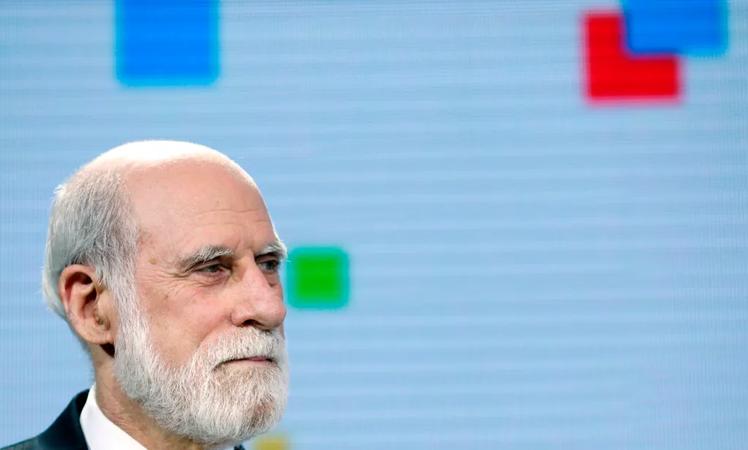
Vint Cerf often says his favorite place is somewhere he has never visited. As one of the key figures who helped create the protocols underlying the open internet, Cerf departed Google last week after a 20-year tenure, but his work on the digital future is far from over. Starting today, he is advising Innovation Labs, an organization focused on building an open architecture that allows AI agents to identify themselves. Innovation Labs is a subsidiary of Identity Digital, a DNS registry company, which views domain-name infrastructure as a practical method for holding AI agents accountable—while also positioning itself for a future where most online interactions occur between agents rather than people. Cerf joins a small group of other internet pioneers who have lent their names to this initiative.
Most AI agents currently operate within closed, proprietary systems, drawing on internal resources for specific tasks. However, businesses are already imagining a world where these agents function far more autonomously across the internet, directly interacting with one another. So far, a major obstacle has been the lack of a shared standard for identifying and auditing these agents. Several standards are beginning to emerge, and Innovation Labs has proposed DNSid—a registry for agent identification that ties each agent to an existing internet domain name and uses cryptographic proofs to log its registration over time. Allie Kline, interim CEO of Innovation Labs, says the company is testing these standards with several unnamed hyperscalers and identity firms. “This is largely triggered by the notion of AI agents and the question of what authorities they have, where they have derived those authorities, who is accountable for the behavior of an agent in this context, and where and how its identity is established, and why [you’d] trust it.”
EMBED_PLACEHOLDER_0
Those questions are likely to be complex, Cerf notes, because AI agents are far more active than domains, and it is not yet clear what commitment an organization makes when it registers one. “It’s going to be a fascinating—and at the same time maybe even exasperating—period in the evolution of the internet and the things that depend on it, because the functionality is so dramatically powerful,” Cerf said. With multiple solutions to the problem being considered, Cerf believes the key to widespread adoption of any protocol will be its functionality. “Company X uses agent Y’s technology, and company A uses agent C’s technology, and then they don’t interwork with each other,” Cerf said. “Nobody can do everything that you might want every agent to do… and so we’re going to have to rely on the pressure coming from the users. This is what happened with TCP/IP.”
A key aspect of Innovation Labs’ proposal is that it does not come with broader plans to engage in other AI businesses or to own the registration data, Kline says. As for whether Cerf believes the agentic economy is the internet’s destiny, he replied: “I don’t think it’s inevitable. But what I do think is inevitable is that people will try to do that. We are fundamentally lazy creatures, and if we find a way to have an agent do something for us, we’re very likely to choose to do that because [it’s] just easier.”
RELATED ARTICLES


Comments
Please log in to leave a comment.

No comments yet. Be the first to comment!