Waabi Secures $1 Billion to Launch Self-Driving Robotaxis on Uber
By admin | Jan 28, 2026 | 5 min read
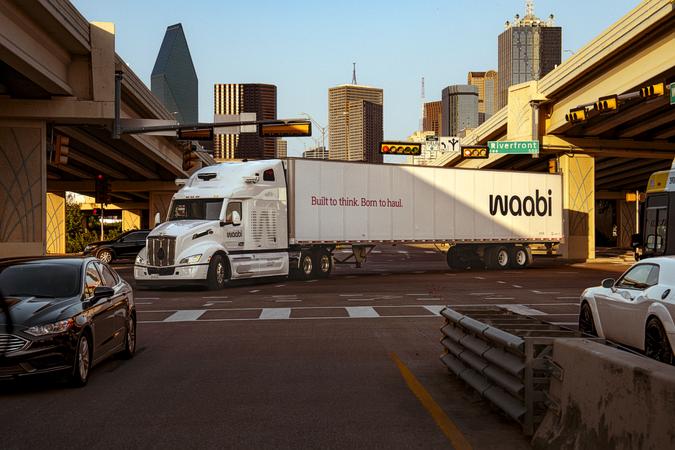
Autonomous vehicle company Waabi has secured $1 billion in new funding and formed a strategic alliance with Uber to introduce its self-driving cars to the ride-hailing network. This marks the company's initial move beyond its original focus on autonomous trucking.
The financial package includes an oversubscribed $750 million Series C investment round, jointly led by Khosla Ventures and G2 Venture Partners. Additionally, Uber is providing approximately $250 million in milestone-based capital to support the exclusive deployment of 25,000 or more Waabi Driver-powered robotaxis on its platform. No specific timeline has been announced for this large-scale rollout.
This partnership underscores a belief that Waabi's artificial intelligence can overcome challenges where others have faced difficulties, specifically in scaling a single technology platform across different self-driving applications. While other companies, such as Waymo, have previously pursued both robotaxi and trucking ventures before scaling back, Waabi's founder and CEO Raquel Urtasun asserts that her company's capital-efficient strategy and adaptable AI architecture provide a distinct edge in addressing both markets at once. "It's not about two programs, two stacks," she emphasized.
The collaboration represents a return to Urtasun's roots, as she formerly held the position of chief scientist at Uber's self-driving unit, Uber ATG, which was sold to Aurora Innovation in 2020. It also extends Waabi's existing relationship with Uber Freight. Waabi joins a roster of autonomous vehicle firms, including Waymo, Nuro, Avride, Wayve, WeRide, and Momenta, that Uber has enlisted to deploy self-driving technology globally.
This new alliance and funding coincide with Uber establishing a new division named Uber AV Labs, which will utilize its fleet to gather data for its autonomous vehicle partners. According to Urtasun, Waabi is less dependent on massive real-world data collection than some competitors. The Waabi Driver is developed and refined within a proprietary closed-loop simulator called Waabi World. This system creates digital replicas of environments from data, conducts real-time sensor simulations, generates challenging scenarios to test the AI, and enables the Driver to learn from errors autonomously.
Urtasun states that this process allows the Waabi Driver to interpret its environment with human-like reasoning and select optimal actions, enabling it to generalize and learn effectively from a smaller set of examples than conventional self-driving systems. 
Over the past four and a half years, Waabi has been implementing this technology for trucks operating on highways and surface streets. Urtasun notes that the core "Waabi Brain" is inherently designed to adapt to different vehicle types, and she has hinted that robotics could be the company's next area of expansion. The firm has been collecting and simulating passenger car data alongside its trucking work from the outset, indicating that robotaxis were always part of the long-term vision.
Urtasun claims this methodology has enabled Waabi to develop technology more rapidly and cost-effectively than rivals. "We don't need the gazillion humans to develop the technology and the large fleets that AV 1.0 needs," she said. "We don't need the massive data centers, energy consumption, or a gazillion latest chips."
With this latest deal, Waabi's total funding reaches approximately $1.28 billion, following a $200 million Series B round closed in June 2024. For context, competitors Aurora Innovation and Kodiak Robotics have raised $3.46 billion and $448 million to date, respectively, through venture capital and public market activities.
Within just five years, Waabi has initiated several commercial pilot programs in Texas, which currently feature a human safety driver. The company had aimed to launch a fully driverless truck on public highways by the end of last year, but Urtasun confirms this rollout has been postponed and is now expected within the next few quarters. She explains that while the Waabi Driver software is prepared, the trucks themselves require final validation.
Urtasun remains confident, citing strong demand for Waabi's trucks due to its direct-to-consumer sales model, which allows shipping companies to purchase equipped vehicles directly. She believes the Uber partnership will enable Waabi to "quickly penetrate the market and scale with a product that will be very reliable."
"We're still in the first innings of deployment of robotaxis," she remarked. "There's a lot more scale to come."
Urtasun did not disclose further specifics about the Uber rollout, such as potential automotive manufacturing partners. She did indicate that Waabi plans to follow a similar approach to its trucking program by integrating its sensors and technology directly into vehicles during the manufacturing process. "We believe in vertically integrating with a fully redundant platform from the OEM," she said. "That is how you really build safe and truly scalable technology."
Other investors participating in Waabi's Series C round include Uber, NVentures (Nvidia's venture capital arm), Volvo Group Venture Capital, Porsche Automobil Holding SE, BlackRock, BDC Capital's Thrive Venture Fund, and several others.
RELATED ARTICLES



Comments
Please log in to leave a comment.

No comments yet. Be the first to comment!