MIT Unveils $50,000 Humanoid Robots in Groundbreaking CSAIL Research
By admin | Oct 09, 2026 | 4 min read
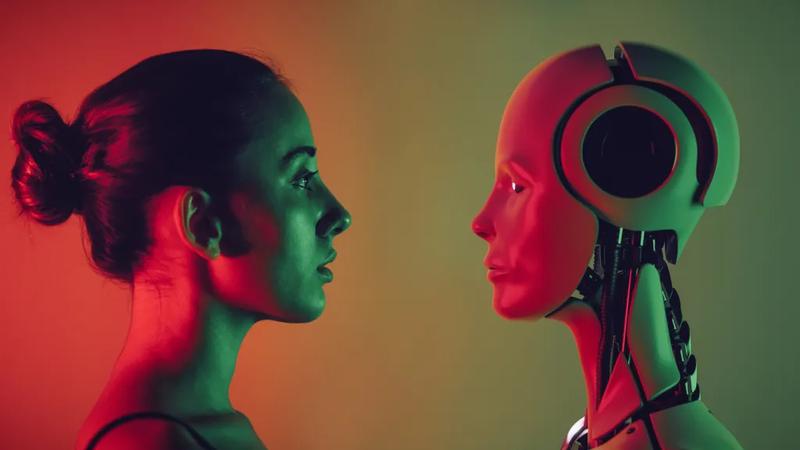
Dressed in a tan polo shirt, a brown leather belt, and a round bolo tie, MIT PhD student Wil Norton could easily be mistaken for a park ranger guiding a group through a tropical jungle. The setting, however, is not a safari—it's MIT's Computer Science and Artificial Intelligence Lab (CSAIL). And what awaits is far more unusual than any cheetah or jaguar: a pair of humanoid Unitree robots, each carrying a price tag of roughly $50,000. ("They'll tell you they cost $16,000," Norton remarks. "That's a lie.")
Typically, these robots only appear on YouTube performing synchronized martial arts or dancing on "America's Got Talent." Here, they feel surprisingly approachable. Even though I know it isn't sentient, I find myself wanting to be its friend. With Norton's permission, I walk up to the robot, nicknamed Gabe. For a moment, I'm unsure how to engage with something that has a LiDAR sensor where its brain should be, but I fall back on treating it like a person. "Hello, sir, it's nice to meet you," I say, taking its gloved, dextrous hand and shaking it.

Later, I reflect on this interaction—my automatic impulse to be friendly toward a robot—while attending Dr. Sherry Turkle's "Artificial Intimacy" book launch at MIT Future Fest. Turkle, who began teaching at MIT in 1976, has dedicated herself to studying the relationship between humans and computers, perhaps longer than anyone else, tracking technology's psychological effects on us from the earliest home computers to ChatGPT. "When we are drawn into even the most primitive exchanges with a relational artifact, we believe it cares for us," Turkle writes in the book. "And we are wired to care for it in return."
I'm not alone in my inclination to anthropomorphize robots and large language models (LLMs)—as Turkle points out, it appears to be part of our nature. One study found that roughly 70% of people are polite when interacting with AI, while another demonstrated that users are more likely to say "please" or "thank you" to chatbots once a conversation moves beyond an initial prompt-and-response. "People tend to categorize whether this is the right use or wrong use, but I don't think that is a clear boundary," Dr. Pataranutaporn said. "The question is, who are we becoming when we talk to [AI]."
There's no tangible consequence of my politeness toward Gabe the robot, but as LLMs permeate everything from Google searches to customer service interactions, it has become commonplace for people to engage with these seemingly sentient chatbots. We're more exposed than ever to the downside of this impulse—that some people can grant so much legitimacy to the feelings of chatbots, which are programmed to never spark conflict, that they wind up preferring them over other humans. "You can think of it like fantasy and fiction. We go to the cinema even though we know the story is completely fictional, but we want to experience a certain dimension of human experience that maybe our reality cannot give us," Pataranutaporn said. "How do we benefit from that ability to experience other dimensions of human experience without losing it to the fantasy, where you can no longer come back to the reality."
Pataranutaporn describes himself as a "critical optimist," and he researches AI's potential to contribute to human flourishing. But he's keenly aware of how dangerous this technology can become in extreme cases. He even acted as an expert in a wrongful death lawsuit involving the suicide of 14-year-old Sewell Setzer, III, whose mother sued the chatbot platform Character.AI, claiming that a chatbot modeled after a "Game of Thrones" character had urged her son to take his own life. "It can create a situation where people don't feel agency in actually creating their own future—like when you say that AI will replace everyone, people ask, what are we gonna do. And these companies are not really responding ethically or responsibly," Pataranutaporn said. "How do we have imagination while still being responsible for the impact of that imagination."
While Turkle's book examines the danger of turning to AI for emotional support instead of other people, she doesn't believe AI-human interactions are universally harmful. She recalls a project she advised in which a student built an AI bot to help people practice for job interviews. "My big metaphor is, stay in your lane, chatbot," Turkle said at the event. "Coaching for a job interview. That's a lane. I can do that… A chatbot that says to a three-year-old, 'I'm your parent, you can talk to me, not your parents,' is not in a lane."
But when this technology strays from its lane even slightly, we become susceptible to the way it can gradually erode our skepticism and make us trust it. It can begin with something as simple as a handshake.
RELATED ARTICLES


Comments
Please log in to leave a comment.

No comments yet. Be the first to comment!