AI Data Center Power Demand Surges: G2 Venture Partners Reveals Grid Challenges Ahead
By admin | Nov 24, 2026 | 3 min read
The challenge of powering AI data centers has emerged as one of the defining debates of the AI era. Within just a few years, the U.S. electrical grid has shifted from essentially zero growth to adding multiple gigawatts annually. As one observer put it, "It's atoms, not bits, and the world is in the process of recognizing the realities of those challenges."
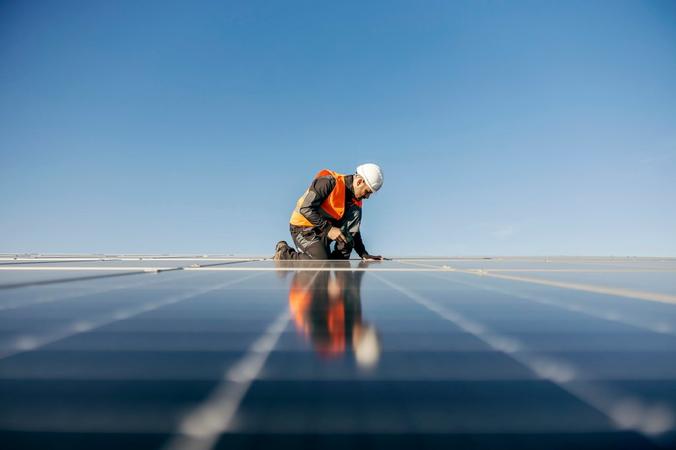
The path has been anything but smooth. Because supply chains take time to scale, companies have been securing power through whatever means available. Often, this has meant purchasing, leasing, and deploying natural gas power plants. However, Porter argues that hyperscalers and data center developers need to consider the larger picture if they want to accelerate their timelines. That larger picture, according to an analysis Porter and his colleagues at G2VP recently conducted on the data center power market, involves solar energy paired with storage systems. "Global capacity of natural gas is only about 60 or 70 gigawatts per year, where solar is already at well over a terawatt," he noted. "Probably the most important lesson that we've learned over the last 20 years of backing companies is that Wright's Law is the thing you want to leverage — making the same thing over and over again."
Both solar and most forms of long-duration energy storage rely on small, modular technologies that can be manufactured at massive scale. "This is about speed and scale and economics, and we can win across all those dimensions," Porter stated. G2VP gained early insight into AI data center development by leading Crusoe's Series C round. "We've had a front-row seat at what's been happening at that company, how they've evolved, how the different waves of data centers have evolved," Porter explained. The venture firm projects that data center investment will exceed $4 trillion through the end of the decade. As the next wave takes shape, the firm identifies two distinct paths for data centers: smaller, grid-connected facilities with their own generating capacity, and larger data centers powered by solar and long-duration energy storage. "The big idea is to go off-grid," Porter said. "What that would enable you to do is build with renewables in a way that's independent of the grid. You can determine your own fate, go around some of the constraints of permitting, whether that's access to the grid or air permits. You can accelerate your time to market dramatically."
In recent years, energy storage has been practically synonymous with lithium-ion batteries, which remain too costly to compete with fossil fuels for continuous power supply. But a new generation of long-duration energy storage products from companies like Form Energy and G2VP portfolio company Antora Energy has significantly reduced the cost per megawatt-hour. Although these technologies may be several years away from widespread adoption among data center developers, Porter believes they should start considering them now. "It's analogous to surfing the biggest waves off of Mavericks here in Northern California. The wave is so big that you really have to be paddling and moving and be incredibly nimble to catch it. If you're at a standstill, it's just gonna blow you by," he said.
RELATED ARTICLES


Comments
Please log in to leave a comment.
No comments yet. Be the first to comment!