Amazon Unveils AI Wearable 'Bee' at CES, Expanding Beyond Alexa
By admin | Jan 12, 2026 | 3 min read
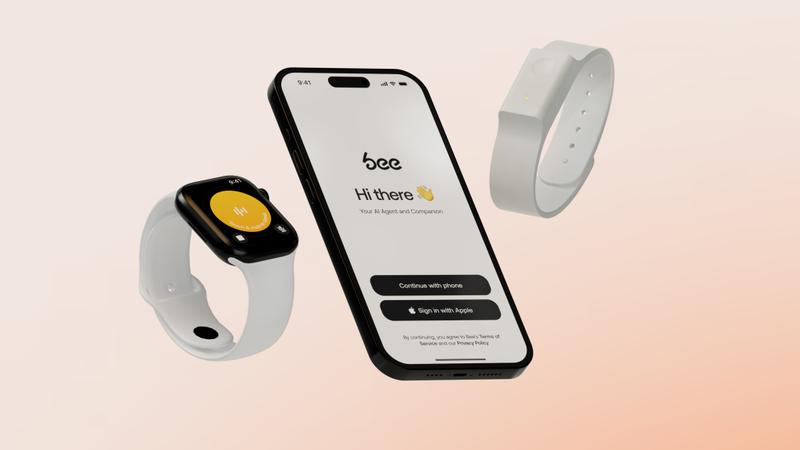
Smart rings, smart screens, smart TVs, smart pins—even smart ice cube makers. This year’s Consumer Electronics Show in Las Vegas made one thing clear: artificial intelligence is being integrated into nearly every kind of device. Among the many companies demonstrating their latest AI innovations, Amazon chose the event to introduce its newest acquisition: Bee, a wearable AI device that functions as a clip-on pin or a bracelet.
While Amazon already offers the AI-powered Alexa, which runs on the vast majority of its shipped hardware, Bee represents a strategic move into wearable technology designed for life beyond the home. Originally created to record conversations such as interviews, meetings, or lectures, Bee also serves as a personalized AI companion. It draws on general knowledge while learning about the user through recorded interactions and connected services like Gmail, Google Calendar, phone contacts, and Apple Health.
Given Amazon’s previous attempts to incorporate Alexa into wearables like earbuds and glasses—efforts that have struggled to compete with products like Apple’s AirPods and Meta’s Ray-Ban smart glasses—the addition of another AI companion might seem to complicate its strategy. However, the company appears to view Bee as a complementary offering. “We see each other as complementary friends,” explained Bee co-founder Maria de Lourdes Zollo during an interview at CES. “Bee has the understanding of outside the house, and Alexa has the understanding of inside the house. Of course, there will be a future where these two things come together.”
That integration, however, is not imminent. Daniel Rausch, Vice President of Amazon Alexa, emphasized that the Bee team has created an “important and lovable experience.” He described Bee as “deeply engaging and personal,” while acknowledging that Alexa and Bee will eventually converge. “We know that it will create even more benefit for customers than what [the AI experiences] do on their own,” Rausch noted. “When you have access to the power of these AI experiences with you throughout the day, and they’re continuous—we’re gonna be able to do so much more for customers.”
According to de Lourdes Zollo, Bee adapts to its users by recognizing their habits, insights, and commitments, enabling it to suggest daily tasks and follow-ups. Early adopters have included students recording lectures, older adults seeking memory support, and professionals who speak frequently and prefer not to take manual notes. “They just want a place to have all the summarization of everything they said,” she said. “So based on that, we build a really big graph of knowledge [about] you, where you can go chat with Bee, and have an understanding of what happened to you, but also how you’re changing during the course of your life.”
Technically, Bee employs a blend of AI models, similar to Alexa, and is considering incorporating Amazon’s own AI into its system. After transcribing conversations, the device deletes the audio files, which limits its utility in scenarios where replaying recordings is necessary for accuracy.
Looking ahead, de Lourdes Zollo hinted at more developments for Bee in 2026, though she did not share specifics. Beyond recently announced features—such as voice notes, templates, and daily insights—the eight-person team based in San Francisco is working on “many new things.” Being part of Amazon, which already has a significant hardware and Alexa presence in the city, opens up “endless possibilities,” she added. “That’s one of the reasons why we’re really excited to be part of Amazon.”
RELATED ARTICLES


Comments
Please log in to leave a comment.
No comments yet. Be the first to comment!