SpaceX Seeks Approval for AI-Powered Orbital Data Centers Across a Million Satellites
By admin | Feb 11, 2026 | 7 min read
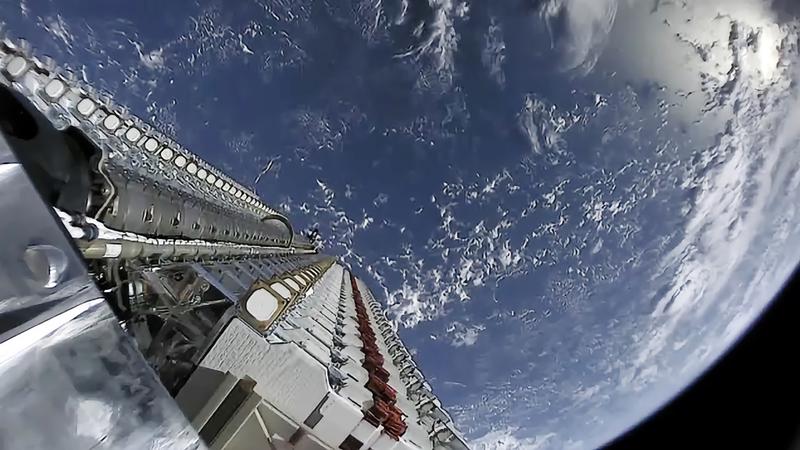
This development feels almost predestined. For years, Elon Musk and his associates have discussed the concept of AI in space, often referencing the far-future universe of Iain Banks' science fiction, where sentient starships govern the galaxy. Musk now perceives a tangible opportunity to bring a version of that vision to life. His firm, SpaceX, has formally requested regulatory approval to construct solar-powered orbital data centers, potentially distributed across a constellation of up to one million satellites. This network could relocate as much as 100 GW of computing power off-world. Musk has also reportedly suggested that some of these AI satellites could be constructed on the Moon. "By far the cheapest place to put AI will be space in 36 months or less," Musk stated last week during a podcast hosted by Stripe cofounder John Collison.
He is not alone in this belief. The head of compute at xAI has reportedly wagered his counterpart at Anthropic that one percent of global computing capacity will be in orbit by 2028. Google, which holds a significant ownership stake in SpaceX, has announced its own space AI initiative named Project Suncatcher, with prototype vehicle launches planned for 2027. The startup Starcloud, backed by $34 million from investors including Google and Andreessen Horowitz, filed plans last week for an 80,000-satellite constellation. Even Jeff Bezos has publicly endorsed this direction for the future.
Yet, beyond the ambitious rhetoric, what practical steps are required to actually establish data centers in space? An initial analysis indicates that terrestrial data centers currently remain more cost-effective than their orbital counterparts. Space engineer Andrew McCalip has developed a comparative calculator for the two models. His baseline calculations show that a 1 GW orbital data center could cost approximately $42.4 billion—nearly three times the price of an equivalent ground-based facility, primarily due to the expenses of satellite construction and launch.
Experts suggest that altering this economic equation will demand technological advancements across multiple disciplines, massive capital investment, and significant development of the supply chain for space-grade components. It also hinges on the assumption that terrestrial costs will rise as growing demand strains resources and supply chains.
**Designing and Launching the Satellites**
The fundamental driver for any space-based business model is the cost of reaching orbit. While SpaceX has already driven down launch expenses with its Falcon 9 rocket, analysts believe even lower prices are necessary to make orbital data centers economically viable. This makes the success of SpaceX's long-in-development Starship vehicle critical to the plan. Currently, the reusable Falcon 9 offers a cost to orbit of roughly $3,600 per kilogram. Project Suncatcher's white paper suggests that feasible space data centers would require launch costs closer to $200 per kilogram—an 18-fold improvement anticipated in the 2030s.
The next-generation Starship rocket is expected to deliver these improvements, as no other vehicle in development promises equivalent savings. However, Starship has not yet become operational or reached orbit; a third test flight is expected in the coming months. Even if Starship is fully successful, assumptions of immediate, drastically lower prices for customers may be optimistic. Analysts at Rational Futures argue that, similar to its strategy with Falcon 9, SpaceX would likely not price its services far below its best competitor to avoid leaving revenue on the table.
"The cost of getting a payload in space today is massive. It is just not economical," stated Matt Gorman, CEO of Amazon Web Services, at a recent event. "There are not enough rockets to launch a million satellites yet, so we’re pretty far from that."
**The Challenge of Production Costs**
If launch costs are one major hurdle, the second is the production expense of the satellites themselves. "People are not taking into account the satellites are almost $1,000 a kilo right now," noted one expert.
Satellite manufacturing constitutes the largest portion of this cost. However, if high-powered satellites can be produced for about half the cost of current Starlink satellites, the economics begin to look more promising. SpaceX has achieved significant advances in satellite economics through its Starlink program and hopes to drive costs down further through mass production—a key rationale behind proposing a constellation of a million satellites.
These satellites must be sizable to meet the complex requirements for operating powerful GPUs, necessitating large solar arrays, advanced thermal management systems, and laser-based communication links. A 2025 white paper from Project Suncatcher compares the cost of power, a fundamental input for running chips. On Earth, data centers spend between roughly $570 and $3,000 per kilowatt of power annually. In contrast, the cost of acquiring, launching, and maintaining a Starlink satellite to deliver that same kilowatt of solar power is about $14,700 per year. Simply put, satellites and their components must become substantially cheaper to compete with terrestrial power costs.
**The Demanding Space Environment**
Proponents often claim thermal management is "free" in space, but this is an oversimplification. The vacuum of space actually makes dissipating heat more difficult. "You’re relying on very large radiators to just be able to dissipate that heat into the blackness of space, and so that’s a lot of surface area and mass that you have to manage," explained Mike Safyan, an executive at Planet Labs, which is building prototype satellites for Google's Project Suncatcher. "It is recognized as one of the key challenges, especially long term."
Beyond thermal issues, AI satellites must contend with cosmic radiation, which can degrade chips over time and cause "bit flip" errors that corrupt data. Mitigation strategies include radiation shielding, using radiation-hardened components, or implementing redundant error checks—all of which add mass and expense. Both Google and SpaceX are actively testing their respective AI chips (Tensor Processing Units and others) against radiation effects, with SpaceX having acquired a particle accelerator for this purpose.
Solar panels present another complication. The core logic of space-based data centers is energy arbitrage: solar panels in space can be five to eight times more efficient than on Earth and, in the right orbit, can be exposed to sunlight over 90% of the time. However, space-rated solar panels made from rare earth elements are durable but expensive. Cheaper silicon-based panels, like those used on Starlink satellites, degrade faster due to space radiation, potentially limiting satellite lifespans to around five years. This shorter lifespan means the satellites must generate a return on investment more quickly, though some analysts note this aligns with the rapid refresh cycle of computing hardware.
"The industry sees orbital data centers as a key driver of growth," said Danny Field, an executive at solar panel startup Solestial. "Any player who is big enough to dream is at least thinking about it." As a seasoned spacecraft design engineer, he acknowledges the challenges but is eager to see how companies reach an economically viable business case.
**How Do Space Data Centers Fit In?**
A fundamental question remains: What will these orbital data centers be used for? Will they handle general computing, specific AI inference tasks, or the intensive process of training new AI models? They may not be directly interchangeable with ground-based centers.
Training new AI models typically requires operating thousands of GPUs in close coordination within a single data center—a challenge to replicate across a distributed satellite network. The team behind Google's Project Suncatcher notes that their terrestrial data centers connect TPU networks with throughput in the hundreds of gigabits per second. The fastest current laser-based inter-satellite links max out at about 100 Gbps. This led Project Suncatcher to propose an architecture where 81 satellites fly in a precise formation, close enough to use terrestrial-grade transceivers. This introduces its own complexities, such as the autonomous station-keeping required to maintain formation and avoid debris.
The Google study also notes that while the work of AI inference might tolerate the orbital radiation environment, more research is needed on radiation's impact on the sensitive process of training AI models. Inference tasks, which don't require thousands of synchronized GPUs, could be performed by dozens of chips on a single satellite. This architecture represents a more feasible starting point, a kind of minimum viable product for the orbital data center business.
"Training is not the ideal thing to do in space," one expert noted. "I think almost all inference workloads will be done in space," envisioning everything from customer service voice agents to ChatGPT queries being processed in orbit. One company claims its first AI satellite is already generating revenue by performing inference tasks in space.
Details are sparse, but SpaceX's regulatory filing for its orbital data center constellation suggests spacecraft with about 100 kW of computing power per ton—roughly twice the capability of current Starlink satellites. These spacecraft would interconnect with each other and utilize the Starlink network, with the filing claiming the laser links can achieve petabit-level throughput.
For SpaceX, its recent acquisition of xAI allows it to position itself in both terrestrial and orbital data centers, enabling it to see which supply chain evolves faster. This strategy leverages the fungibility of computing power. "A FLOP is a FLOP, it doesn’t matter where it lives," said Andrew McCalip. "[SpaceX] can just scale until [it] hits permitting or capex bottlenecks on the ground, and then fall back to [their] space deployments."
EMBED_PLACEHOLDER_0
RELATED ARTICLES


Comments
Please log in to leave a comment.

No comments yet. Be the first to comment!