AMD launches Helios AI rack system to challenge Nvidia's dominance in AI computing
By admin | Jul 23, 2026 | 2 min read
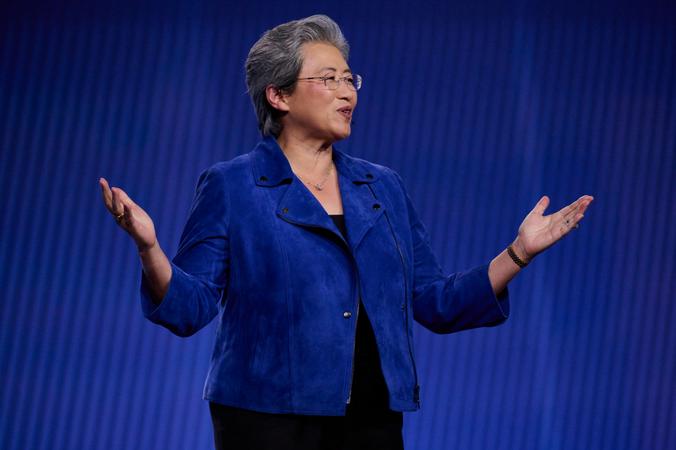
Chipmaker AMD is setting its sights on rival Nvidia with its latest product launch: a rack-scale system engineered to meet the massive computing demands of the world’s largest AI laboratories. During its fully booked Advancing AI conference in San Francisco on Thursday, AMD Chair and CEO Dr. Lisa Su unveiled the new AI rack system, called Helios, alongside a growing roster of customers that includes Microsoft. The company plans to begin shipping the system later this year. Su also highlighted AMD’s newest chips, designed to fuel the insatiable computing needs of the AI industry.
Rack systems consolidate numerous processors into a single, high-performance unit, built specifically for data centers where AI models are trained and run, along with other compute-heavy tasks. Su described Helios as the tech industry’s “highest performance AI rack,” noting it was “built to train and run the most demanding frontier models in the world at massive scale.” According to AMD, the system will be deployed by leading AI companies at gigawatt-scale levels. Historically, Nvidia has dominated this market with its Vera Rubin and Grace Blackwell rack-scale systems, but AMD is clearly eager to compete. Performance metrics for Helios appear promising, with reports indicating it outperforms Vera Rubin in several areas.
First unveiled in 2025 and showcased onstage at CES 2026 in January, Helios already counts several major names as customers, including OpenAI, Meta, Oracle, Anthropic, and Microsoft. All have announced plans to deploy the system. Microsoft CEO Satya Nadella stated on Monday that the company would expand its Azure infrastructure using Helios. Additionally, Anthropic and AMD announced a strategic partnership on Wednesday to deploy up to two gigawatts of GPUs through the new rack system.
AMD also introduced its Venice-X CPU on Thursday, designed for data centers and high-computing workloads, with a planned launch in 2027. During her remarks, Su reflected on the chip industry’s trajectory, predicting that by 2030, chips powering AI will represent a massive portion of the overall computing market. This shift is driven by a “step change in compute demand,” largely fueled by the rise of agentic AI, she explained.
“When you ask the agent to do something, it actually has dozens of steps, and it has to reason, and it has to call tools, and it has to access data, and it has to keep doing it over and over until it solves the problem, and so you need lots of GPUs to do all that,” the executive said. “We’re now expecting that by 2030, the AI accelerator market is going to reach about $1.4 trillion,” Su added. “What that means is, by the end of the decade, the AI accelerator market is going to approach the size of the entire semiconductor market today.”
“We do expect that GPUs are going to make up the vast majority of that market because the algorithms are still very much in their infancy, and we’re still continuing to see the workloads change, and that favors programmability in the overall silicon ecosystem,” she concluded.
RELATED ARTICLES


Comments
Please log in to leave a comment.

No comments yet. Be the first to comment!