Binance Launches Agent OS: AI Agents That Analyze Markets and Execute Trades for 300M+ Users
By admin | Aug 20, 2026 | 6 min read
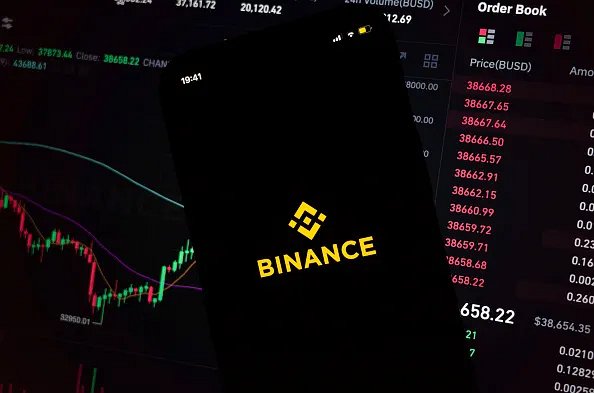
Binance, the world’s largest cryptocurrency exchange with over 300 million registered users, rolled out a new platform on Thursday that enables AI agents to analyze markets and carry out trades on behalf of users. This moves autonomous AI directly into the realm of managing real money. Dubbed Agent OS, the platform allows developers to link AI applications and agents to Binance’s financial infrastructure. It consolidates the exchange’s existing tools and services—such as Binance APIs, Binance Wallet Agentic Hub, Binance’s x402 transaction verification and payment facilitator API, and Binance Skill Hub—alongside newly introduced support for its Model Context Protocol (MCP). The platform also integrates with tools like OpenAI’s ChatGPT and Codex, Anthropic’s Claude Code, and Cursor, letting users authorize agents to access market data, view account details, and execute trades.

As the AI race shifts from chatbots that answer questions to agents that can take action, Binance is placing much of the responsibility for keeping these agents in check on users. Ultimately, users must decide what agents can access and trade, and set limits on their activities. “Instead of total freedom, we put the power in users’ hands to give them the granular access control of what they can do through the agent,” said Jeff Li, vice president of product at Binance, in an interview. “We put [the control] at the account level to protect the users’ funds.”
Binance achieves this primarily through dedicated “sub-accounts,” which users can assign to agents and configure for specific activities, such as spot or futures trading. Users can also choose whether an AI agent must seek approval for every order or can execute trades autonomously once its permissions are set, a Binance representative noted. Binance does not impose a separate cap on how much an AI agent can trade or lose, so the amount a user transfers into the sub-account effectively serves as the limit.

When asked whether Binance can see what leads an agent to make a specific trade, Li explained that the reasoning occurs outside its systems, either on the user’s computer or within their chosen AI application. “We really cannot see the reasoning of what the user’s action is,” he said. This means Binance can monitor an agent’s resulting trading activity, but has limited visibility into whether a decision was influenced by faulty information or manipulation. Li again pointed to the sub-account as the primary defense when asked what would happen if an agent were manipulated through a prompt-injection attack or otherwise compromised. Binance also stated that its existing security, risk-control, and anti-money-laundering policies for subaccount APIs apply to Agent OS at launch.
Trading is one of the first use cases Binance is targeting, but Li noted that agents could also monitor markets, conduct research and risk analysis, react to signals, and autonomously place orders or execute strategies such as arbitrage. Agent OS is designed to connect agents to payments and on-chain activity as well. Through Binance’s x402 integration, agents can send and settle payments, while its Agentic Wallet allows them to interact with tokens and decentralized-finance protocols. Unlike exchange trading, where Binance does not impose a separate cap on how much an agent can trade or lose within its sub-account, Agentic Wallet transactions carry Binance-set daily limits. Regular swaps are capped at $50,000 a day, DeFi transactions have a default $100,000 daily limit, and x402 payments are limited to $20 a day, according to the company.
Li described Agent OS as Binance’s “first step” toward giving developers a platform to build AI-powered applications that can act across crypto and traditional markets. Binance is not alone in opening its infrastructure to AI agents. Rival crypto exchanges have been moving in the same direction, using MCP and other developer tools to give AI applications direct access to market data and trading systems. In March, Kraken launched an open-source command-line tool with a built-in MCP server that allows AI agents to execute actions including spot and futures trades. Coinbase followed in June with Coinbase for Agents, which connects AI agents directly to users’ accounts and allows them to trade, make payments, and execute other financial workflows within user-set limits. Similarly, OKX enabled agentic trading on its platform by introducing an open-source MCP toolkit earlier this year.
RELATED ARTICLES

Comments
Please log in to leave a comment.

No comments yet. Be the first to comment!