Canva AI Assistant Launches Editable Design Creation for Automated Workflows
By admin | Apr 16, 2026 | 4 min read
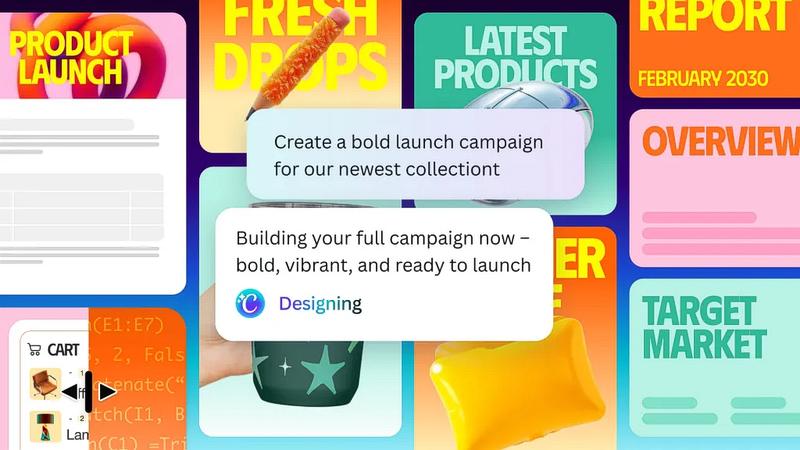
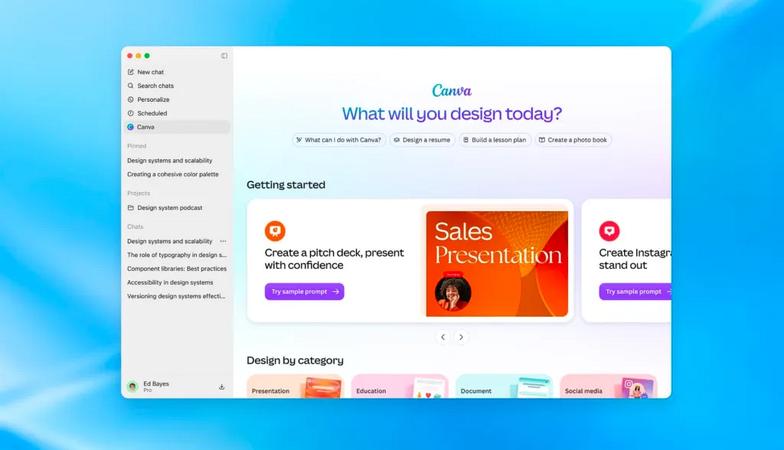
The fundamental appeal of emerging AI platforms lies in their ability to understand a user's described task, autonomously plan and execute it using appropriate tools, and learn preferences for future work. For design professionals, this capability is particularly valuable, as it enables a reliable and automated process for producing content and media assets. Canva is embracing this approach with the newest iteration of its AI assistant, which leverages the company's own AI model to allow users to generate editable designs through simple text prompts. By describing what they need, users can prompt the assistant to utilize the necessary tools and present multiple design options. A key feature is the assistant's use of layers in its creations, providing users with the flexibility to adjust various elements of the final design.

This update aligns with Canva's ongoing strategy to position its AI assistant as a central component of user workflows, expanding its capabilities to include features like image and website generation. The competitive landscape appears to be moving in a similar direction. Recently, Adobe introduced a Firefly AI assistant capable of operating across its suite of applications, and Figma last month integrated support for AI agents into its platform via an MCP server.
Canva's co-founder and COO, Cliff Obrecht, observed that while many companies are attempting to consolidate workflows, businesses often choose Canva for the crucial final stages of editing and publishing. “I think a lot of small businesses start and end their day, and they’ll do a lot of their workflows completely, in Canva,” Obrecht said. He emphasized the platform's interoperability, adding, “We also work incredibly well with Anthropic, Google and OpenAI, so if someone is doing their agentic workflows in those products, they can call Canva, get content, and they can get it back into those LLMs. But they always need to end up doing the final mile of editing, collaboration and deployment. That’s where we really are strong.”
While a significant portion of Canva's revenue originates from individual users and small teams, Obrecht noted that its enterprise business is demonstrating strong growth, increasing by 100% year-on-year. He also mentioned that the company, most recently valued at $42 billion according to PitchBook, is likely to pursue an initial public offering next year.
The latest update further enhances the assistant's utility through new integrations with workplace tools like Slack, Gmail, Google Drive, Calendar, and Zoom. These connections allow the AI to build context by accessing emails, conversations, files, and meeting data. A new web research skill enables the bot to browse the internet to complete tasks. Additionally, a scheduling feature lets users program the AI to run repeatable tasks in the background, though it will only create a draft for user review and final posting.
Canva is also refining its existing AI tools. Its AI code generator now supports HTML import, and users can employ text prompts to describe the type of spreadsheets they wish to generate. The company reports significant improvements in its AI models' efficiency, claiming its Lucid Origin image-generation model is now five times faster and thirty times cheaper to operate, while its 12V image-to-video model is seven times faster and seventeen times cheaper.
Canva AI 2.0 is launching in a research preview this week, with plans to roll it out to all users in the coming weeks.
RELATED ARTICLES


Comments
Please log in to leave a comment.
No comments yet. Be the first to comment!