Unconventional AI Unveils Un0 Image Generator with Revolutionary Oscillator-Based Architecture for Ultra-Efficient Inference
By admin | Jun 25, 2026 | 2 min read
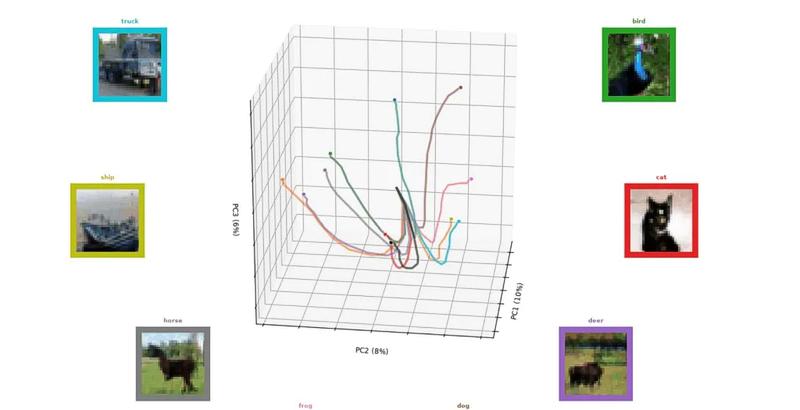
The quest to uncover the next breakthrough in artificial intelligence has fueled some remarkably ambitious ventures, but one startup is using this opportunity to completely reimagine computing from the ground up. Led by Naveen Rao, who previously served as head of AI at Databricks, Unconventional AI aims to make inference processing dramatically more energy-efficient. Its secret lies in a novel oscillator-based computer architecture. On Thursday, the company unveiled its first AI model, called Un0—an image-generation tool that demonstrates how its technology can replicate conventional AI systems. In a newly published paper, the company's research team explains how they developed a fully functional image generation model using a software simulation of this new architecture, achieving performance on par with state-of-the-art diffusion models. "Over the next year, you're going to start seeing some pretty interesting news around this," Rao says.
The output from the Un0 model resembles that of popular image-generation systems like Stable Diffusion or OpenAI's GPT Image 1. What sets it apart is the method behind its performance. The model is built on an oscillator-based architecture that fundamentally differs from the chips used in traditional computing and large language models. The benefits of this approach are intricate, but Rao believes it could ultimately slash power consumption by up to 1,000 times. However, much of the necessary infrastructure is still under development. The current version of Un0 runs on a software simulation of Unconventional's oscillator chips, but the company plans to release schematics for an actual chip soon. From there, the goal is to construct an entirely new inference stack, with Unconventional AI eventually offering compute capacity like any other provider. "We will build a new kind of system composed of our chips," Rao explains. "We will run AI models there, and we will have a network cable where prompts come in and inferences go out, but it'll be done at 1/1000 of power."
This is an incredibly ambitious target, especially for a company with fewer than 50 employees. Yet, given the massive scale of AI expansion and the projected costs of meeting rising inference demand, this effort might be one of the few that can tackle the challenge effectively. In Rao's view, the available power supply will become a critical bottleneck for AI in the coming years, and Unconventional is among the rare projects capable of addressing it. "AI scaling is hard because of energy. It's going to be the fundamental limit in the next few years. You just can't go past it. It's going to be an energy limited problem, at the end of the day," he says.
RELATED ARTICLES


Comments
Please log in to leave a comment.

No comments yet. Be the first to comment!